Sending money across borders used to mean a trip to a bank branch, a paper form, and a 3 to 5% cut taken quietly through the FX spread.
The funds would then hop through two or three correspondent banks before landing, usually four days later, sometimes longer if a compliance flag held things up.
That model is breaking down fast.
The rails replacing it look almost nothing like the SWIFT-based pipes we grew up with, and providers competing on secure international transfers are setting the standard the rest of the industry now has to match.
Settlement Speed Is the First Big Shift
The biggest change is settlement speed.
Real-time payment systems like SEPA Instant in Europe, FedNow in the US, UPI in India, and Pix in Brazil are domestic rails, but they’re increasingly being bridged.
Fintech intermediaries now sit between two real-time rails to deliver near-instant cross-border settlement.
Wise, for example, completes more than half its transfers in under twenty seconds because it pre-funds liquidity in destination countries.
Your money never actually crosses a border in the traditional sense.
It gets paid in locally on one side, while a matching amount gets paid out locally on the other.
Stablecoins Are Quietly Becoming a Real Rail
Stablecoins are the second wave.
USDC and USDT have become some of the most active rails for remittance corridors in Latin America, Southeast Asia, and parts of Africa.
The pitch is simple.
A dollar-backed token can travel between two wallets on a blockchain in minutes, at a cost measured in cents rather than percentages.
Companies like Bridge (acquired by Stripe in 2024) and Felix Pago use this rail under the hood while presenting a familiar app interface to the sender.
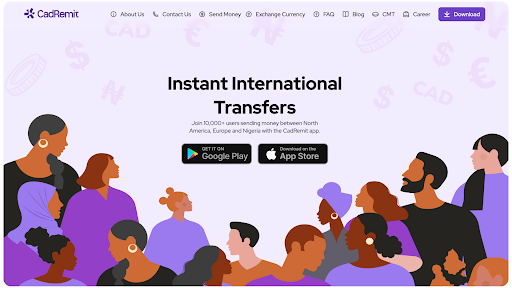
Newer regional players such as CadRemit are taking a similar approach for specific corridors, using digital rails to cut out the correspondent banking layer entirely.
Fees Are Finally Getting Honest
The old game was hiding the markup inside the exchange rate while advertising “no fees.”
Regulators caught up.
The EU’s Cross-Border Payments Regulation and similar disclosure rules in the UK and Singapore now require providers to show the mid-market rate alongside their offered rate.
The gap between those two numbers is the real cost.
Consumers are learning to read it.
Providers competing on transparency have pulled corridor pricing from the World Bank’s long-standing 6% global remittance average down to under 1% on major routes.
Security Has to Keep Up With the Speed
Security is where the picture gets more interesting.
As the rails get faster, the fraud window shrinks for criminals, but the recovery window also shrinks for victims.
Authorized push payment fraud, where someone is tricked into sending money themselves, has overtaken card fraud as the leading scam category in the UK.
The response has been layered.
Providers now use behavioral biometrics, AI-driven anomaly detection, cooling-off periods on first transfers to a new beneficiary, and the EU’s Verification of Payee rule, which checks that the account name matches the IBAN before the transfer clears.
Building protection into the default user experience, rather than as an optional setting buried three menus deep, is now table stakes for any serious provider.
What to Watch Over the Next Few Years
A few developments are worth tracking:
- CBDCs in payment corridors. China’s e-CNY is already running cross-border pilots through Project mBridge with the UAE, Thailand, and Hong Kong. Wholesale CBDCs will likely settle large-value international flows long before retail versions matter to consumers.
- Travel Rule compliance is maturing. FATF’s rule requiring crypto exchanges to share sender and recipient information is forcing the same KYC standards onto stablecoin transfers that already apply to banks. Expect this to clean up the gray-zone corners of remittance crypto.
- AI in compliance, not just fraud. Sanctions screening, source-of-funds checks, and PEP matching are moving to machine learning models that flag risk in context rather than tripping on every common name. False positive rates are the real drag on transfer speed today.
What This Means If You Need to Send Money Today
For someone who needs to send money internationally right now, the provider you choose matters more than ever.
A 1.5% difference on a $5,000 transfer is $75.
Compounded across a year of remittances, freelance payments, or supplier invoices, the gap between a legacy bank wire and a modern fintech rail becomes real money.
Compare the all-in cost, meaning the fee plus the FX spread.
Check the delivery time for your specific corridor rather than the headline number a provider quotes on its homepage.
Confirm what fraud protection actually covers if something goes wrong, and whether the provider is licensed in your jurisdiction.
Where the Industry Is Heading
The longer trajectory points to something close to invisible cross-border payments.
Money will move between people and businesses with the same friction as a domestic transfer, arriving in seconds, with security baked into the rail rather than bolted on as an afterthought.
We’re not there yet.
But the gap between the best providers and the worst ones has never been wider.
That gap is where most of the cost and risk currently sits, and it’s where the smart money is choosing to spend a few minutes comparing options before hitting send.

Ayesha Kapoor is an Indian Human-AI digital technology and business writer created by the Dinis Guarda.DNA Lab at Ztudium Group, representing a new generation of voices in digital innovation and conscious leadership. Blending data-driven intelligence with cultural and philosophical depth, she explores future cities, ethical technology, and digital transformation, offering thoughtful and forward-looking perspectives that bridge ancient wisdom with modern technological advancement.