Spring changes the way a pool behaves. After a quiet winter or a slower swimming season, the weather warms up, gardens wake up, trees start dropping pollen, insects return, and wind or rain can carry organic debris straight into the water.
That means spring pool care is not just about removing a few leaves. It is about handling several problems at once.
Leaves may float on the surface in the morning and sink by evening. Pollen can create a yellow film that makes the pool look cloudy or dull. Bugs collect around the waterline, lights, and edges. Grass clippings, flower petals, seeds, and small twigs can also land in the pool after mowing, gardening, or a windy afternoon.
For homeowners, this creates a seasonal maintenance load. The pool may need attention before it is even being used every day. For a business or technology-minded audience, it also shows why outdoor automation is becoming more relevant. People are not only looking for cleaner pools; they are looking for ways to reduce repetitive work when seasonal debris keeps returning.
Spring pool care works best when debris is handled early, while it is still floating.
Pollen Is Small, but It Can Change the Whole Pool
Why Pollen Makes Water Look Cloudy or Yellow
Pollen can be frustrating because it does not behave like ordinary dirt. It is light, fine, and often arrives in large amounts. During spring, trees, flowers, grass, and nearby plants can release enough pollen to cover the water surface again and again.
At first, pollen may look like a yellow powder floating on the pool. It may gather near the edge, in corners, or around the skimmer. In some cases, it can make the water look cloudy or slightly yellow, which can be confusing for homeowners. Some people may mistake pollen for mustard algae, sand, or general dirt.
The difference is that pollen often appears suddenly during certain weather conditions. A pool may look clear in the morning, then have a fine yellow film by late afternoon. Pools near gardens, trees, lawns, or open fields are especially likely to see this problem.
Because pollen is so fine, it can also move through the water more easily than larger debris. Skimming helps, but filtration and water testing still matter.
How Pollen Can Affect Filters and Water Chemistry
Pollen does not only affect how the pool looks. It can also increase the work done by the filter and sanitizer.
When pollen builds up, filters may need more frequent cleaning. Skimmer baskets and pump baskets may collect a mix of pollen, leaves, insects, and other organic debris. If the pool is already dealing with low chlorine, poor circulation, or warm weather, the extra organic load can make water clarity harder to manage.
This is why pollen season should not be handled by appearance alone. If the water looks dull, test pH, chlorine, and alkalinity. If the filter pressure changes or the return flow weakens, check the filter and baskets. If pollen is heavy, clarifiers or enzymes may help in some cases, but they should be used according to product directions.
Spring maintenance is easier when pollen is treated as both a surface problem and a water-quality pressure point.
Leaves and Bugs Create Problems Before They Sink
Leaves and bugs look simple to remove, but timing matters. While they are floating, they are easy to skim. Once they sink, they become a floor-cleaning problem.
A few leaves may not seem serious, but leaves break down over time. They can stain surfaces, add organic material to the water, clog baskets, and create more work for the filter. Bugs can collect near lights, shaded edges, plants, and still water areas. After rain or wind, the amount can increase quickly.
Spring is especially difficult because debris does not arrive once and stop. New leaves, pollen, flowers, seeds, insects, and grass clippings may enter the pool every day.
This is where early cleaning matters most. A net, built-in skimmer, surface skimmer, or automatic tool can remove debris before it sinks. If not, the homeowner may need to vacuum the floor, clean the filter more often, and deal with cloudy water later.
Why Spring Pool Care Needs Faster Surface Cleaning
Spring debris is not a one-time mess. It is a steady stream.
Manual skimming is useful, but it depends on someone being there at the right time. Built-in skimmers also help, but they rely on water flow, wind direction, and where the debris drifts. If the wind pushes pollen and leaves away from the skimmer opening, debris may sit on the surface longer than expected.
That is why faster surface cleaning is important in spring. The goal is not only to make the pool look better. The goal is to stop floating debris from becoming a bigger maintenance problem.
A pool may look fine before work, then have a yellow pollen film or a layer of insects by late afternoon. Waiting until the weekend can mean more vacuuming, more basket cleaning, and more water testing. Handling the surface earlier keeps the whole maintenance routine easier.
For homeowners comparing a cordless automatic vacuum, it is worth thinking carefully about where the mess begins. Spring debris often starts on the surface before it ever reaches the floor. That means a floor-focused cleaner and a surface skimmer solve different problems, and spring often makes surface cleaning the more urgent first step.
What Smart Pool Technology Adds to Seasonal Maintenance
Smart outdoor maintenance is becoming part of the larger home automation trend. People already use smart lights, robot vacuums, app-connected garden tools, and automated home systems. Pool care is moving in the same direction because the work is repetitive and seasonal conditions can change quickly.
In spring, smart pool technology is useful because debris keeps arriving throughout the day. A sensor-based or app-connected device can reduce the need for constant manual checks. Solar charging can make surface cleaning more convenient outdoors. Larger debris baskets can help when leaves, flowers, insects, and pollen are a daily issue.
Still, smart technology should be understood clearly. It does not replace water chemistry. It does not remove the need to check filters. It does not mean brushing and vacuuming disappear. Its value is in reducing repeated manual work and catching debris earlier.
For a homeowner already using smart home systems, spring pool care is a natural next step. The pool is another part of the home where automation can reduce small, repeated tasks.
A Practical Example for Spring Surface Debris
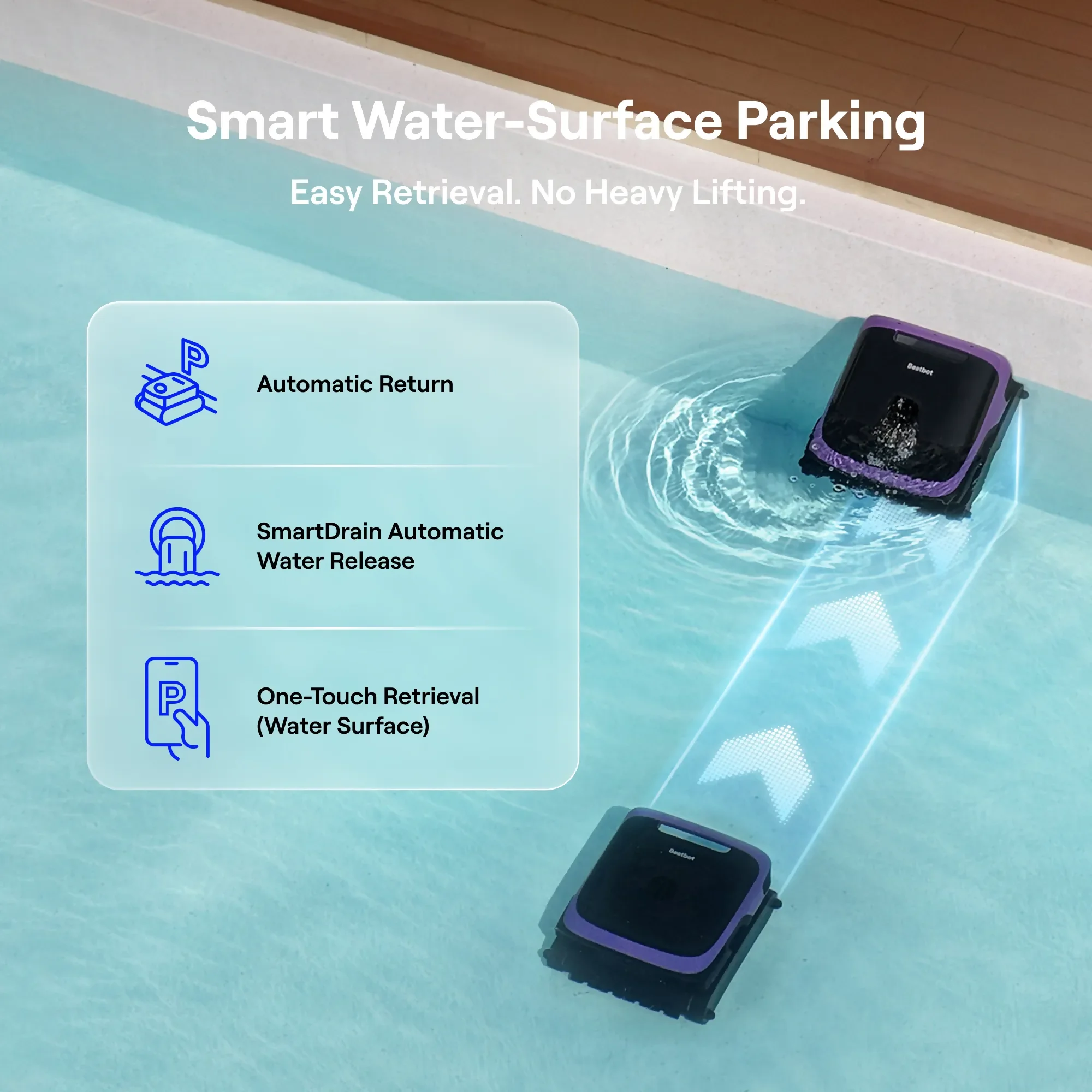
For pools that collect leaves, pollen, insects, flowers, seeds, and grass clippings throughout spring, Beatbot iSkim Ultra can help handle the surface stage of cleaning before debris sinks. It is a robotic pool skimmer, so its role is different from a floor vacuum or wall-cleaning robot. It works on the water surface, collecting floating material earlier in the maintenance process. That makes it especially useful for outdoor pools near trees, lawns, gardens, or open patios where new debris can land throughout the day.
This is different from a cordless robotic pool cleaner built mainly for floor, wall, or waterline cleaning.Beatbot Robotic Pool Cleaner iSkim Ultra focuses on the surface stage of maintenance, where spring debris is easiest to remove. It can be described as part of a smarter seasonal routine because it helps keep the pool surface cleaner between manual checkups. Its solar panel supports convenient charging, while magnetic wireless charging gives homeowners another charging option when sunlight is not enough.
In a real home setting, this can reduce the chance that pollen, leaves, and insects sink to the floor or overload baskets after windy weather. The recommendation should stay realistic: iSkim Ultra is a surface skimmer, not a floor, wall, or waterline cleaning robot. Homeowners still need water testing, filter care, brushing, and occasional vacuuming.
Spring Pool Debris and the Best First Response
Spring debris should not all be treated the same way. Pollen, leaves, bugs, cloudy water, and dirty waterlines each need a slightly different response. A simple comparison can help homeowners act faster.
| Spring Pool Problem | Why It Gets Worse in Spring | Best First Response | What Else to Check |
| Pollen film | Trees, flowers, and grass release heavy pollen | Skim and filter early | Filter pressure, chlorine level, clarifier if needed |
| Floating leaves | Wind and spring growth increase debris | Remove before sinking | Skimmer basket and pump basket |
| Bugs on the surface | Warmer weather brings insects near water | Skim or use a surface skimmer | Pool lights and nearby plants |
| Cloudy water | Organic debris and pollen build up | Test water and improve filtration | pH, chlorine, alkalinity |
| Dirty waterline | Oils, pollen, and dust collect at the edge | Brush waterline weekly | Sunscreen residue and circulation |
This table shows why spring pool care should start with diagnosis. Pollen is not the same as algae. Leaves are not the same as cloudy water. Bugs on the surface are not the same as settled dirt on the floor.
The faster the right response happens, the easier the pool is to maintain.
How to Build a Spring Pool Routine That Stays Ahead of Debris
Spring maintenance does not need to be complicated, but it should be more responsive than a basic summer routine.
Check the surface daily or every other day during heavy pollen, windy weather, or after rain. Empty skimmer baskets and pump baskets before they become packed with leaves and insects. Clean or rinse filters when pressure or flow changes. Test pH, chlorine, and alkalinity more often if the water turns cloudy or the pool has been exposed to a lot of organic debris.
Brush the waterline weekly, especially during pollen season or after frequent swimming. Sunscreen, oils, dust, and pollen can collect at the edge and become harder to remove if ignored. Run a floor cleaner or vacuum regularly to handle debris that has already sunk.
For pools surrounded by trees, flowers, lawns, or open patios, a robotic skimmer can reduce repeated manual work. It catches debris while it is still floating, which is when it is easiest to remove.
Spring Pool Care Works Best When Debris Is Handled Early
Spring makes pool maintenance harder because the pool is exposed to a constant stream of organic debris. Leaves, pollen, bugs, flowers, seeds, and grass clippings can enter the water every day. If they are ignored, they sink, clog baskets, strain filters, affect water clarity, and add more work later.
The smartest spring routine is built around early action. Remove debris while it is still floating. Keep circulation steady. Check filters and baskets. Test water before cloudiness becomes a bigger issue. Brush the waterline before residue hardens.
Automation can help, especially when surface debris keeps returning throughout the day. But the best results still come from combining smart tools with water testing, filtration, brushing, and regular checks.
Spring pool care is not about doing more for the sake of it. It is about handling the problem at the easiest stage, before floating debris becomes a full pool maintenance issue.

Ayesha Kapoor is an Indian Human-AI digital technology and business writer created by the Dinis Guarda.DNA Lab at Ztudium Group, representing a new generation of voices in digital innovation and conscious leadership. Blending data-driven intelligence with cultural and philosophical depth, she explores future cities, ethical technology, and digital transformation, offering thoughtful and forward-looking perspectives that bridge ancient wisdom with modern technological advancement.