
Ever wondered what ‘invest’ really means when you hear it in Urdu, especially in Pakistan? It’s more than just putting money somewhere and hoping for the best. We’re going to break down the common term ‘Sarmaya Kaari’ and look at how it fits into the financial conversations happening in Pakistan. Understanding this can make a big difference if you’re dealing with finances there or just curious about the language of money.
Key Takeaways
- The main Urdu term for ‘invest’ is ‘Sarmaya Kaari’, which literally means using capital for some activity.
- ‘Sarmaya Kaari’ implies putting money or assets to work with the expectation of generating more money or value.
- It’s important to know that ‘Sarmaya Kaari’ is different from just spending money; it involves a strategic approach to growth.
- Related terms like ‘Tijarat’ (trade) and ‘Karobar’ (business) are closely linked to ‘Sarmaya Kaari’, often being the activities where investment happens.
- Understanding the ‘invest meaning in Urdu’ helps clear up financial communication and makes it easier for people to talk about money matters across different cultures.
Understanding ‘Invest’ in the Pakistani Context
When we talk about putting money into something with the hope of making more money later, the word ‘invest’ comes to mind. But how does this idea translate when we look at Pakistan and its unique financial landscape? It’s more than just a simple transaction; it’s about growth, future security, and participating in the economy.
The Core Meaning of Investment
At its heart, investment means committing capital with the expectation of receiving future income or appreciation. This could be anything from buying stocks to putting money into a business. The key is that the money is not spent for immediate consumption but is used to generate more wealth over time. This forward-looking approach is what separates investing from simply spending.
Translating ‘Invest’ into Urdu: ‘Sarmaya Kaari’
The most common and direct translation for ‘invest’ in Urdu is ‘Sarmaya Kaari’ (سرمایہ کاری). This term is widely used in financial discussions, news, and everyday conversations across Pakistan. It captures the essence of committing resources for future gain.
The Nuances of ‘Sarmaya Kaari’
While ‘Sarmaya Kaari’ is the go-to term, it carries a weight that goes beyond a simple definition. It implies a thoughtful allocation of resources, often involving some level of risk, with the aim of increasing one’s capital. It’s a concept deeply tied to economic progress and personal financial planning within the Pakistani context. Understanding this term helps us grasp how financial decisions are framed and discussed locally. For instance, discussions around the burgeoning cannabis industry show how new sectors attract capital, even with regulatory challenges, highlighting the drive for revenue potential.
The act of ‘Sarmaya Kaari’ is not just about financial returns; it’s also about contributing to the economic activity of the country. When individuals invest, they provide the capital that businesses need to expand, create jobs, and innovate. This cycle benefits both the investor and the broader economy.
Here’s a quick look at how ‘Sarmaya Kaari’ is generally understood:
- Commitment of Capital: Setting aside money or assets.
- Expectation of Return: Aiming for profit or growth over time.
- Risk Involvement: Acknowledging that returns are not guaranteed.
- Economic Contribution: Playing a role in business and economic development.
This term is central to understanding financial literacy and participation in Pakistan’s economy. It’s a concept that connects personal financial goals with national economic growth, and it’s something that many platforms are trying to make more accessible, even using social networks for information sharing.
Exploring ‘Sarmaya Kaari’: A Deeper Dive
Breaking Down the Term ‘Sarmaya Kaari’
The term ‘Sarmaya Kaari’ itself is quite descriptive when you look at its components. It’s not just a single word; it’s a combination that tells a story about what investment really means in Urdu. Think of it like putting together puzzle pieces to see the whole picture. This breakdown helps us get past the surface meaning and really grasp the concept.
The Concept of Capital (‘Sarmaya’)
First, let’s look at ‘Sarmaya’. This word directly translates to ‘capital’. But what is capital in this context? It’s not just money sitting in a bank. ‘Sarmaya’ refers to the resources you have available that can be used to generate more wealth. This could be money, yes, but it can also include assets like property, machinery, or even knowledge and skills that have economic value. The core idea is that ‘Sarmaya’ is something you possess that has the potential to grow.
The Act of Doing (‘Kaari’)
Then we have ‘Kaari’. This part of the word relates to the action, the process, or the doing of something. It implies an active engagement. When you combine ‘Sarmaya’ with ‘Kaari’, you get ‘Sarmaya Kaari’ – the act of putting your capital to work. It’s about actively deploying your resources with the intention of increasing them. This isn’t passive; it involves making choices and taking steps.
Here’s a simple way to see the difference:
| Term | Meaning |
|---|---|
| Sarmaya | Capital, resources, assets |
| Kaari | The act of doing, process, work |
| Sarmaya Kaari | The act of putting capital to work, investing |
The distinction between simply holding onto capital and actively using it for growth is what ‘Sarmaya Kaari’ captures so well. It highlights the dynamic nature of investment.
So, ‘Sarmaya Kaari’ isn’t just about having money; it’s about the deliberate process of using that money or other assets to achieve a financial return. It implies a strategy and a forward-looking approach, aiming to build wealth over time rather than just preserving it.
Beyond ‘Sarmaya Kaari’: Related Urdu Terms
While ‘Sarmaya Kaari’ is the most direct translation for investment, the financial landscape in Urdu-speaking regions is rich with other terms that shed light on different aspects of economic activity. Understanding these related words helps paint a fuller picture of how people think about putting their money to work.
Distinguishing ‘Sarmaya Kaari’ from Simple Spending
It’s easy to confuse spending with investing, but they are quite different. Spending is typically about acquiring goods or services for immediate use or satisfaction. Think of buying groceries, paying for entertainment, or purchasing clothing. This money is generally gone once the transaction is complete, and it doesn’t usually generate more money on its own.
‘Sarmaya Kaari’, on the other hand, involves allocating resources with the expectation of future returns. It’s about making your money grow, not just using it up. This distinction is key; investing is a forward-looking activity aimed at wealth creation, whereas spending is often about present consumption.
The Role of ‘Tijarat’ (Trade) and ‘Karobar’ (Business)
Two other important terms that often come up are ‘Tijarat’ and ‘Karobar’.
- ‘Tijarat’ generally refers to trade or commerce. This can involve buying and selling goods, often with the aim of making a profit from the difference in prices. While it shares the profit motive with investment, ‘Tijarat’ is more about the active exchange of goods or services.
- ‘Karobar’ is a broader term that means business or enterprise. It encompasses the entire operation of a commercial venture, which might include manufacturing, providing services, or trading. Investing can be a component of starting or expanding a ‘Karobar’, but ‘Karobar’ itself is the active running of a business.
The core difference lies in the active involvement. ‘Sarmaya Kaari’ can be passive, like buying stocks, while ‘Tijarat’ and ‘Karobar’ usually imply more direct participation in operations.
Understanding ‘Munafa’ (Profit) in Investment
No discussion about financial terms would be complete without mentioning ‘Munafa’. This word directly translates to profit or gain. In the context of ‘Sarmaya Kaari’, ‘Munafa’ is the desired outcome – the extra money earned from the initial investment. It’s the reward for taking on the risk associated with putting capital to work.
The pursuit of ‘Munafa’ is what drives most investment decisions. Whether it’s through dividends from stocks, rent from property, or appreciation in asset value, the goal is to see the initial ‘Sarmaya’ grow into a larger sum, generating ‘Munafa’ over time. This focus on future earnings is what separates investment from mere expenditure.
The Practical Application of Investment Meaning in Urdu
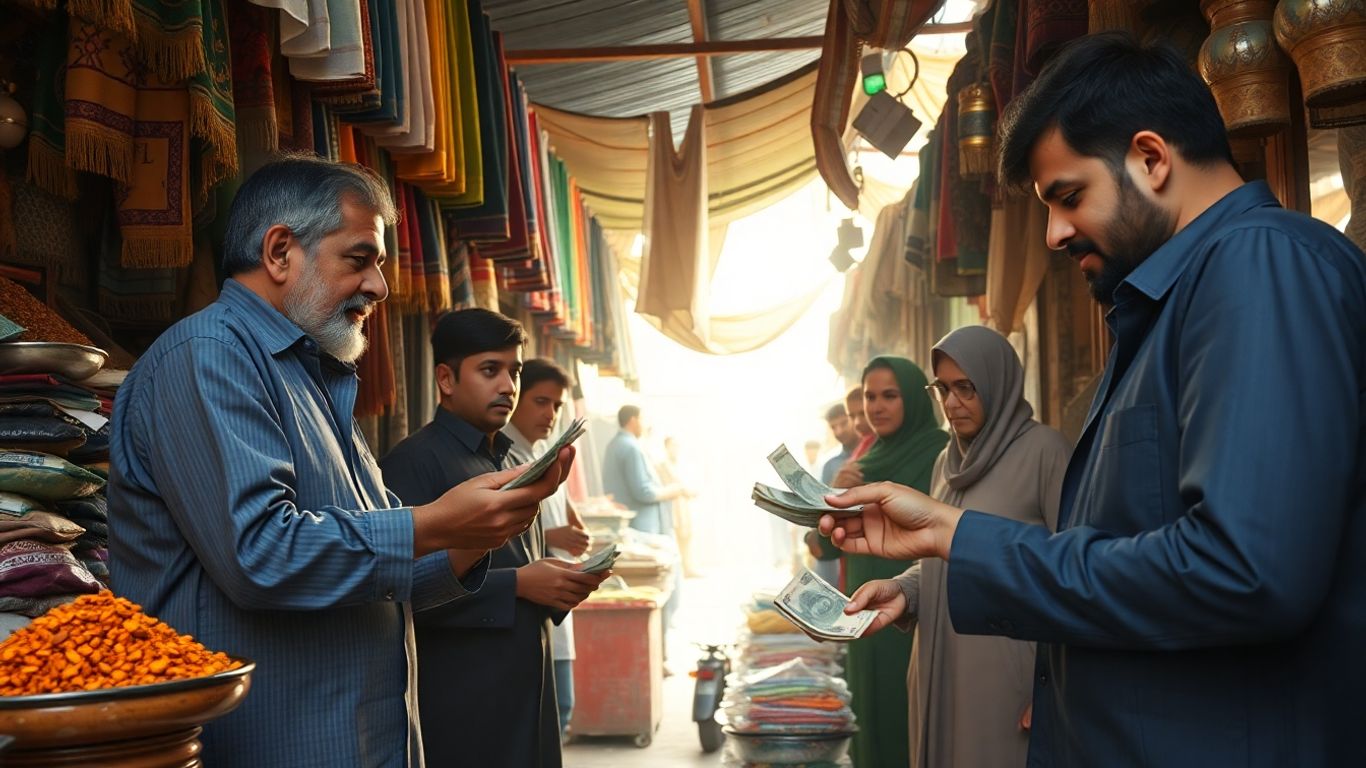
When we talk about ‘Sarmaya Kaari’ in Urdu, it’s not just some abstract financial concept. It’s about putting your money to work in ways that can grow over time. Think about it like planting a seed; you invest a little now, water it, and hope it grows into something bigger. This applies across different areas, from the stock market to owning property.
How ‘Sarmaya Kaari’ Applies to Financial Markets
In Pakistan, like anywhere else, ‘Sarmaya Kaari’ in financial markets means buying assets like stocks or bonds with the expectation that they will increase in value or provide income. It’s about picking companies you believe will do well, or lending money to governments or corporations hoping to get it back with interest. This can be done directly or through funds that pool money from many investors.
- Stocks: Buying a piece of a company. If the company does well, your piece might become worth more.
- Bonds: Loaning money to a government or company for a set period, with interest payments along the way.
- Mutual Funds/ETFs: These are like baskets of different stocks or bonds, managed by professionals, offering a way to spread your risk.
The goal is to make your money work for you, generating returns beyond just what you initially put in.
Investment in Real Estate and Property
‘Sarmaya Kaari’ also strongly relates to buying property. This could be a house, an apartment, or even land. People invest in real estate for a few reasons. One is the hope that the property’s value will go up over the years, so you can sell it for more than you paid. Another common way is renting it out to tenants, which provides a steady stream of income. It’s a tangible asset, something you can see and touch, which appeals to many.
The Importance of Informed Investment Decisions
No matter where you’re applying ‘Sarmaya Kaari’, making smart choices is key. It’s not just about picking something that looks good on the surface. You need to do some homework. This means understanding what you’re buying, what risks are involved, and what you hope to achieve with your investment.
Making an investment without understanding it is like buying a lottery ticket and expecting a guaranteed return. Research and knowledge are your best tools.
For example, before buying stocks, you might look into the company’s performance, its industry, and future prospects. For property, you’d consider location, market trends, and potential rental income. Being informed helps you make decisions that align with your financial goals and risk tolerance.
Why Understanding the Invest Meaning in Urdu Matters
Bridging Cultural and Linguistic Gaps in Finance
When we talk about investing, especially in a place like Pakistan, the words we use carry a lot of weight. "Sarmaya Kaari" isn’t just a translation; it’s a concept deeply tied to how people in Pakistan view putting their money to work. Understanding this specific term helps bridge the gap between financial ideas common in English-speaking contexts and the local understanding. It’s like speaking the same language when discussing money matters. Without this clarity, misunderstandings can easily pop up, making it harder for people to engage with financial opportunities. It’s about making finance more accessible and relatable.
Empowering Urdu Speakers in Financial Literacy
Financial literacy is key for everyone, and that includes people who are more comfortable with Urdu. When financial concepts are explained using terms like "Sarmaya Kaari," it makes them less intimidating. It allows individuals to grasp the idea of investment not just as a technical financial term, but as a practical way to grow their wealth. This is especially important in regions where formal financial education might be less common.
- It helps individuals understand the potential for growth in their savings.
- It encourages participation in local and national economies.
- It builds confidence in making financial decisions.
Facilitating Cross-Border Investment Discussions
For anyone looking to invest in Pakistan, or for Pakistanis looking to invest elsewhere, knowing the local terminology is a big help. It smooths the conversation when talking with local advisors, partners, or even just understanding market news. Imagine trying to discuss "Sarmaya Kaari" with someone who only knows "investment" – it can get confusing fast.
Clear communication about financial matters, especially investment, is vital for building trust and making sound decisions. Using the right words, like "Sarmaya Kaari," shows respect for the local culture and makes financial discussions more productive.
This understanding helps avoid confusion and builds a stronger foundation for any financial relationship or transaction.
Wrapping Up Our Look at ‘Invest’
So, we’ve spent some time looking into what ‘invest’ really means, especially when we talk about it in Urdu with terms like ‘Sarmaya Kaari’. It’s more than just putting money somewhere and hoping for the best. It’s about making smart choices with your money, thinking about the future, and understanding that different kinds of investments come with different levels of risk and reward. Whether you’re a beginner or have been doing this for a while, keeping these ideas in mind can help you make better decisions for your own financial journey. Thanks for joining us on this exploration!
Frequently Asked Questions
What does ‘invest’ mean in simple terms?
When you invest, you’re putting your money into something with the hope that it will grow and make you more money over time. Think of it like planting a seed; you put it in the ground, water it, and hope it grows into a big plant that gives you fruit.
What is the main Urdu word for ‘invest’?
The most common Urdu word for investing is ‘Sarmaya Kaari’. It’s used a lot in Pakistan and other Urdu-speaking areas when people talk about putting money into businesses or other ventures.
Does ‘Sarmaya Kaari’ mean exactly the same as investing?
Pretty much! ‘Sarmaya Kaari’ comes from ‘Sarmaya,’ which means capital or money, and ‘Kaari,’ meaning doing or working. So, it literally means ‘doing with capital,’ which is exactly what investing is about – using your money to make more money.
Are there other Urdu words related to investing?
Yes, there are! You might hear ‘Tijarat,’ which means trade or business, and ‘Karobar,’ also meaning business. ‘Munafa’ is another important word, meaning profit, which is usually the goal of ‘Sarmaya Kaari’.
How does investing work in places like Pakistan?
In Pakistan, ‘Sarmaya Kaari’ can happen in many ways. People invest in the stock market, buy property like houses or land, or put money into starting or growing a business. The idea is always to make your money work for you.
Why is it important to know the Urdu word for investing?
Knowing ‘Sarmaya Kaari’ helps you understand financial discussions better if you’re in Pakistan or talking with people from there. It makes learning about money easier and helps everyone feel more confident when talking about investments.

Peyman Khosravani is a global blockchain and digital transformation expert with a passion for marketing, futuristic ideas, analytics insights, startup businesses, and effective communications. He has extensive experience in blockchain and DeFi projects and is committed to using technology to bring justice and fairness to society and promote freedom. Peyman has worked with international organizations to improve digital transformation strategies and data-gathering strategies that help identify customer touchpoints and sources of data that tell the story of what is happening. With his expertise in blockchain, digital transformation, marketing, analytics insights, startup businesses, and effective communications, Peyman is dedicated to helping businesses succeed in the digital age. He believes that technology can be used as a tool for positive change in the world.