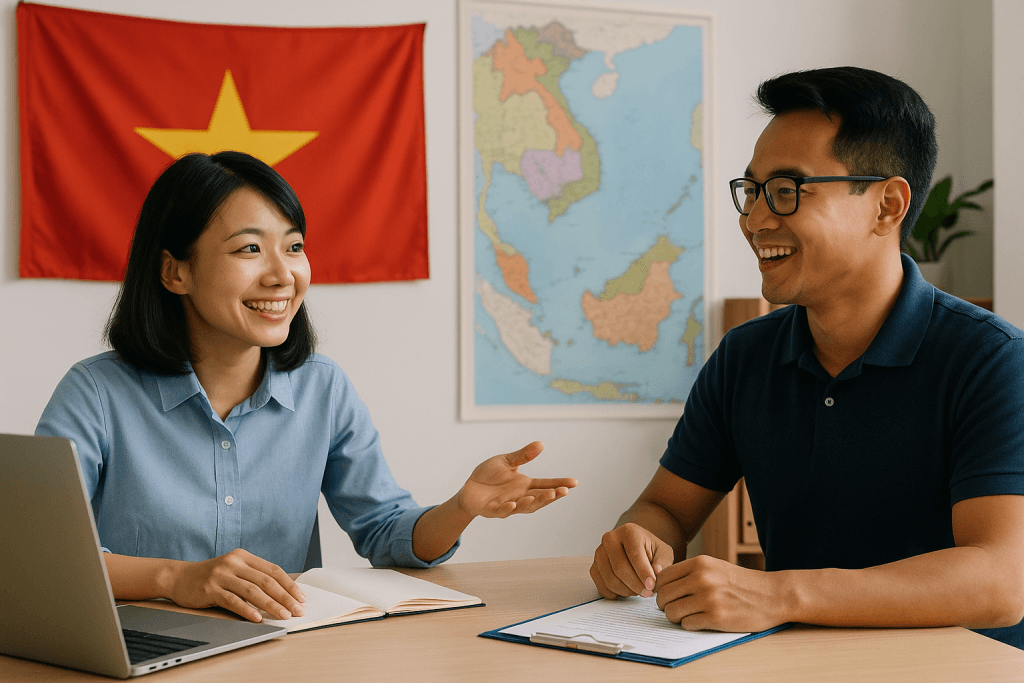
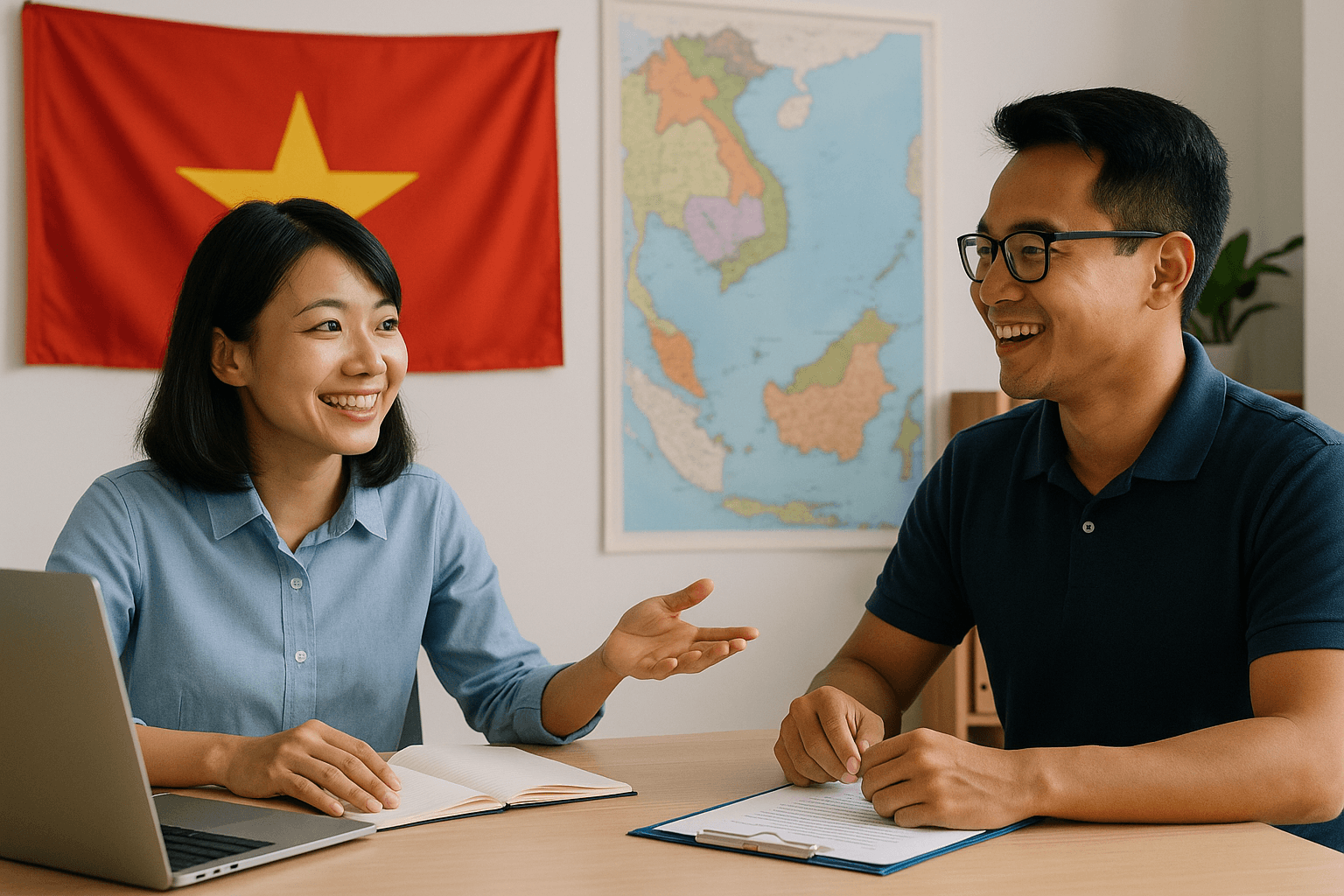
In multicultural Singapore, we’re used to navigating different cultures but knowing English alone is not enough in Southeast Asia. Vietnamese offers a way to connect on a deeper level. This connection is founded on shared values, history, and trust. Whether you are growing your business, collaborating with regional teams, or simply interested in your neighbors, learning Vietnamese allows you to move beyond basic interactions. It helps you have more meaningful conversations across borders.
Why Cross-Cultural Skills Matter in Southeast Asia
Southeast Asia is more than a region. It is a mosaic of cultures, religions, histories, and languages. In Singapore, where multiculturalism is part of daily life, it is easy to assume we already understand our neighbours. But shared geography does not always mean shared mindset.
When working across ASEAN, assumptions can easily lead to miscommunication. That is why cross-cultural communication is no longer just a soft skill. It is a strategic asset.
Whether you are:
- Closing a business deal in Hanoi
- Collaborating on a regional sustainability project
- Launching a product across ASEAN markets
Understanding local customs, values, and communication styles can make or break trust. And trust is everything in this region.
Quick Comparison: Context Levels in Communication
| Country | Communication Style | What It Looks Like in Practice |
| Vietnam | High-context | Meaning is implied; relationships come first |
| Singapore | Mid to low-context | Direct communication, especially in business |
| Thailand | High-context | Harmony is prioritised over blunt honesty |
| Indonesia | High-context | Hierarchy shapes discussions |
| Philippines | Mixed | Informal settings are high-context; formal ones less so |
In high-context cultures like Vietnam, tone, status, and silence often carry more meaning than the actual words. Cultural awareness is important as your message might be misunderstood or simply ignored without it.
In a region where deals are done over trust and relationships, cross-cultural skills are not optional. It is what sets effective communicators apart.
How Vietnamese Builds Cultural Understanding and Sensitivity
Learning Vietnamese reshapes the way you view relationships, hierarchy, and even silence. Through its structure and daily use, the language reveals how culture is deeply woven into communication. At the same time, the process of learning Vietnamese helps individuals grow more empathetic, observant, and socially aware.
What the Language Reveals About Vietnamese Culture
- Relational Pronouns Reflect Social Awareness
Vietnamese speakers choose pronouns based on age, gender, and social relationship. Whether someone is an “anh” (older brother), “chị” (older sister), or “em” (younger person) must be assessed early in conversation to create a habit of recognising social context before speaking. - Politeness Often Replaces Directness
Instead of directly saying “no,” people use phrases like “để xem đã,” which means “let me think about it.” This is a polite way to keep the peace and avoid offending or embarrassing anyone. - Meaning Is Often Implied, Not Stated
In high-context cultures like Vietnam, a clear “yes” or “no” is not always expected. Much is communicated through tone, pause, and implication. Understanding this helps learners listen more attentively and respond more appropriately.
- Social Rituals Reinforce Respect
Offering items with both hands or greeting elders properly are not optional extras—they are central to how relationships are maintained. These rituals are reinforced through language and everyday behaviour. - Learning Through Correction and Curiosity
Mistakes in tone or form are common, but they often lead to positive cultural exchanges as locals are usually eager to help.
- Immersion in Everyday Culture
Engaging helps learners pick up humour, values, and rhythms that formal lessons can’t teach. This adds depth to their communication skills.
Language learning works best when culture is front and centre. Vietnamese teaches you to observe, adjust, and respond with care. Over time, learners find themselves becoming not just more fluent, but also more culturally fluent.
The Role of Vietnamese in Regional Integration
As ASEAN continues to deepen its economic and political ties, language plays a quiet but powerful role in building bridges. English may be the region’s working language, but local languages like Vietnamese are critical for forging deeper trust and cooperation at the ground level.
Vietnam is one of the fastest-growing economies in Southeast Asia, with rising influence in manufacturing, technology, and education. As regional businesses expand operations into Vietnam, the ability to communicate in Vietnamese is becoming a practical asset. It signals commitment, cultural respect, and a willingness to adapt.
For Singaporeans, this matters more than ever. As one of Vietnam’s top foreign investors and trading partners, Singapore-based professionals, entrepreneurs, and educators are increasingly engaging with Vietnamese counterparts. Whether in logistics, fintech, tourism, or education, clear communication enhances collaboration, avoids cultural missteps, and unlocks long-term opportunities.
Why Vietnamese Matters in ASEAN Collaboration:
| Sector | Vietnam’s Role | Why Language Matters |
| Manufacturing | Key hub in global supply chains | Improves local team coordination |
| Tech & Startups | Growing ecosystem with regional ambitions | Eases investor and partner relations |
| Education | International schools and partnerships rising | Supports curriculum and programme design |
| Tourism | Popular destination for intra-ASEAN travellers | Enhances cultural experience and rapport |
Vietnamese also plays a role in cultural diplomacy and people-to-people exchange. Understanding each other’s language promotes empathy, which in turn helps ASEAN nations move toward shared goals like sustainability, innovation, and resilience.
You can strengthen your foundation through a Vietnamese Language Course in Singapore, with structured learning, cultural immersion, and practical speaking practice. This will help you gain the confidence to navigate real-world interactions more effectively. Learning Vietnamese is no longer a niche pursuit. It is a smart, future-focused step for anyone engaging with the region.
Pallavi Singal is the Vice President of Content at ztudium, where she leads innovative content strategies and oversees the development of high-impact editorial initiatives. With a strong background in digital media and a passion for storytelling, Pallavi plays a pivotal role in scaling the content operations for ztudium’s platforms, including Businessabc, Citiesabc, and IntelligentHQ, Wisdomia.ai, MStores, and many others. Her expertise spans content creation, SEO, and digital marketing, driving engagement and growth across multiple channels. Pallavi’s work is characterised by a keen insight into emerging trends in business, technologies like AI, blockchain, metaverse and others, and society, making her a trusted voice in the industry.