

Thinking about putting your money into something a bit steadier than stocks? Bonds might be what you’re looking for. They’re basically a way to lend money to governments or companies, and in return, they pay you back with interest over time. It sounds simple, and for the most part, it is. This guide breaks down what bonds are in finance, why they matter, and how you can start investing in them without getting overwhelmed.
Key Takeaways
- Bonds are essentially loans you give to an issuer, like a government or company, in exchange for regular interest payments and the return of your original money later.
- When you buy a bond, you become a creditor to the issuer, and they promise to pay you back by a certain date, called the maturity date.
- Bonds can help balance out your investment portfolio because their prices don’t always move the same way as stock prices.
- Most bonds offer predictable interest payments, which can be a nice, steady income stream for your investments.
- You can buy bonds directly, through a broker, or even through funds like bond ETFs, which hold a variety of bonds.
Understanding The Fundamental Nature Of Bonds
When you hear the word "bond" in a financial context, think of it as a loan. Essentially, when you purchase a bond, you are lending money to an entity, like a government or a corporation. In return for your loan, the issuer of the bond promises to pay you back the original amount you lent, plus regular interest payments over a set period. It’s a straightforward concept that forms the backbone of a significant part of the financial world.
What Constitutes A Bond?
A bond is a type of debt security. It represents a loan made by an investor (the bondholder) to an issuer (the borrower). The issuer could be a national government, a local municipality, or a private company. The bond agreement specifies the terms of the loan: the amount borrowed (the principal or face value), the interest rate (the coupon rate), and the date when the loan must be repaid in full (the maturity date). This structured agreement makes bonds a predictable investment for many.
The Role Of Bonds In Financial Markets
Bonds play a vital role in the economy. For issuers, they are a primary way to raise capital for various purposes, such as funding public infrastructure projects, expanding businesses, or managing government budgets. For investors, bonds offer a way to earn income, preserve capital, and diversify their investment portfolios. They are often seen as a more stable investment compared to stocks, providing a steady stream of income through interest payments.
Key Participants In The Bond Market
The bond market involves several key players:
- Issuers: These are the entities borrowing money by selling bonds. They can be governments (national, state, or local) or corporations.
- Investors: These are the individuals or institutions lending money by buying bonds. This includes individual investors, pension funds, insurance companies, and mutual funds.
- Underwriters: Often investment banks, they help issuers sell their bonds to investors, especially in the primary market.
- Regulators: Government agencies that oversee the bond market to ensure fairness and transparency.
Bonds are a cornerstone of the fixed-income market, providing a mechanism for entities to secure funding and for investors to generate returns with a degree of predictability. Their structure, involving a principal amount, interest payments, and a maturity date, sets them apart from other investment types.
How Bonds Function As A Lending Instrument
When you buy a bond, you’re really acting as the lender, not the borrower. You give your money to an entity—maybe a government, a large business, or even a city—and they agree to pay you back with interest. There are a few specific mechanics that make bonds work as a way to lend money and get paid back over time.
The Mechanics Of Bond Issuance
Bonds don’t just appear out of thin air. Here’s the step-by-step process for how new bonds come to life:
- Decision to Borrow: The issuer, such as a company or government, decides it needs cash for big projects or general business needs.
- Structure the Terms: They figure out how much they want to borrow, what interest rate to offer, and set a maturity date when they’ll pay it all back.
- Offer to Investors: These bonds are then offered to investors in the primary market. Sometimes, investment banks help with this sale.
Investors who buy the new bonds are essentially lending their money, and in return, they expect regular interest payments and repayment of the original sum once the bond matures.
Understanding Coupon Payments And Maturity Dates
When you hold a bond, you don’t just wait years for your money back—there’s income along the way. Every bond comes with two key details:
- Coupon payments: This is the interest the issuer pays you, usually every six months. Some are paid annually, but twice a year is common.
- Maturity date: The day when the issuer must return your original investment, known as the principal or face value.
Here’s a simple table that lays out these parts:
| Bond Feature | What It Means |
|---|---|
| Coupon Rate | Annual interest rate you earn |
| Payment Dates | When you get your interest (e.g., semiannual) |
| Maturity Date | When you get your principal back |
The amount of the coupon is fixed at the time the bond is issued and remains the same until maturity, which makes future income predictable.
The Bond Lifecycle From Issuance To Redemption
A bond doesn’t last forever—it moves through different stages:
- Issue Date: Bond is created and sold to investors.
- Holding Period: You collect regular coupon payments for as long as you own it.
- Maturity/Redemption: At the end, the issuer pays back your principal and the bond is finished.
- If a bond is ‘callable’, the issuer might pay you back early and retire the bond before the planned maturity date.
- During the holding period, you can also sell the bond to another investor in the secondary market at any time. Its price may go up or down depending on interest rates and how risky people think the issuer is.
Bonds are a straightforward way for regular people to participate in lending, earning a steady paycheck along the way and getting their money back at a set future date.
Exploring The Diverse Landscape Of Bond Types
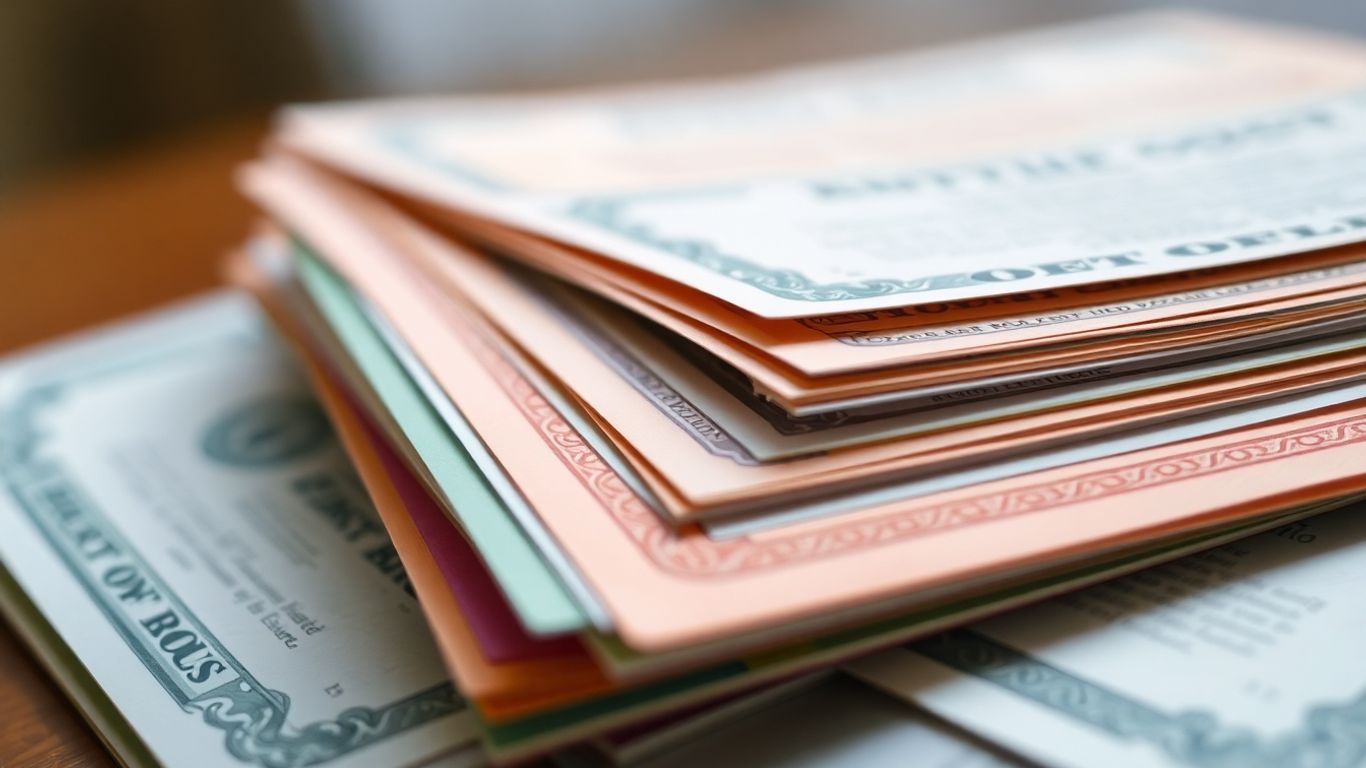
It sometimes feels like there’s a never-ending list of bonds out there. When you start looking into investing, you quickly realize bonds aren’t just a one-size-fits-all deal. Each type serves different needs, funding projects from highways to water systems, helping companies grow, or even powering city upgrades. Here’s how some of the most common bond types break down:
Government Bonds And Their Significance
Government bonds are among the most familiar and widely traded. These are issued by national governments to pay for everything from public works to managing national budgets. There’s a lot of trust in these because the government stands behind them.
- U.S. Treasuries: These are bonds issued by the U.S. government in various forms—T-bills, T-notes, and T-bonds—each with different maturity lengths.
- Inflation-Linked Bonds: Some countries issue bonds that adjust their payments for inflation, like the U.S. Treasury Inflation-Protected Securities (TIPS).
- Savings Bonds: Sold directly to individuals, often with lower denominations and simpler terms.
| Bond Type | Issuer | Typical Risk | Example |
|---|---|---|---|
| Treasury Bonds | Central Government | Low | U.S. T-Bond |
| Inflation-Linked | Central Government | Low | TIPS |
| Savings Bonds | Central Government | Very Low | I Bond |
If steady payments and strong credit backing matter most, government bonds are often considered a go-to option for many cautious investors.
Corporate Bonds: Funding Business Growth
Companies use bonds to finance all sorts of things, from new offices to research and development. These aren’t completely risk-free—companies can face tough times—but they often pay higher interest than government bonds.
- Investment-Grade Bonds: Issued by companies with strong credit ratings. These usually pay less interest than riskier options, but they’re generally safer.
- High-Yield (Junk) Bonds: These come from companies with weaker credit but compensate by offering much higher interest rates.
- Convertible Bonds: Let you swap your bond for shares of company stock if you want equity upside.
Corporate bonds can help round out a portfolio, especially if you want a layer between stable government bonds and riskier stocks. For those looking to avoid excessive trading, Fidelity’s policy on trading frequency is worth understanding before you enter or exit positions.
Municipal Bonds For Public Infrastructure
Municipal bonds, or "munis," are tools for cities, states, and local agencies to tackle community needs. Whether funding schools, building hospitals, or updating water systems, the money raised comes from people who buy these bonds. Interest earned is often tax-exempt at federal (and sometimes state) levels, making them appealing for certain investors.
- General Obligation Bonds: Backed by the issuer’s taxing power.
- Revenue Bonds: Supported by income from a specific project, like a toll road or utility.
- Tax-Exempt Status: Many muni bonds have tax benefits, which can mean bigger real returns if you’re in a higher tax bracket.
| Muni Bond Type | Security Source | Tax Status |
|---|---|---|
| General Obligation | Government taxing authority | Usually tax-free |
| Revenue Bond | Project revenues (e.g., bridge toll) | Often tax-free |
Taxes can eat away at investment returns, so municipal bonds offer a way to keep more of what you earn, especially if you live in areas with higher taxes.
Specialized Bonds For Specific Goals
Some bonds are designed for very particular needs or markets. They often offer unique features, especially for investors with specific risks or return goals.
- Green Bonds: Used only for projects that benefit the environment, like solar farms or pollution control.
- Zero Coupon Bonds: Sold at a deep discount and pay no periodic interest, but you get the full value at maturity.
- Callable Bonds: Can be repaid early by the issuer—which is great for them if rates fall but could leave you looking for new investments at lower yields.
- Floating Rate Bonds: Interest payments change over time, keeping pace with the broader interest rate trends.
Specialized bonds aren’t for everyone, but they can play a role for investors looking for something beyond the basics.
- Some respond to changing economic climates (like floating-rate bonds).
- Others offer a chance to support causes you care about (like green bonds).
- Still others mix features, like convertible bonds with both bond and stock appeal.
Picking the right bond type depends on your own needs—whether that’s dependable income, tax savings, or something with a bigger potential payoff down the road.
Evaluating Bonds: Ratings, Yields, And Risks
Evaluating bonds isn’t just about picking what pays the most. You need to know what you’re actually getting into, from the safety of your investment to what kind of return you might expect. Here, we’ll break down the guts of how credit ratings, yields, and risks fit together, and why each one matters.
Interpreting Bond Credit Ratings
Credit ratings are like a report card for bond issuers. These grades are given out by agencies (think Moody’s, S&P, or Fitch) and basically reflect how likely it is that the issuer will be able to pay back both interest and the principal. A higher credit rating signals a safer bond, but usually with lower returns.
| Rating Category | Typical Grades | Default Risk Level |
|---|---|---|
| Investment Grade | AAA, AA, A, BBB | Low |
| Non-Investment Grade | BB, B | Moderate to High |
| Junk (Speculative) | CCC and below | Very High |
- Investment grade bonds are highly likely to pay on time.
- Junk bonds pay more but you risk losing money if the issuer fails.
- Agency ratings often differ, so compare a few before you decide.
Bonds with lower credit ratings may sound tempting, but the risk of the issuer defaulting can lead to losses that wipe out the higher yields quickly.
The Concept Of Bond Duration And Interest Rate Sensitivity
Bond duration is confusing at first—it’s not just how long till the bond matures. Instead, it’s like a measure of how much a bond’s value will shift if interest rates move.
- Bonds with higher duration react more to interest rate changes.
- A 1% rise in rates can mean a big drop in market value for long-duration bonds.
- Short-term bonds are less sensitive, so their prices change less.
Here’s a straightforward table for how maturity and duration relate to price volatility:
| Bond Maturity | Typical Duration | Price Sensitivity to Rate Change |
|---|---|---|
| 2 years | ~1.9 | Low |
| 10 years | ~8.5 | Medium |
| 30 years | ~20 | High |
When rates rise, long-term bonds lose value faster than short-term ones. This means you might want to mix different durations to manage risk if you think rates will change soon—like the advice found in essential risk considerations.
Understanding Yield And Its Relation To Market Conditions
Yield is your return from the bond, factoring in both the coupon (interest) and the price you paid. It changes all the time, depending on what’s happening in the market.
Some quick points:
- When interest rates go up, new bonds pay better—older bonds look less appealing and their prices drop.
- The yield on a bond you buy today probably won’t match its coupon if you didn’t buy it at face value.
- Inflation cuts into your bond’s real return—fixed payments may not keep up with rising prices.
| Market Factor | Impact On Yield |
|---|---|
| Rising rates | Yield goes up |
| Falling rates | Yield goes down |
| Higher inflation | Yield needs to be higher |
Watching market rates and yield shifts is the main way to track whether your bonds are keeping up or falling behind with changing conditions.
The Advantages Of Incorporating Bonds Into Portfolios

When building an investment plan, many people focus heavily on stocks, but bonds play a really important role too. They’re not just for big institutions; individual investors can find them quite useful. Think of them as a different kind of tool in your financial toolbox.
Bonds As A Source Of Stable Income
One of the main reasons people buy bonds is for the steady income they provide. Most bonds pay out interest at regular intervals, like every six months. This predictable cash flow can be really helpful, especially if you’re retired or just want a reliable stream of money coming in. Unlike stock dividends, which companies can cut or skip, bond interest payments are usually a legal obligation for the issuer. This makes them a dependable source of income.
- Regular Interest Payments: You know when you’ll get paid and how much.
- Predictable Returns: The coupon rate is set, so you can calculate your expected income.
- Flexibility: You can choose to spend the income or reinvest it.
Bonds can offer a consistent income stream that helps manage your cash flow, which is a big deal for many investors.
Diversification Benefits Of Fixed-Income Investments
Putting all your money into one type of investment, like stocks, can be risky. If that one area does poorly, your whole portfolio suffers. Bonds can help spread out your risk. They often don’t move in the same direction as stocks. This means when the stock market is down, your bonds might be doing okay, or even going up. This can help smooth out the ups and downs of your overall investments. It’s a way to make your portfolio more balanced. This strategy is a key part of managing risk in trading, helping to lessen the impact of any single underperforming investment on your total portfolio, leading to a smoother overall performance. You can find a variety of bond options to help with diversification.
Here’s a quick look at how bonds can help:
- Reduced Volatility: Bonds generally experience less price fluctuation than stocks.
- Offsetting Losses: When stocks fall, bonds may hold their value or even increase.
- Broader Market Exposure: Investing in different types of bonds gives you exposure to various sectors of the debt market.
Capital Preservation Through Bond Holdings
Another big plus for bonds is their role in protecting your initial investment. When you buy a bond, you’re essentially lending money, and the issuer promises to pay you back the original amount (the principal) on a specific date, known as the maturity date. If you hold the bond until it matures, and the issuer doesn’t go bankrupt, you’re likely to get your original money back. This makes bonds a good choice for money you might need in the future or for investors who are more cautious about losing their principal. While no investment is completely risk-free, bonds are generally considered safer than stocks when it comes to preserving capital. This is especially true for bonds issued by stable governments or highly-rated corporations.
Navigating The Bond Market As An Investor
So, you’ve learned about what bonds are and how they work. Now, let’s talk about actually getting your hands on them. Investing in bonds doesn’t have to be complicated, and there are a few main ways to go about it, depending on what you’re looking for.
Most people buy individual bonds through a brokerage account. Think of a broker as your go-between for buying and selling investments. You can open an account with a traditional brokerage firm or an online platform. Online brokers often have lower fees and make it pretty easy to see what bonds are available. When you decide to buy, you’ll place an order, and the broker will execute it for you. It’s important to know that not all bonds are easily accessible to individual investors. Some might have very high minimum purchase amounts, or they might be complex international bonds that aren’t readily available on the retail market. This is where understanding the specific bond you’re interested in really matters.
Bonds don’t just disappear after they’re issued. There’s a whole market where investors buy and sell bonds from each other before they mature. This is called the secondary market. If you bought a bond and then interest rates in the economy changed, you might decide to sell your bond. If rates went down, your bond paying a higher fixed rate might be more attractive to someone else, and you could potentially sell it for more than you paid. Conversely, if rates went up, your bond might be worth less. This market is where bond prices fluctuate based on supply, demand, and prevailing interest rates. It’s a dynamic space, and understanding how these factors influence prices is key if you plan to trade bonds rather than just hold them until they mature.
If buying individual bonds feels a bit overwhelming, or if you want instant diversification, bond ETFs are a great option. An ETF is like a basket of many different investments, and a bond ETF holds a collection of various bonds. This means when you buy one share of a bond ETF, you’re essentially investing in dozens or even hundreds of different bonds all at once. This spreads out your risk considerably. Plus, ETFs are traded on stock exchanges just like individual stocks, making them easy to buy and sell throughout the trading day. They offer a way to get exposure to different types of bonds, like government bonds or corporate bonds, without having to pick each one yourself. For many investors, this provides a simpler path to fixed-income investing, similar to how some investors look at staking yields compared to traditional investments like Treasuries.
Here’s a quick look at how you might approach buying bonds:
- Research: Understand the types of bonds available and which might fit your financial goals.
- Choose a Method: Decide if you want to buy individual bonds or go with a bond fund or ETF.
- Open an Account: Set up a brokerage account if you don’t already have one.
- Place Your Order: Work with your broker or use the online platform to buy your chosen bonds or ETF shares.
- Monitor: Keep an eye on your investments, especially if you’re trading bonds or if market conditions change significantly.
Investing in bonds can be a steadying force in a portfolio. While individual bonds offer direct ownership and a clear path to maturity, bond funds and ETFs provide diversification and ease of access. The secondary market allows for flexibility, but it also introduces price volatility. For most investors, starting with bond ETFs or mutual funds is often a practical first step.
Wrapping Up Your Bond Knowledge
So, we’ve gone over what bonds are – basically, you’re lending money to an organization or government, and they promise to pay you back with interest. It’s a way to get steady returns and help fund projects, kind of like a loan with a set schedule. Remember, bonds can be a good way to balance out riskier investments in your portfolio, like stocks. There are different kinds out there, each with its own details, so knowing the basics helps you pick what fits your financial plan. Keep learning, and you’ll be able to make smarter choices about adding bonds to your investments.
Frequently Asked Questions
What exactly is a bond?
Think of a bond as an IOU. When you buy a bond, you’re basically lending money to a government or a company. They promise to pay you back the original amount you lent them on a certain date, and in the meantime, they’ll pay you regular interest, like a small reward for lending them your money.
Who issues bonds and why?
Lots of different groups issue bonds! Governments need money to build roads or schools, companies need it to grow or create new products, and even cities need it for local projects. Bonds are a way for them to borrow money from investors like you to get these things done.
How do I get my money back from a bond?
Every bond has a ‘maturity date.’ This is the day the issuer has to pay you back the full amount you originally lent them (the principal). Until then, you usually receive regular interest payments, often twice a year.
Can I sell my bond before the maturity date?
Yes, you usually can! Bonds can be bought and sold between investors even after they’re first issued. However, the price you get might be different from what you paid, depending on things like interest rates and how the issuer is doing financially.
Are bonds safer than stocks?
Generally, bonds are considered less risky than stocks. This is because bond payments are usually more predictable, and you’re promised your original money back at maturity. Stocks, on the other hand, can go up and down a lot more in value.
What does a bond’s ‘rating’ mean?
A bond rating is like a grade given by experts that tells you how likely it is that the issuer will pay back the money they owe. A higher rating (like AAA) means it’s very safe, while a lower rating means there’s a higher chance they might not be able to pay you back.

Peyman Khosravani is a global blockchain and digital transformation expert with a passion for marketing, futuristic ideas, analytics insights, startup businesses, and effective communications. He has extensive experience in blockchain and DeFi projects and is committed to using technology to bring justice and fairness to society and promote freedom. Peyman has worked with international organizations to improve digital transformation strategies and data-gathering strategies that help identify customer touchpoints and sources of data that tell the story of what is happening. With his expertise in blockchain, digital transformation, marketing, analytics insights, startup businesses, and effective communications, Peyman is dedicated to helping businesses succeed in the digital age. He believes that technology can be used as a tool for positive change in the world.








