If you need clean welds, fast setups, and minimal infrastructure, an air cooled laser welding machine can be a game-changer. Unlike water-cooled units, these systems manage heat using fans, heat sinks, and heat pipes—no external chiller, no plumbing, and far less maintenance. That’s why you’re seeing rising adoption in handheld and compact systems and in facilities where portability matters.
You’re likely weighing three pain points right now:
- Infrastructure hurdles: chillers, water loops, and space constraints.
- Maintenance burden: leak risks, coolant checks, and pump upkeep.
- Cost-to-value clarity: deciding when “good enough cooling” is truly enough for your duty cycle.
This guide helps you decide when air cooling is right, how to spec it correctly, and how to run it reliably day to day.
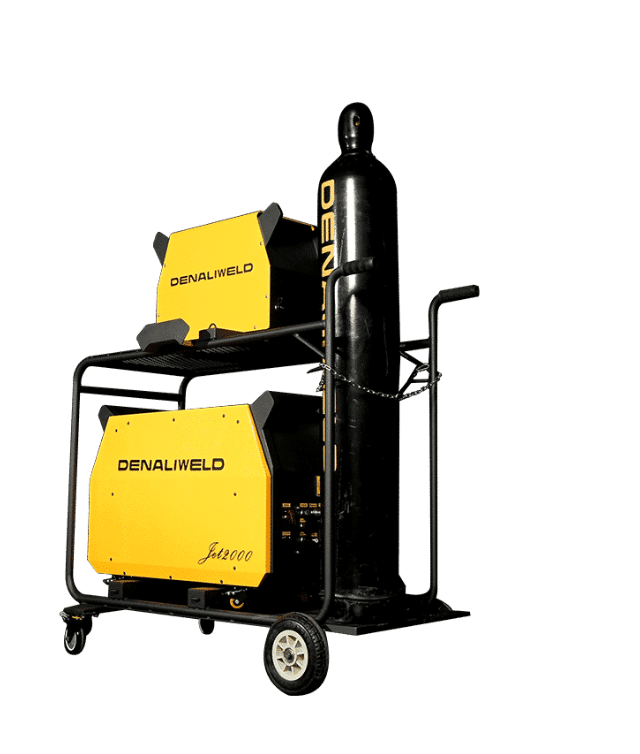
Operating Principle & Cooling Mechanisms
A laser source and its power electronics generate heat during operation. If you don’t move that heat away efficiently, output stability suffers and protective interlocks will trip. An air cooled laser welding machine handles thermal loads using:
- Forced convection (fans): High-flow, directional fans move hot air across fins to accelerate heat transfer.
- Heat sinks & heat pipes: High-surface-area fins plus vapor-chamber or heat-pipe elements spread and conduct heat to cooler zones.
- Air-to-air heat pump (select designs): Transfers heat out of the enclosure without a water loop.
- Thermal path design: Internal ducting and chassis conduction routes heat from diodes, drivers, and optics to sinks efficiently.
- Temperature control & protection: Sensors monitor critical points; firmware ramps power, throttles fans, or shuts down to prevent over-temperature events.
Well-designed airflow paths, sealed electronics zones, and dust filtration are central to keeping performance consistent over time.
Key Features of Air-Cooled Laser Welding Machines
Compactness & Integrated Design
By removing the chiller, pump, reservoir, hoses, and quick-connects, you get a smaller footprint and lower system weight. Many units integrate laser, cooling, and controls in one housing—ideal if floor space is tight or you need a mobile cart.
Portability & Field Usability
Because there’s no external cooling infrastructure, you can roll in, plug in, and weld—perfect for on-site repairs, facility maintenance, and jobs with frequent station changes.
Simplicity & Lower Maintenance
No coolant to replace, no leaks to chase, fewer components to service. Routine care typically involves filter cleaning, fan inspection, and heat-sink dust removal—fast tasks that keep TCO predictable.
Energy Efficiency in the Right Duty Cycle
Eliminating pumps and chillers cuts auxiliary power draw. In moderate-duty applications, the total energy footprint can be lower than water-cooled setups.
Thermal Protection & Stability Features
Expect over-temp interlocks, power ramp-downs, and continuous thermal monitoring. Better designs also manage central wavelength drift as internal temperatures rise, preserving coupling efficiency and weld consistency.
Benefits & Use-Case Strengths
For many shops, air cooling hits the sweet spot:
- Power class fit: Most compelling from handheld through compact machines—commonly up to ~1000–1500 W continuous, depending on design and ambient conditions.
- Application match: Thin sheet, brackets, enclosures, HVAC ducting, stainless furniture, signage, and general light fabrication.
- Infrastructure flexibility: Ideal when you can’t install a chiller or don’t want the maintenance.
- Cost & simplicity: Lower acquisition complexity and less time lost to coolant management.
If your jobs are varied, mobile, and moderate in heat load, an air-cooled platform can deliver clean, repeatable results with less overhead.
Limitations & Constraints
Cooling Capacity & Power Ceiling
Air simply removes less heat per unit time than water. At higher continuous powers, or long bead runs without breaks, temperatures can climb past safe thresholds.
Dependency on Ambient Conditions & Ventilation
Hot shops, cramped cells, blocked vents, or dusty environments degrade cooling. Fan health and clear airflow paths are non-negotiable.
Noise & Airflow Disturbance
High-RPM fans can add audible noise and minor vibration. Airflow direction may matter if you’re working near shielding-gas curtains.
Thermal Stability & Wavelength Drift
If temperatures swing, the laser’s output characteristics can shift. Better electronics and control loops mitigate this, but tight parameter windows still benefit from stable ambient conditions.
Duty Cycle & Continuous Operation Limits
For very long, high-duty-cycle welds, you may need to step power down, add pauses, or move to a water-cooled platform.
Comparative Overview: Air-Cooled vs Water-Cooled
Aspect | Air-Cooled | Water-Cooled |
Cooling Efficiency | Moderate | High |
| Max Power / Continuous Duty | Lower | Higher |
Portability | Excellent | Lower |
| Infrastructure Needs | Minimal | Requires chiller, plumbing |
Maintenance | Simpler (fans/filters) | Higher (coolant, pumps, seals) |
| Ambient Sensitivity | Higher | Lower |
Selection Criteria & Best Practices
1) Match power to thermal budget
Choose a machine whose rated power and duty cycle align with your longest continuous welds at your typical ambient temperature. If you routinely push long, high-energy seams, re-evaluate water cooling.
2) Prioritize airflow integrity
- Maintain clear intake and exhaust—no obstructions behind the cart.
- Clean or replace dust filters routinely.
- Verify fan health (speed, noise) during preventive maintenance.
3) Use smart process settings
- Consider pulsed or modulated strategies on thin or heat-sensitive parts.
- Tune travel speed, focus, wobble/oscillation, and shielding gas flow to reduce unnecessary heat.
4) Control the environment
- Aim for good ventilation and moderate room temperatures.
- Avoid enclosing the machine in sealed cabinets without dedicated airflow.
5) Monitor and protect
- Leverage the unit’s thermal alarms and auto-throttle features.
- Log temperature, power, and duty cycle for repeat jobs to build a reliable playbook.
6) Plan for edge cases
For unusually hot days, thick materials, or marathon runs, schedule cool-down intervals—or keep a water-cooled bay available as a backstop.
Typical Applications Where Air Cooling Excels
- Handheld welding on thin stainless or carbon steel: gates, frames, cabinetry, signage.
- Light aluminum work: enclosures and general sheet with appropriate parameters and joint prep.
- On-site repairs: maintenance work where plug-and-play portability trumps raw power.
- Prototype and job-shop environments: quick setups, frequent changeovers, minimal infrastructure.
When you value mobility, simplicity, and clean weld aesthetics over maximum continuous power, the air cooled laser welding machine shines.
When to Choose Water Cooling Instead
- High-power continuous seams (long beads on thick stock).
- High-ambient or enclosed cells where heat can’t dissipate.
- Production lines needing near-100% duty cycles.
- Tightest stability windows for micro-scale or highly reflective materials at higher powers.
In these scenarios, a water-cooled platform’s larger thermal headroom delivers consistent output hour after hour.
Example Setup Checklist
Before you weld:
- Confirm intake/exhaust clearance (≥ 200 mm recommended).
- Inspect filters and wipe accessible fins; verify fan spin-up.
- Set gas flow, nozzle, and wobble pattern for the material.
- Run a 30–60 s warm-up at low power to stabilize.
During welding:
- Watch thermal indicators and alarms.
- Keep cable bends gentle to protect fiber and airflow paths.
- If temps trend up, add brief cool-down intervals between runs.
After welding:
- Let fans continue for post-cooling before power-down.
- Log power, speed, duty cycle, peak temps for repeatability.
Practical Performance for Portable Laser Welding
If your workflow values mobility and quick setups, Denaliweld engineers systems that make air-cooled welding practical and predictable. Explore how an air cooled laser welding machine pairs integrated thermal management with intuitive controls and field-ready ergonomics—so you can move from station to station without hunting for chillers or plumbing. From thin-gauge stainless to shop-floor repairs, our designs aim to deliver stable power within real-world duty cycles, with maintenance you can complete in minutes.
Conclusion
An air cooled laser welding machine offers a compelling balance of portability, simplicity, and cost-effectiveness for moderate-duty applications. You save space, avoid coolant hassles, and get fast, clean welds—especially on thin metals and field work. Just recognize the limits: cooling capacity, ambient sensitivity, and continuous high-power duty cycles.
Match power to your thermal budget, keep airflow clean, and use the machine’s built-in protections. Do that, and you’ll get dependable results with less overhead. For nonstop heavy production, water-cooled systems still rule; for the rest, air-cooled platforms deliver exactly what you need—without the infrastructure tax.

Peyman Khosravani is a global blockchain and digital transformation expert with a passion for marketing, futuristic ideas, analytics insights, startup businesses, and effective communications. He has extensive experience in blockchain and DeFi projects and is committed to using technology to bring justice and fairness to society and promote freedom. Peyman has worked with international organizations to improve digital transformation strategies and data-gathering strategies that help identify customer touchpoints and sources of data that tell the story of what is happening. With his expertise in blockchain, digital transformation, marketing, analytics insights, startup businesses, and effective communications, Peyman is dedicated to helping businesses succeed in the digital age. He believes that technology can be used as a tool for positive change in the world.