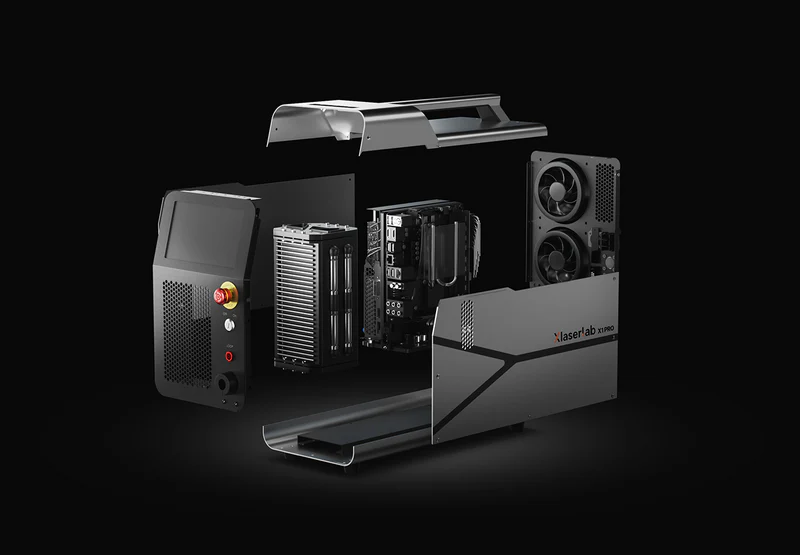
Laser spot welding is about joining metal exactly where the connection is needed. Instead of running a long continuous weld seam, the laser creates small, controlled weld points that hold parts together with limited heat spread and clean placement.
That makes it useful for thin sheet metal, small brackets, tabs, repair patches, prototype assemblies, tool fixtures, and precision parts where a full seam may be unnecessary or even harmful. In many cases, the goal is not to cover more area with weld metal. The goal is to create the right weld point in the right location.
For small shops, makers, and repair teams, laser spot welding is attractive because it can reduce distortion, improve appearance, and help with tight or delicate joining tasks. But it still depends on good fit-up, clean surfaces, stable focus, and careful testing.
What Laser Spot Welding Means in Precision Joining
Laser spot welding uses focused laser energy to melt a small area where two metal pieces meet. After the molten area cools, it forms a weld nugget that joins the pieces together. The weld point may be small, but it can be strong when the material, joint fit-up, and settings are correct.
This process is different from running a full seam. A continuous weld joins along a longer path, while spot welding connects selected points. That can reduce heat input and save time when the part does not need a full-length weld.
Precision point joining is especially useful when appearance, positioning, or low distortion matters. A small metal tab, a thin repair patch, a bracket, or a prototype fixture may only need a few accurate weld points to stay in place. If the spot is too hot, too wide, or poorly placed, the part may warp or weaken. If it is controlled well, the result can be clean and repeatable.
How Laser Spot Welding Works: Heat, Focus, and Weld Nugget Formation
The basic idea is simple. The laser beam focuses energy into a small area. That local heat melts the contact point between the materials. As the metal cools, it forms a weld nugget. The size and strength of that nugget depend on power, dwell time, spot size, focus, material thickness, and surface condition.
Laser spot welding can behave differently depending on the energy density. In conduction-style welding, the heat stays closer to the surface and usually forms a shallower, wider weld. This can be useful for thin or delicate materials. In keyhole-style welding, the energy penetrates more deeply, but poor control can cause spatter, porosity, or unstable welds.
Fit-up is just as important as laser power. If two sheets do not touch tightly, the laser may heat the top layer without forming a strong joint below. Oil, rust, coatings, and oxide layers can also reduce consistency. A clean surface, stable clamping, and proper focus often matter as much as the machine setting.
When Spot Welding Is Better Than a Continuous Weld
Not every metal joint needs a long weld seam. Some parts only need to be positioned, held, reinforced, or joined at selected points. In those cases, spot welding can reduce heat and save processing time.
For beginners comparing joint styles, a practical guide to spot welding helps explain why small, controlled weld points can be better than a full seam in certain precision assemblies. Thin sheet lap joints, small tabs, clips, brackets, repair patches, prototype alignment points, and tight housings are good examples.
Spot welding can also help when appearance matters. A full seam may leave more discoloration, more heat marks, or more finishing work than the part needs. A few well-placed weld points can hold the structure while keeping the visible surface cleaner.
The key is understanding the load. If the joint must seal, carry heavy stress, or resist vibration across a long edge, a continuous weld may still be better. If the joint only needs localized strength or positioning, spot welding may be more efficient.
Laser Spot Welding vs. Traditional Resistance Spot Welding
Traditional resistance spot welding uses electrode pressure and electrical resistance to create heat at the contact point. It is common in automotive sheet metal and other high-volume metal joining lines. It can be fast, repeatable, and cost-effective when the part design is stable.
Laser spot welding works differently. The laser beam delivers heat without direct electrode contact. This can help when the weld area is small, access is limited, or pressure from electrodes could affect the part surface. It can also be useful for precision components, small assemblies, and jobs where only one side of the part is easy to reach.
Resistance spot welding is still strong in large-scale production where the parts are designed for it. It can be very efficient for repeated sheet metal welds. Laser spot welding becomes more attractive when the part is smaller, more delicate, harder to access, or needs cleaner visual results.
The right choice depends on access, volume, material, joint design, and appearance requirements. One method is not always better. The better process is the one that matches the part.
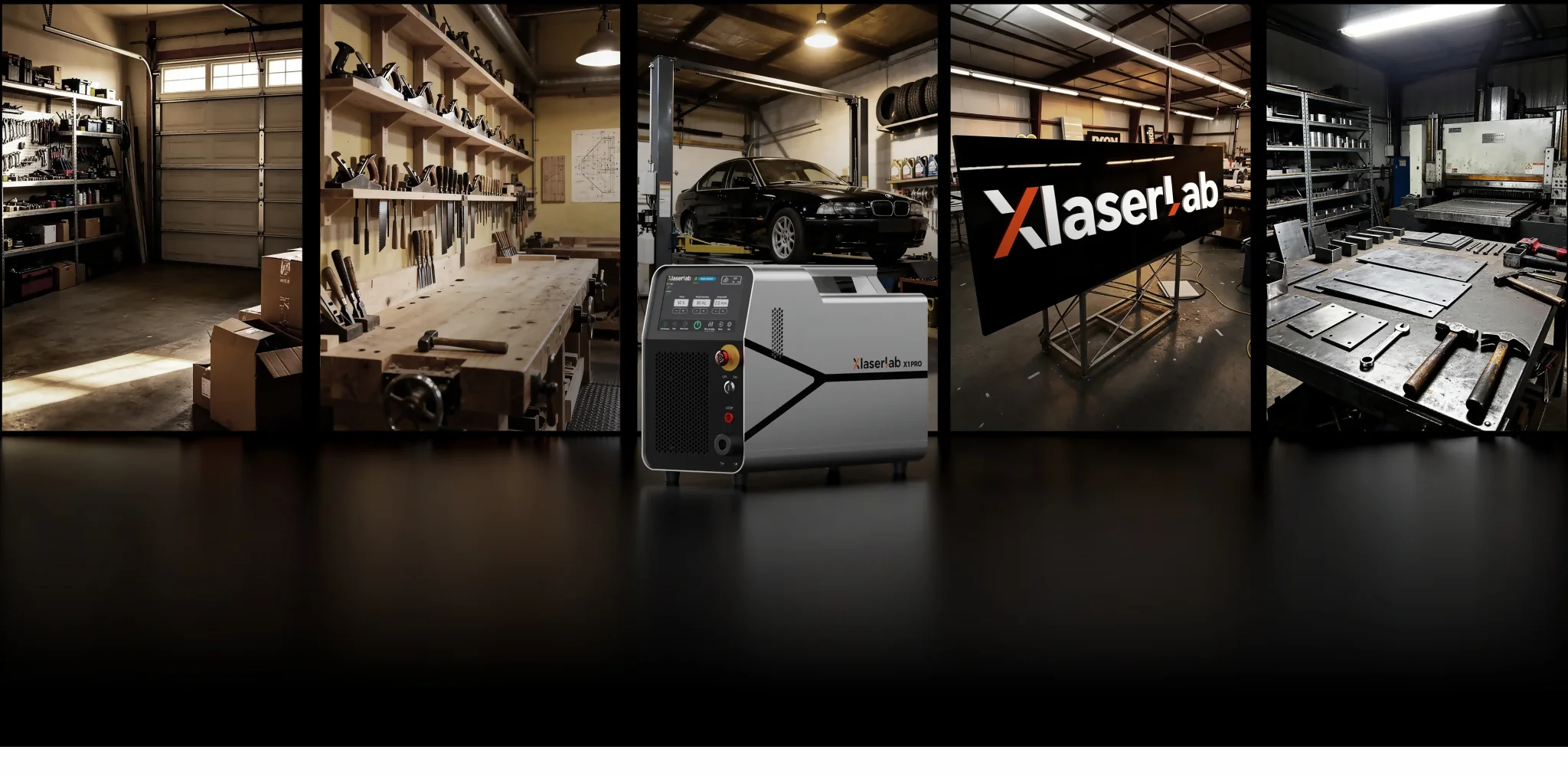
Choosing a Handheld Metal Laser Welder for Precision Point Joining
A handheld metal laser welder is useful when a shop needs flexible point joining, short seams, tack welds, small repair welds, and fast movement between custom metal jobs. Before choosing one, buyers should check material type, thickness range, joint style, fit-up quality, clamping method, shielding gas setup, operator training, and safety requirements.
For this article, the most suitable Xlaserlab product is the X1 Pro because the topic focuses on laser spot welding, precision joining, and flexible metal workflows. X1 Pro is positioned as a laser welder, cleaner, and cutter, making it more relevant than Q1 for welding-related tasks. For small shops, repair studios, and fabrication users, precision point joining often happens alongside short seams, tack welds, lap joints, T-joints, surface preparation, and small cutting jobs.
In a real workflow, a user may clean a rusty contact area, tack a thin repair patch, join a bracket, or trim a small metal piece before final fitting. X1 Pro fits this type of mixed metal work because it supports welding while also helping with rust, oxide, coating, and pre-welding surface preparation. That matters because clean contact surfaces usually make spot-style joining more consistent. Users still need proper clamping, laser safety goggles, shielding gas, parameter testing, and training. For highly automated micro spot welding or battery production, a dedicated automated spot welding system may still be better.
Before moving to project examples, it helps to remember one simple rule: laser spot welding is most useful when a small, controlled weld point solves the joining problem without adding unnecessary heat or cleanup.
Quick Table: When Laser Spot Welding Makes Sense
Laser spot welding works best when the part design, material fit-up, and heat-control needs match the process. It is not only about creating a small weld; it is about creating the right weld point in the right place.
| Use Case | Why Laser Spot Welding Helps | Main Risk | Practical Tip |
| Thin sheet lap joints | Low heat spread and clean point joining | Burn-through if power is too high | Test on scrap first |
| Small brackets and tabs | Fast positioning and localized joining | Poor fit-up weakens welds | Clamp parts tightly |
| Repair patches | Limits heat on surrounding metal | Rust or coating affects weld | Clean the surface first |
| Precision housings | Small welds in tight areas | Misalignment shows quickly | Use fixtures or guides |
| Prototype assemblies | Easy to test joint positions | Inconsistent manual placement | Mark weld points before starting |
| Appearance-sensitive parts | Less spatter and grinding | Surface discoloration | Adjust power and dwell time |
This table helps identify good starting points, but it does not replace testing. Real weld quality still depends on material thickness, surface cleanliness, focus, dwell time, shielding gas, clamping pressure, and operator consistency.
Common Mistakes Beginners Make in Laser Spot Welding
One common mistake is treating spot welding like a tiny version of seam welding. Spot welding has its own logic. The operator needs to think about dwell time, pulse energy, cooling, overlap, weld nugget size, and joint strength. A short weld is not automatically a good spot weld.
Another mistake is ignoring surface preparation. Oil, rust, paint, oxide, and coatings can all affect the weld point. Even if the laser has enough power, the weld may become inconsistent if the contact area is dirty or uneven.
Poor clamping also causes problems. If the parts separate slightly, the weld may look fine on the top surface but fail to join properly underneath. This is especially important for lap joints and thin repair patches.
Inspection should not be skipped. A visible mark does not always mean the weld is strong enough. Shops can use sample coupons, pull tests, cut checks, or repeated trial pieces to confirm that the weld point is stable before using the setting on final parts.
Safety and Setup Checklist Before Precision Point Joining
Laser spot welding is precise, but it is not forgiving of poor preparation. Before welding final parts, check the full setup:
- Confirm material type and thickness.
- Clean rust, oil, paint, and coatings from the contact area.
- Clamp parts tightly before welding.
- Check focus, spot size, pulse time, and power.
- Use shielding gas when required by the material.
- Wear laser safety protection and control the work area.
- Test on scrap before welding the final part.
- Inspect weld strength, not only surface appearance.
A clean surface and stable joint fit-up often matter as much as the machine setting. For repeat jobs, record the material, thickness, focus, dwell time, power, gas setup, and inspection result.
Conclusion: Precision Point Joining Works Best with the Right Fit-Up
Laser spot welding is valuable when a shop needs small, controlled weld points with low heat spread, clean appearance, and repeatable placement. It can be better than a continuous weld for thin sheet, tabs, brackets, repair patches, and precision assemblies.
The process still depends on clean surfaces, tight fit-up, correct focus, and realistic strength testing. For flexible shops, a handheld system can support many point-joining tasks, while automated laser spot welding systems may still be better for high-volume micro-weld production.

Peyman Khosravani is a global blockchain and digital transformation expert with a passion for marketing, futuristic ideas, analytics insights, startup businesses, and effective communications. He has extensive experience in blockchain and DeFi projects and is committed to using technology to bring justice and fairness to society and promote freedom. Peyman has worked with international organizations to improve digital transformation strategies and data-gathering strategies that help identify customer touchpoints and sources of data that tell the story of what is happening. With his expertise in blockchain, digital transformation, marketing, analytics insights, startup businesses, and effective communications, Peyman is dedicated to helping businesses succeed in the digital age. He believes that technology can be used as a tool for positive change in the world.