

Trying to nail down what an ‘investment’ really means can get a bit fuzzy, can’t it? People throw the word around for all sorts of things, from buying stocks to planning out a new business venture. This guide is here to help sort out the different ways we talk about investment, especially in economics. We’ll look at the basic ideas, how folks like Keynes and Ricardo thought about it, and how international agreements define it. It’s all about getting a clearer picture of the investment definition economics uses and how it shows up in the real world.
Key Takeaways
- At its core, an investment involves committing resources now with the expectation of future gains, setting it apart from simple spending.
- Economic thinkers like Keynes and Ricardo offered distinct perspectives on investment, often linking it to capital formation and business confidence.
- International law and treaties have specific ways of defining investment, particularly concerning foreign direct investment and regulatory frameworks.
- Understanding the nuances between different investment types, such as direct versus portfolio, is important for financial planning.
- The concept of investment has evolved significantly, with modern approaches incorporating new strategies and financial instruments.
Understanding The Core Investment Definition Economics
When we talk about economics, the idea of ‘investment’ isn’t just about buying something and hoping it goes up in value. It’s a bit more specific and has a few key parts that make it what it is. At its heart, an investment is about putting resources—like money, time, or effort—into something with the expectation that it will generate a return or benefit in the future. It’s a forward-looking decision, a commitment made today for a potential gain tomorrow.
The Fundamental Principle Of Committing Resources
Think of it like planting a seed. You take a seed (your resource) and put it in the ground. You’re not eating that seed right now; you’re setting it aside with the hope that it will grow into a plant that gives you fruit or more seeds later. This act of setting aside resources is the first step. It’s a conscious choice to forgo immediate use or enjoyment for a possible future reward. This commitment can range from an individual saving a small portion of their paycheck to a large company investing millions in new technology or infrastructure.
The Expectation Of Future Returns
Why would anyone commit resources if they didn’t expect something back? That expectation of a future return is what really defines an investment. It’s not just about spending money; it’s about allocating it with a purpose. This return could be financial, like profits from a business or dividends from stocks, or it could be non-financial, such as increased knowledge from education or improved efficiency from new equipment. Without the anticipation of some kind of future benefit, an action is usually just consumption or perhaps a gamble.
Distinguishing Investment From Consumption
It’s pretty important to tell the difference between investing and just consuming. Consumption is using up resources for immediate satisfaction. Buying groceries to eat today is consumption. Buying a new car to drive to work every day, which helps you earn a living, has an investment component, but the immediate use is consumption. An investment, on the other hand, is about creating or improving something that will yield benefits over time. For example, a company buying a new machine to produce more goods is an investment because that machine will help generate revenue for years. An individual buying stocks with the aim of receiving dividends and capital gains is also investing. The key difference lies in the time horizon and the purpose: consumption is for now, investment is for later.
The core idea is that an investment involves a sacrifice of present resources for the promise of greater resources or benefits in the future. This sacrifice is made with a degree of calculated risk, based on an assessment of potential future outcomes.
Historical Perspectives On Investment
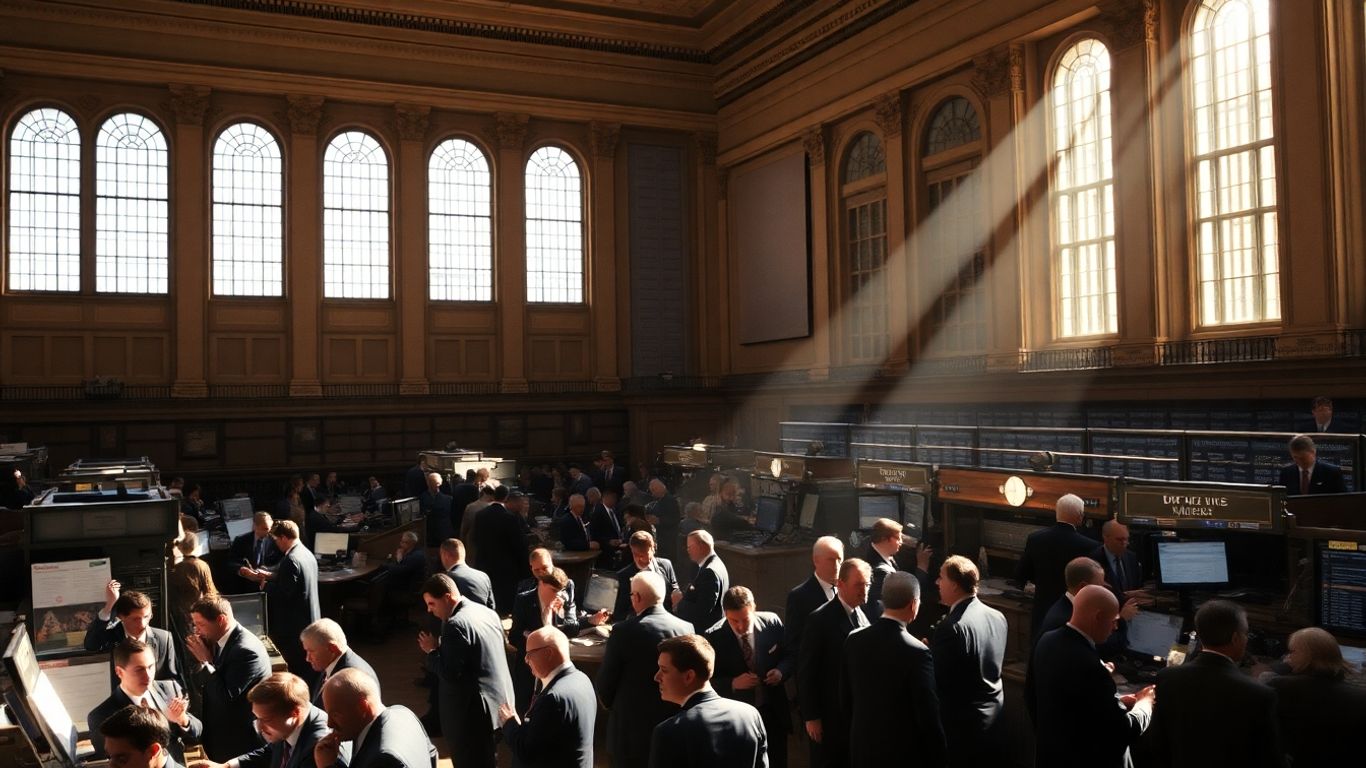
When we talk about investment today, it really helps to look back at how economists and thinkers from the past approached the idea. It wasn’t always about complex financial instruments or global markets. Early economic theories laid a lot of the groundwork for how we still talk about putting money to work.
Classical Economics And Capital Accumulation
Classical economists, including big names like Adam Smith and David Ricardo, saw investment as a main engine for economic growth. They believed that saving money and then putting that saved money into productive assets was how wealth was created and increased. This view often focused on tangible things like machinery, buildings, and infrastructure. The core idea was that by investing in these physical assets, businesses could produce more goods and services, which would lead to the economy expanding overall. It was a pretty straightforward model: save more, invest more, grow more.
- Investment was seen as applying capital to productive uses.
- It was directly linked to building up capital.
- The focus was often on physical assets that helped production.
The fundamental concept was that putting resources into things that help create more resources was the path to prosperity. It wasn’t just about making money; it was about building the capacity to produce more wealth over time.
Keynesian Views On Investment And Animal Spirits
John Maynard Keynes, a really influential economist, had some specific ideas about investment. For him, investment wasn’t just about buying stocks or bonds. He saw it more as the creation of new capital assets – things like factories, machinery, or buildings. Keynes heavily linked investment decisions to what he called ‘animal spirits.’ These are basically waves of optimism and pessimism that affect business confidence. When businesses feel good about the future, they invest more in new projects. When they’re feeling down, investment tends to drop. This focus on expectations and confidence is a big part of his view.
Ricardo’s Contributions To Investment Theory
David Ricardo, another major figure in classical economics, spent a lot of time thinking about capital and how it’s used. He was interested in what makes capital grow and what factors might slow that down. For Ricardo, investment was closely tied to the accumulation of capital, which he saw as the engine for economic progress. He broke down capital into fixed and circulating types, depending on how quickly it was used up in the production process. His work helps us see that the concept of investment isn’t new; it’s been a central topic for centuries as economists tried to figure out how economies expand.
Economic Interpretations Of Investment
When economists talk about investment, they’re generally looking at how resources are put to work today with the idea of getting more back later. It’s not just about spending money; it’s about allocating it in a way that’s expected to build wealth or increase productive capacity down the road. This forward-looking aspect is what really separates investment from just buying something for immediate use.
Capital Formation And Physical Assets
This is perhaps the most traditional view of investment. It involves creating or improving tangible things that help produce goods and services. Think about a company deciding to build a new factory, buy more advanced machinery, or upgrade its existing equipment. These actions require a significant upfront commitment of resources – money, labor, materials – but the goal is to boost production, improve efficiency, and ultimately generate more revenue in the future. It’s about building the physical backbone of an economy.
- Machinery and Equipment: Upgrading tools and technology to produce more or better goods.
- Buildings and Structures: Constructing new factories, warehouses, or commercial spaces.
- Infrastructure: Investing in roads, bridges, and communication networks that support economic activity.
Financial Investment Instruments
Beyond physical assets, investment also heavily involves financial markets. This is where individuals and institutions buy and sell financial products like stocks, bonds, and mutual funds. The expectation here is that these instruments will provide a return, either through regular income (like dividends or interest payments) or by increasing in value over time. It’s a way to channel savings into businesses and government projects that need funding, while offering investors a chance to grow their own wealth.
The core idea across these interpretations is that investment involves a commitment of resources today with the expectation of a future benefit. This benefit might be financial returns, increased productivity, or improved well-being. It’s a forward-looking activity that drives economic growth.
The Role Of Human Capital Investment
We can’t forget about people when we talk about investment. Human capital refers to the skills, knowledge, and health of the workforce. Investing in human capital means spending on things like education, job training, and healthcare. When people are better educated and healthier, they tend to be more productive, innovative, and adaptable. This not only benefits the individuals themselves but also boosts the overall economic output and competitiveness of a nation. It’s an investment in the most vital resource an economy has: its people.
Investment In International Law And Agreements
When countries get together to make deals, especially about trade and business, they often include rules about how they’ll treat investors from each other’s nations. These agreements, often called Bilateral Investment Treaties (BITs) or investment chapters in larger trade deals, are pretty important. They set the stage for how foreign money and businesses are handled, and importantly, they define what actually counts as an ‘investment’ in the eyes of international law. This definition isn’t just a small detail; it’s the key that decides who gets protection under the treaty and what kinds of problems can be brought before international courts.
Defining Investment In International Treaties
International treaties don’t always offer a single, neat definition of ‘investment.’ Instead, they often list examples of what can be considered an investment. These lists can include things like:
- Physical assets such as land, buildings, and machinery.
- Shares or ownership stakes in companies.
- Intellectual property rights, like patents or trademarks.
- Loans or other forms of debt.
- Contributions made to new business ventures.
However, the reality can get complicated. Sometimes, things like business licenses, specific contracts, or even the goodwill of a business might be argued as investments. Judges often have to look closely at the exact words used in the treaty and the specific facts of a case to decide. The general idea is that an investment usually involves putting resources, like money or time, into something with the hope of making a profit later on, often over a period of time. It’s more than just a quick deal; it’s about setting up a lasting economic connection.
The precise wording of an international agreement is paramount. What one treaty might consider an investment, another might not, leading to significant legal interpretation and dispute.
Foreign Direct Investment Versus Portfolio Investment
International agreements often distinguish between different types of investment, with Foreign Direct Investment (FDI) and Portfolio Investment being two major categories. FDI typically involves an investor establishing or acquiring a lasting interest in an enterprise in another country, with a significant degree of influence or control over its management. Think of a company building a factory overseas or buying a controlling stake in a foreign business. Portfolio investment, on the other hand, usually refers to the purchase of financial assets like stocks, bonds, or mutual funds. The investor’s primary goal is often diversification and financial return, without the intention of actively managing the enterprise. The level of control and the investor’s involvement are key differences.
| Investment Type | Investor’s Goal | Level of Control | Example |
|---|---|---|---|
| Foreign Direct Investment | Establish lasting interest, manage enterprise | Significant | Building a factory abroad, acquiring a company |
| Portfolio Investment | Financial return, diversification | Limited | Buying foreign stocks or bonds |
Regulatory Acts Shaping Investment Definitions
Beyond treaties, various national laws and regulatory acts also play a role in shaping how investments are defined and treated, both domestically and internationally. These acts can set specific criteria for what qualifies for certain protections or incentives. For instance, a country might have laws that define the minimum amount of capital required for an investment to be considered ‘foreign direct investment’ or specify the types of economic activities that are encouraged. These domestic regulations interact with international agreements, sometimes creating complex legal landscapes for investors and governments alike. Understanding these layers of regulation is key to grasping the full picture of investment definitions in practice.
- National Investment Laws: These laws, passed by individual countries, often detail specific requirements and benefits for foreign investors.
- Sector-Specific Regulations: Certain industries, like telecommunications or energy, may have unique rules governing investment.
- International Trade Agreements: Broader trade pacts can include provisions that influence investment definitions and protections.
Navigating Investment Terminology And Nuances

Objective Criteria For Investment Classification
When we talk about investment, it’s not just about throwing money at something and hoping for the best. There are usually some objective markers that help us figure out if something truly qualifies as an investment. The main thing is the intent to generate future income or see the value of the asset grow over time. This means the primary goal isn’t just spending money, but using it in a way that’s expected to bring more money back later. This could be through dividends from stocks, interest from bonds, or increased value of a property. It’s about putting resources to work.
The expectation of future returns is the bedrock upon which most investment definitions are built. This forward-looking aspect distinguishes it from mere consumption or spending.
Distinguishing Investment From Speculation
It’s easy to get investment and speculation mixed up, but they’re quite different. Speculation is more about betting on short-term price movements, often with high risk, hoping for a quick profit. Investment, on the other hand, usually involves a longer time horizon and a more reasoned approach based on the underlying value or earning potential of an asset. Think of it this way:
- Investment: Focuses on the long-term growth and income-generating potential of an asset. It’s often based on analysis of the asset’s fundamentals, like a company’s profits or a property’s rental income. For instance, buying shares in a stable company with a history of paying dividends is typically seen as an investment. You can find more on how economic health influences currency values by looking at fundamental analysis in forex trading.
- Speculation: Involves taking on significant risk for potentially rapid returns, often based on market sentiment or anticipated price changes rather than intrinsic value. Day trading volatile stocks or betting on short-term market swings would fall under speculation.
- Saving: Simply setting aside money without the primary intention of generating returns. While important, it doesn’t carry the same risk or potential reward profile as investment or speculation.
The line between investment and speculation can sometimes blur, especially in fast-moving markets. However, the core difference lies in the time horizon, the level of risk taken, and the basis for the decision – intrinsic value versus market momentum.
Understanding Different Types Of Investment
When we talk about investment, a big difference lies in how it’s made and what the investor’s goal is. Foreign Direct Investment (FDI) is when someone from one country invests in a business in another country, usually with the aim of having some control or significant influence over that business. Think of a car company building a factory in a new country. Portfolio investment, on the other hand, is more about buying stocks, bonds, or other financial assets in a foreign country without intending to manage or control the business. It’s more about financial returns.
Here’s a simple way to look at it:
- Foreign Direct Investment (FDI): Involves establishing or acquiring a controlling interest in a foreign enterprise. Often includes physical assets like factories or operations. Focuses on long-term management and control.
- Portfolio Investment: Involves purchasing financial assets like stocks and bonds. Does not typically involve management control. Focuses on financial returns and liquidity.
Governments and regulatory bodies also play a big part in shaping how investments are defined. Laws and acts often set specific criteria that must be met for something to be officially recognized as an investment, especially for tax purposes or to qualify for certain protections. These definitions can vary significantly between countries and even between different types of financial markets. Getting them right helps ensure you’re on the right track.
Modern Investment Strategies And Innovations
The Evolution of Investment Theory
Investment theory hasn’t stood still. For a long time, it was pretty much about gut feelings and following what the wealthy did. But as economics and math got more involved, things started to get more structured. Think about ideas like the efficient market hypothesis – the notion that all known information is already baked into stock prices. This has been debated and tweaked a lot over the years. Some folks even looked at things like biology or literature for new ways to understand how markets move and how to research companies. It’s not just finance anymore; it’s about borrowing ideas from everywhere.
Contemporary Investment Approaches
Today’s investment world looks pretty different from even a few decades ago. We’ve seen a big move towards using complex math, new financial tools like derivatives, and trading that happens at lightning speed. This has led to a constant stream of new strategies and products. There’s a push and pull between different ways of doing things. On one side, you have low-cost options like index funds and ETFs that aim to just match the market’s performance. On the other, you have more complex, higher-fee strategies like hedge funds and private equity. The main goal is still to grow wealth, but the methods and the people involved have changed a lot.
Newer Forms of Investment
When we talk about investing, it’s not just one big category. Think of it like a toolbox; you’ve got different tools for different jobs. Understanding these various types helps you pick the right ones for your financial goals. It’s about spreading your money around so you’re not putting all your eggs in one basket.
- Stocks (Equities): These represent ownership in a company. If the company does well, your stock price might go up, and they might even pay you a portion of their profits, called dividends.
- Bonds: These are like loans you give to a government or a company. They promise to pay you back your original amount plus interest over a set period.
- Exchange-Traded Funds (ETFs): These are baskets of stocks or bonds that trade on an exchange like a single stock. They offer diversification at a low cost.
- Mutual Funds: Similar to ETFs, these pool money from many investors to buy a portfolio of stocks, bonds, or other securities. They are managed by a professional fund manager.
The intention behind committing resources is what truly separates a genuine investment from mere spending or saving. It involves a conscious decision to put money to work with a specific outcome in mind, whether that’s funding retirement, saving for education, or generating income.
The way we think about and practice investing has transformed significantly, becoming more accessible and driven by technological innovation.
Wrapping Up Our Look at Investment
So, we’ve covered quite a bit trying to figure out what ‘investment’ really means. It turns out it’s not as simple as just putting money into something and hoping for the best. From economic viewpoints to legal definitions, the term shifts and changes depending on who’s talking and why. We saw how different thinkers, like Keynes and Ricardo, approached it, and how modern legal documents try to create clear rules, though even those can be tricky. Understanding these different angles helps us see the bigger picture. It’s a concept that affects everything from personal finance to global trade, and knowing its various shades of meaning is pretty important for anyone involved.
Frequently Asked Questions
What’s the main idea behind investing?
Investing is basically putting your money or resources into something with the hope that it will grow and give you more money back later. Think of it like planting a seed; you put the seed (your money) in the ground, water it, and hope it grows into a big plant that gives you fruit.
How is investing different from just saving money?
Saving is like putting money aside for a rainy day, keeping it safe. Investing is more about taking a bit of a chance to make your money grow faster than just sitting in a bank. You might get more back, but there’s also a chance you could lose some.
What are some common things people invest in?
People invest in lots of different things! The most common are stocks (which are like tiny pieces of a company) and bonds (which are like loans you give to a company or government). You can also invest in things like houses, gold, or even art.
Does investing always mean you’ll make money?
Not necessarily. While the goal is to make more money, there’s always a risk involved. Sometimes, the value of your investment can go down, and you might lose some or all of the money you put in. That’s why it’s important to understand the risks before you invest.
What’s the difference between foreign direct investment and portfolio investment?
Foreign direct investment (FDI) is when someone from another country starts or buys a significant part of a business in your country, often to manage it. Portfolio investment is more like buying stocks or bonds from another country just to make money, without planning to run the business.
Why is understanding investment important?
Knowing what an investment is helps you make smarter decisions with your money. It helps you tell the difference between spending money for today and using it to build wealth for tomorrow, whether you’re planning for retirement or just trying to grow your savings.

Peyman Khosravani is a global blockchain and digital transformation expert with a passion for marketing, futuristic ideas, analytics insights, startup businesses, and effective communications. He has extensive experience in blockchain and DeFi projects and is committed to using technology to bring justice and fairness to society and promote freedom. Peyman has worked with international organizations to improve digital transformation strategies and data-gathering strategies that help identify customer touchpoints and sources of data that tell the story of what is happening. With his expertise in blockchain, digital transformation, marketing, analytics insights, startup businesses, and effective communications, Peyman is dedicated to helping businesses succeed in the digital age. He believes that technology can be used as a tool for positive change in the world.








