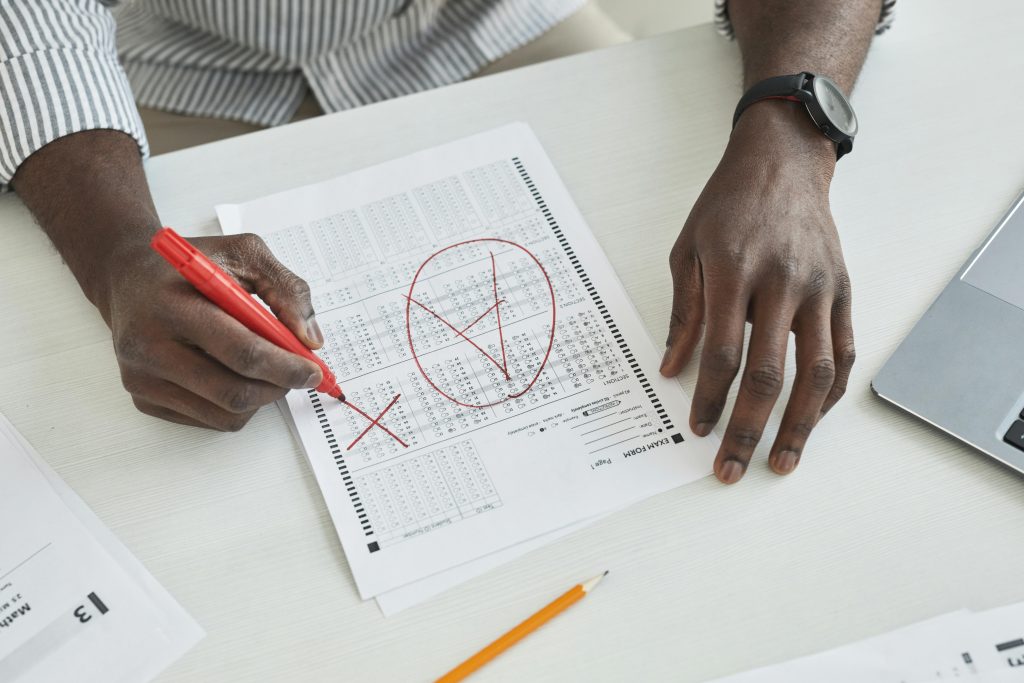
The College GPA is changing. Fast.
Students, educators, and employers treating GPA the same way they did 20 years ago are already behind.
Grade inflation, smarter GPA computation tools, holistic admissions reviews – the game is changing.
Here’s what’s going on.
What You’ll Learn
- The College GPA Doesn’t Mean What It Used To
- The rise of grade inflation
- How GPA computation tools are changing student success
- Fine-grained replacements for the GPA
- Admissions + hiring: The employer side of the equation
- Tying it all together
Why the College GPA Doesn’t Mean What It Used To
When it was introduced, the GPA was elegantly simple. Reward academic performance. Penalise underperformance. Give employers and grad schools something they could trust.
That trust is being eroded.
Grade inflation didn’t happen overnight. For decades colleges have faced pressure to keep students enrolled and professors have increasingly been rewarded for student evaluations. The result? An unreliable GPA.
Trying to stand out in that system is hard. Figuring out how to measure academic performance without it is even harder.
The Rise of Grade Inflation (And What the Numbers Really Show)
Grade inflation is accelerating.
Across the United States, college students are earning higher grades than ever before. The median GPA has risen by 21.5% over the past 30 years. That’s not noise in the system. That’s a dramatic, quantifiable shift in how academic performance is reported.
Want more shocking numbers? At Yale, the percentage of A grades awarded to students increased from 67% in 2010 to nearly 79% in 2023. Harvard saw the same trend line start at 60% A grades in 2011 and rise to 79% in the 2020-21 academic year.
The causes? According to the US Department of Education, they’re institutional pressure to give students higher grades in response to “consumer demand” and students choosing easier classes and majors.
Except here’s the weird part…
While grades are going up, student performance measured by test scores is going down. Average ACT scores hit a 30-year low for the class of 2023.
Grades are going one direction, GPA is going the other.
The system is cracking at the seams.
How GPA Computation Tools Are Changing the Game
Here’s one important trend that doesn’t get enough attention:
GPA calculation is moving toward real-time grading.
GPA computation is getting real-time.
Most students ten years ago waited weeks to learn their grade. Now, students can open up a gpa calculator college page and see how each course will impact their transcript before they even take the final exam.
Real-time GPA computation completely changes how students think about their grades. Rather than just “trying to get good grades,” students can see how each course will impact them on a mathematical level. They can plan accordingly. And that kind of visibility is raising the bar across the board.
Students who know how their grades will impact their GPA before the semester ends are better students. They show up to meetings with advisors and scholarship committees better prepared because they already know what they need to get.
Better GPA computation tools won’t fix education by themselves. But they’re a huge part of why students are taking academic planning more seriously than ever.
What’s Replacing the Traditional GPA in the Modern Era
The GPA isn’t going anywhere. At least not yet.
But it is being supplemented by a number of fine-grained signals that better measure student performance.
Here are the leading contenders:
- Course rigor: Did the student take advanced courses, AP classes, and challenging majors? Or did they coast through with an easy schedule?
- Standardized tests: SAT and ACT scores are imperfect themselves, but they’re far less vulnerable to grade inflation. Many universities are bringing them back for that reason.
- Portfolio / Project-based review: Show what was built. Not what grade was earned — the actual work.
- Skill-based certifications: Mastery of specific skills, instead of grading on a curve relative to other students.
Western Oregon University announced last year it would be eliminating failing grades and replacing them with a No Credit designation that wouldn’t impact student GPA. The stated goal was to boost retention rates. But the move drew criticism for removing the feedback loop grades are supposed to create. Students who fail should know they failed and be able to improve.
Truthfully? No single one of these things can replace the GPA.
…but all of them together can paint a more precise picture of a student’s abilities than GPA ever could.
The Employer Side of the Equation
One last piece of the puzzle worth considering:
Employers are changing too.
GPAs are going to climb as long as they matter to employers and universities. Some of the largest employers in the United States have already started to create their own entrance exams — tests that entirely bypass the degree certificate.
It’s not future speculation. It’s already begun.
This creates a huge crisis of relevancy for mid-tier colleges and universities:
- A 3.8 GPA from School A means the same thing as a 3.8 GPA from School Z. It means nothing.
- Employers can’t tell the colleges that challenge students from the ones that don’t.
- Students no longer have an incentive to challenge themselves.
- Degrees become worthless pieces of paper that everyone can get.
The universities who weather this shift will be the ones who fix their GPA — whether that’s through transparent grading standards, assessment design, or coursework tied to tangible skills.
Tying It All Together
College GPAs are changing. The rules are being rewritten.
Grade inflation, higher standards on college admissions, smarter GPA computation tools, and employer review practices are happening all at once. When everything changes, it’s hard to know what to do.
The GPA still matters. But so much more goes into academic performance now.
Here’s a quick recap of why:
- College students are earning 21.5% higher grades than they were 30 years ago
- Elite institutions like Yale are awarding As to over 79% of students
- GPA computation tools have given students more control over their academic planning than ever before
- Colleges and employers are looking beyond GPA to course rigor, portfolio reviews, and standardized testing
If there’s one thing that will become clear in the next decade, it’s that the GPA alone isn’t enough to show colleges and employers what students know.
Something has to change.

Pallavi Singal is the Vice President of Content at ztudium, where she leads innovative content strategies and oversees the development of high-impact editorial initiatives. With a strong background in digital media and a passion for storytelling, Pallavi plays a pivotal role in scaling the content operations for ztudium’s platforms, including Businessabc, Citiesabc, and IntelligentHQ, Wisdomia.ai, MStores, and many others. Her expertise spans content creation, SEO, and digital marketing, driving engagement and growth across multiple channels. Pallavi’s work is characterised by a keen insight into emerging trends in business, technologies like AI, blockchain, metaverse and others, and society, making her a trusted voice in the industry.