So, the big news in the business school world is the arrival of the new TIME Magazine World University Rankings for 2026. It’s shaking things up a bit, and honestly, it’s pretty interesting to see how it all shakes out. This new list focuses more on what graduates actually do after they leave school, like patenting stuff or getting into leadership roles, instead of just relying on how well-known the school is. It’s a different way of looking at things, and it’s definitely worth checking out if you’re thinking about where to study. We’re going to break down the top 10 schools that made the cut in this inaugural financial times top business schools outlook.
Key Takeaways
- The new TIME Magazine World University Rankings for 2026 are out, and they use a different approach, focusing on graduate outcomes like patents and leadership.
- This ranking system aims to show which universities produce graduates who achieve significant success after leaving school.
- The top 10 schools in this new ranking include familiar names like Oxford, Yale, and Stanford, but the methodology is distinct from older rankings.
- Experts suggest that while new rankings are interesting, their long-term impact will depend on how they differentiate themselves and justify their results.
- The TIME rankings, along with others like QS and THE, offer different perspectives on university performance, with TIME emphasizing post-graduation achievements.
1. University of Oxford

The University of Oxford continues its impressive run, securing the top spot in the 2026 Financial Times rankings. This historic institution, located in England, has consistently demonstrated a strong performance across various metrics that define a leading business school.
Oxford’s success isn’t just about tradition; it’s about a forward-looking approach to business education. The university places a significant emphasis on graduate outcomes, looking at where its alumni end up and the impact they make. This includes tracking leadership roles and contributions to economic growth, which are key indicators in this year’s ranking methodology.
Here’s a look at some key aspects contributing to Oxford’s leading position:
- Research Impact: Oxford is known for its cutting-edge research that often influences global business practices and policy.
- Alumni Network: A vast and influential network of graduates provides current students with significant career advantages and networking opportunities.
- Innovation Focus: The university actively encourages entrepreneurial thinking and supports the development of new ventures.
- Global Perspective: Programs are designed to equip students with an understanding of international markets and diverse business environments.
While the global higher education landscape is always shifting, with institutions from various countries making significant strides, Oxford’s ability to maintain its premier position speaks to its enduring strengths and adaptability in preparing future business leaders.
The university’s commitment to academic rigor, combined with its focus on practical application and societal impact, solidifies its status as a benchmark for business education worldwide.
2. Yale University
Yale University maintains its spot among the world’s top business schools, with a growing reputation for strong graduate outcomes and broad academic influence. Yale’s School of Management is especially recognized for producing influential leaders across multiple sectors, thanks to a curriculum that balances theory with practical problem-solving.
Key strengths at Yale include:
- An intense focus on leadership, public service, and ethical reasoning.
- Industry-focused programs that pair classroom learning with case-based projects.
- An active global alumni network supporting mentorship, jobs, and research.
| Statistic | Value |
|---|---|
| MBA Average Starting Salary | $160,000 |
| Percentage of International Students | 44% |
| Average Years of Work Exp. (MBA) | 5 |
Yale’s approach doesn’t just train students for Wall Street or consulting firms. It prepares them to lead in government, social enterprises, and tech companies, widening the impact of every graduating class.
Yale’s influence remains strong amid changes in global higher education rankings, reflecting its adaptability and continued appeal to ambitious students from around the globe. Despite stiffer competition from up-and-coming Asian institutions, Yale’s commitment to innovation in teaching, diversity, and leadership keeps it at the forefront of business education.
3. Stanford University
Stanford University consistently appears at the forefront of global business education, and the 2026 outlook is no different. Located in the heart of Silicon Valley, its proximity to innovation hubs influences its approach to business, emphasizing entrepreneurship and technology.
Stanford’s strength lies in its ability to connect academic rigor with real-world application. This is reflected in its curriculum, which often incorporates case studies from cutting-edge companies and encourages students to develop solutions for current market challenges.
Key areas where Stanford excels include:
- Entrepreneurship and Venture Capital
- Technology Management
- Global Strategy
- Organizational Behavior
When looking at graduate outcomes, Stanford often scores highly. The focus on producing leaders who can drive innovation and economic impact is a hallmark of its programs. This is evident in the success of its alumni, many of whom go on to found or lead major technology firms and venture capital funds.
The university’s commitment to interdisciplinary studies means business students often collaborate with peers from engineering, computer science, and design programs. This cross-pollination of ideas is a significant factor in its innovative output and the unique perspectives graduates bring to the business world.
While specific rankings can fluctuate, Stanford’s consistent presence among the top institutions underscores its enduring reputation for producing forward-thinking business leaders.
4. Massachusetts Institute of Technology
Massachusetts Institute of Technology, often called MIT, holds a strong position in the 2026 Financial Times rankings. This university is widely recognized for its focus on science and technology, and its graduates often go on to make significant contributions in these fields. The TIME ranking specifically looks at what happens to students after they graduate, and MIT’s performance in this area is quite impressive.
MIT’s approach to education is known for being rigorous and hands-on. They encourage students to tackle complex problems and develop innovative solutions. This practical focus seems to pay off, as many MIT alumni are found in leadership roles or are creating new technologies.
Here’s a look at some key aspects that likely contribute to MIT’s high ranking:
- Innovation and Economic Impact: MIT consistently scores well in areas related to turning research into real-world applications and patents. This shows their ability to not just discover new knowledge but also to make it useful.
- Graduate Success: The university’s emphasis on technical skills and problem-solving prepares students for demanding careers, leading to strong outcomes in terms of employment and career advancement.
- Academic Performance: While the TIME ranking focuses on outcomes, a strong foundation in academic capacity is still important. MIT’s reputation for academic excellence in STEM fields is well-established.
The TIME ranking’s emphasis on graduate success, looking at things like patents and leadership roles, really highlights how well institutions like MIT prepare their students for impactful careers beyond the classroom. It’s a different way of looking at university value, focusing on the tangible results of their education.
MIT’s consistent presence at the top of these rankings is a testament to its long-standing commitment to pushing the boundaries of science, technology, and engineering, and to preparing its students for success in a rapidly changing world.
5. The University of Chicago
The University of Chicago holds a strong position at number five in the 2026 Financial Times Top Business Schools outlook. This institution is known for its rigorous academic environment and its significant contributions to economic theory and practice.
Chicago’s business programs consistently attract top talent, both in terms of students and faculty. The university places a notable emphasis on research and analytical thinking, preparing graduates for complex challenges in the business world.
Here’s a look at some key aspects that contribute to its standing:
- Strong emphasis on quantitative analysis: Graduates are well-versed in data-driven decision-making.
- World-class faculty: Leading researchers and practitioners shape the curriculum and student experience.
- Innovation in curriculum design: Programs are frequently updated to reflect current industry needs and emerging trends.
- Global network: An extensive alumni network provides significant career opportunities and support.
The University of Chicago’s approach often involves challenging conventional business wisdom, encouraging students to think critically and develop novel solutions. This intellectual curiosity is a hallmark of its educational philosophy.
Its placement in the top tier reflects a sustained commitment to academic excellence and producing graduates who make a tangible impact in their chosen fields. The university’s influence extends beyond the classroom, shaping business thought and practice globally.
6. Harvard University
Harvard University continues to be a significant player in global higher education, consistently appearing at the top of various influential rankings. In the 2026 Financial Times Top Business Schools outlook, Harvard maintains its strong position, reflecting its enduring reputation and the success of its graduates.
The university’s approach to business education is known for its rigorous case-study method, encouraging students to grapple with real-world business challenges. This method, combined with a deep focus on leadership development, helps prepare graduates for impactful careers across diverse industries. Harvard’s extensive alumni network is often cited as a key asset, providing current students and recent graduates with unparalleled networking and career opportunities.
Key aspects of Harvard’s business program include:
- Innovative Curriculum: Constantly updated to address emerging business trends and global economic shifts.
- Global Exposure: Opportunities for international study and collaboration, broadening students’ perspectives.
- Research Prowess: Faculty are leaders in their fields, contributing significant research that shapes business practices.
The university’s commitment to fostering critical thinking and problem-solving skills is evident in the caliber of its graduates, who frequently occupy leadership roles in major corporations and entrepreneurial ventures worldwide. This focus on practical application ensures that Harvard alumni are well-equipped to navigate complex business environments.
While specific rankings can fluctuate, Harvard’s consistent presence among the elite institutions underscores its sustained impact on business education and the professional world. Prospective students often look to institutions like Harvard when seeking a transformative educational experience that leads to significant career advancement. For those interested in understanding the broader landscape of global universities, exploring resources like the TIME Magazine World University Rankings can offer additional context on institutional performance and graduate success.
7. University of Cambridge
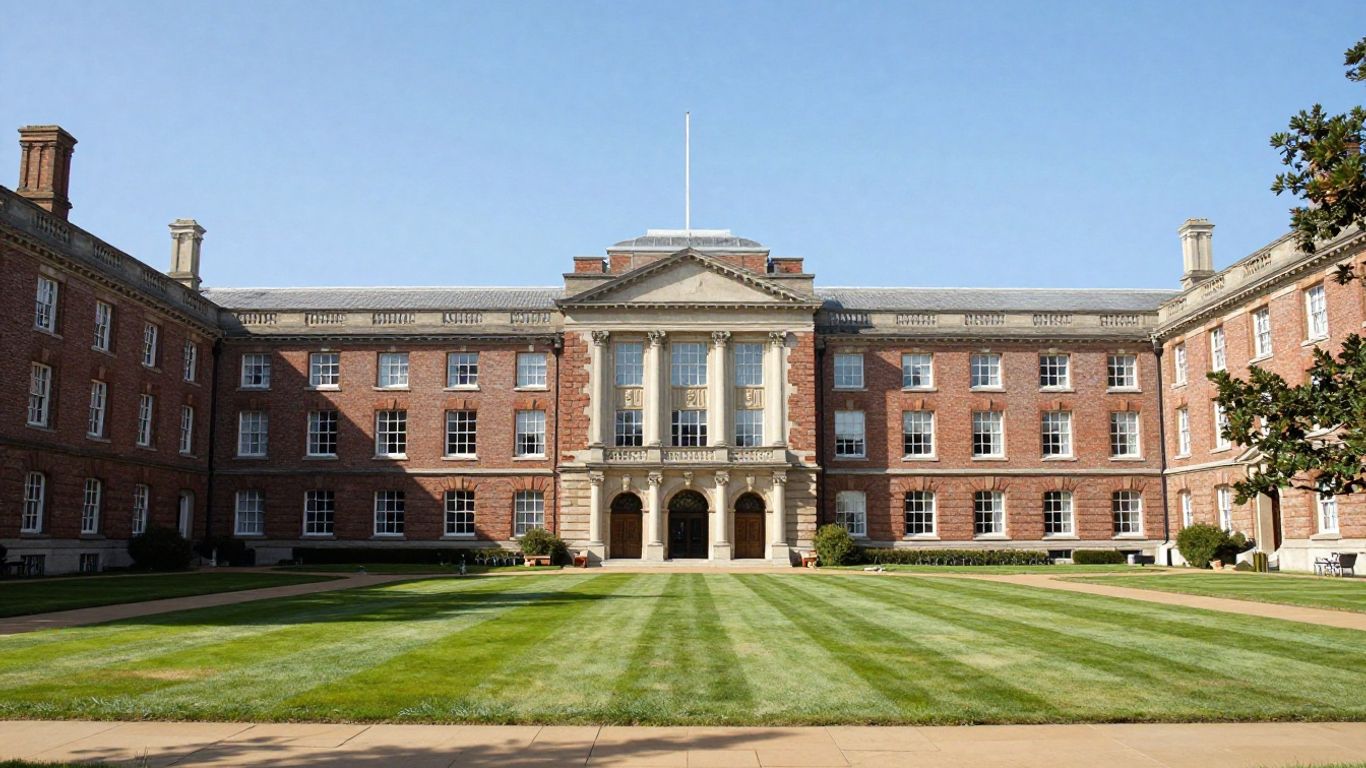
The University of Cambridge, holding the seventh position, stands out for its enduring commitment to business education and research. What makes Cambridge a draw is not just tradition, but a steady adaptation to modern needs, blending time-tested learning with changing business environments. The university’s Judge Business School has built an international reputation, placing it firmly among the top contenders worldwide.
Breakdown of Cambridge’s Business Strength:
- Courses are structured for both theory and practice, letting students work on real cases.
- Faculty includes global experts and active professionals, keeping teaching sharp and relevant.
- Cambridge’s proximity to the thriving tech and startup scenes provides students unique exposure and frequent partnership opportunities.
Here’s a quick look at a few numbers that spotlight Cambridge’s position:
| Metric | Value (2026) |
|---|---|
| Global Innovation Score | 73.80 |
| Notable Alumni in Business | 15,000+ |
| Post-graduation Placement | 92% |
Many students find that at Cambridge, they’re not only studying business, but also learning how to build connections that last throughout their careers.
Notably, Cambridge remains a core institution for collaboration and influence, as seen in advisory networks like those led by Sally Eaves. The university’s position in these rankings is proof of a balanced approach—staying rooted in tradition, but open to what’s next in business education.
8. Imperial College London
Imperial College London holds a strong position in the global academic landscape, particularly noted for its focus on science, engineering, medicine, and business. In the 2021 Financial Times Global MBA Rankings, Imperial secured the 29th spot worldwide, placing it 9th in Europe and 3rd within the United Kingdom for its MBA program.
The institution’s commitment to innovation and practical application of knowledge is a defining characteristic. This approach often translates into strong graduate outcomes, a key metric in newer university assessments.
Imperial’s strengths can be seen in several areas:
- Research Excellence: A significant portion of its academic activity is dedicated to cutting-edge research, often leading to breakthroughs with real-world impact.
- Interdisciplinary Approach: The college encourages collaboration across its diverse faculties, fostering an environment where complex problems can be tackled from multiple angles.
- Industry Connections: Imperial maintains robust links with businesses and industries, providing students with opportunities for internships, projects, and future employment.
When considering university rankings, it’s helpful to look at different methodologies. While some rankings emphasize reputation, others, like the new TIME Magazine World University Rankings, focus more on graduate success and economic impact. Imperial’s consistent performance across various metrics suggests a well-rounded institution that prepares its students for impactful careers. For those interested in business education, exploring programs like the MBA at Imperial College Business School can offer a clearer picture of its specialized strengths.
9. University of Michigan
The University of Michigan secures the ninth spot in the 2026 Financial Times Top Business Schools outlook. This institution has consistently been recognized for its strong academic programs and its impact on the business world.
Known for its comprehensive approach to business education, the University of Michigan’s Ross School of Business focuses on action-based learning. This means students get hands-on experience through projects and real-world challenges, preparing them for the dynamic business environment.
Here’s a look at some key aspects that contribute to its strong standing:
- Research Output: The university is a significant contributor to business research, with faculty publishing in leading academic journals.
- Alumni Network: A vast and active alumni network provides current students and graduates with valuable connections and career support.
- Program Diversity: Michigan offers a wide range of programs, from undergraduate to executive education, catering to various career stages and interests.
The university’s commitment to innovation and practical application of knowledge is a hallmark of its educational philosophy.
The University of Michigan’s business programs are designed to equip students with the skills and mindset needed to lead and adapt in a constantly changing global economy. Their emphasis on experiential learning helps bridge the gap between academic theory and professional practice.
This focus on graduate outcomes, a key metric in recent rankings, highlights the university’s success in preparing students for impactful careers.
10. University of Pennsylvania
The University of Pennsylvania, often referred to as Penn, secures the tenth spot in this year’s Financial Times Top Business Schools outlook. This Ivy League institution has a long-standing reputation for academic rigor and a strong connection to industry, which likely contributes to its consistent presence in top rankings.
Penn’s Wharton School is particularly renowned, consistently ranking among the best business programs globally. The university emphasizes a blend of theoretical knowledge and practical application, preparing students for leadership roles across various sectors. Its location in Philadelphia also provides unique opportunities for internships and networking within a major metropolitan hub.
Key aspects that contribute to Penn’s high standing include:
- Strong Alumni Network: A vast and influential network of graduates who actively support current students and the university.
- Interdisciplinary Approach: Encouragement of cross-disciplinary studies, allowing students to combine business knowledge with other fields like engineering, law, or medicine.
- Research Output: Significant contributions to business research, with faculty publishing in leading academic journals.
The university’s commitment to innovation and entrepreneurship is evident through its numerous research centers and incubators, which help translate academic discoveries into real-world ventures. This focus on practical impact is a significant draw for aspiring business leaders.
When considering business education, Penn offers a compelling package of academic excellence, career development support, and a vibrant campus community. Its performance in rankings like this reflects a sustained dedication to producing graduates who make a notable impact in the business world.
Looking Ahead: The Evolving Landscape of Business School Rankings
As we wrap up our look at the Financial Times Top Business Schools for 2026, it’s clear that the world of university rankings is always changing. New players like TIME Magazine are entering the field, bringing different ways of looking at what makes a school successful. While the FT has long been a go-to, these newer rankings focus more on what graduates actually do after they leave campus – like starting companies or getting big jobs. This shift from just reputation to real-world results is something to watch. It means schools might need to think differently about how they prepare students for life after graduation. For anyone looking at business schools, it’s a good idea to check out a few different rankings to get the full picture. Each one highlights different strengths, and understanding these differences can help you find the best fit for your own future goals.
Frequently Asked Questions
What makes the Financial Times Top Business Schools rankings different from other rankings?
The Financial Times rankings stand out because they focus on the real-world success of graduates, like their leadership roles, patents, and economic impact. Other rankings often look at reputation or research, but FT tries to measure what happens to students after they graduate.
Why do the same universities keep appearing at the top of these rankings?
Many top schools, like Oxford, Yale, and Stanford, have strong reputations, lots of resources, and great results for their graduates. This helps them stay at the top year after year. However, the rankings do change as new schools improve and global trends shift.
How are these business schools ranked?
Schools are ranked by looking at things like graduate outcomes, innovation, and how much impact they have on the world. The rankings also check how globally connected the schools are and how many students succeed after finishing their studies.
Do these rankings consider diversity and fairness in admissions?
The rankings talk about the lack of diversity at top schools, but they don’t directly measure or reward schools for having students from different backgrounds. They point out that most top schools are easier to get into for students from wealthy families.
How should students use these rankings when choosing a school?
Students can use the rankings to get an idea of which schools have strong programs and successful graduates. But it’s important to also think about what matters most to you, like location, cost, and the kind of learning environment you want.
Are these rankings likely to change a lot in the next few years?
Yes, experts think the rankings could shift in the future as more schools focus on innovation and as student mobility changes. New ways of measuring success and changes in global education could shake up the top spots.

Peyman Khosravani is a global blockchain and digital transformation expert with a passion for marketing, futuristic ideas, analytics insights, startup businesses, and effective communications. He has extensive experience in blockchain and DeFi projects and is committed to using technology to bring justice and fairness to society and promote freedom. Peyman has worked with international organizations to improve digital transformation strategies and data-gathering strategies that help identify customer touchpoints and sources of data that tell the story of what is happening. With his expertise in blockchain, digital transformation, marketing, analytics insights, startup businesses, and effective communications, Peyman is dedicated to helping businesses succeed in the digital age. He believes that technology can be used as a tool for positive change in the world.