So, you want to get a handle on the financial times stock exchange, specifically the FTSE 250? It sounds a bit complicated, but honestly, it’s not too bad once you break it down. Think of it like understanding a neighborhood – you’ve got the big, famous landmarks (that’s the FTSE 100), and then you’ve got all the other businesses that make the place tick. The FTSE 250 is kind of like that second group for the UK stock market. It shows you what’s happening with a lot of companies that are growing but aren’t the absolute giants yet. We’ll go through what it is, why it matters, and how you might even put some money into it.
Key Takeaways
- The FTSE 250 index tracks the 250 largest companies on the London Stock Exchange after the top 100. It’s a good way to see how mid-sized UK businesses are doing.
- To be in the FTSE 250, companies need to meet certain rules, like being listed on the London Stock Exchange and having a minimum market value. It’s not just for the biggest players.
- This index is seen as a sign of how the UK economy is doing. When the FTSE 250 does well, it often means businesses are growing and people are feeling good about the economy.
- You can invest in the FTSE 250 by buying shares of individual companies in the index or by using index funds, which hold many companies from the index to spread out your risk.
- Like any investment, putting money into the FTSE 250 has its ups and downs. It’s important to think about your own money goals and how much risk you’re okay with before you start.
Understanding the Financial Times Stock Exchange 250
The FTSE 250: A Mid-Cap Benchmark
The FTSE 250 index is a key marker for understanding the performance of medium-sized companies listed on the London Stock Exchange. Think of it as a snapshot of the UK’s economic activity beyond the very largest corporations. It includes the 250 companies that follow the top 100 by market value. These companies are often seen as having significant growth potential, representing a dynamic part of the British economy. The index serves as a widely followed indicator for this specific segment of the market.
Historical Context of the FTSE 250
The FTSE 250 was introduced in 1992. Its creation was a response to a growing need for a benchmark that specifically tracked the performance of mid-cap companies, complementing the already established FTSE 100. Initially, it took some time for the index to gain widespread recognition. However, as it demonstrated its value in reflecting the health and trends of this important business group, its importance grew among investors and analysts.
Distinguishing the FTSE 250 from the FTSE 100
It’s easy to get the FTSE 250 and FTSE 100 mixed up, but they represent different parts of the market. The FTSE 100, as the name suggests, tracks the 100 largest companies by market capitalization on the London Stock Exchange. These are often global giants. The FTSE 250, on the other hand, comprises the next 250 largest companies. These mid-cap firms are generally more focused on the UK domestic economy.
Here’s a quick breakdown:
- FTSE 100: Represents the top 100 largest companies (large-cap).
- FTSE 250: Represents the next 250 largest companies (mid-cap).
This distinction is important because mid-cap companies can sometimes offer different investment profiles, often with higher growth prospects but potentially more volatility than their larger counterparts.
The FTSE 250 offers a look into companies that are often more established than smaller businesses but still have room to expand. Their performance can be a good indicator of the general economic sentiment and growth within the United Kingdom, as they are frequently more sensitive to domestic economic shifts than the globally focused FTSE 100 companies.
Composition and Criteria of the FTSE 250
Eligibility Requirements for Index Inclusion
So, how does a company actually get a spot in the FTSE 250? It’s not just about being a UK company listed on the London Stock Exchange. There are some pretty specific rules. First off, a company needs to have a minimum free float market capitalization. Think of free float as the shares that are actually available for trading by the public, not held by insiders or governments. Right now, that minimum is set at £700 million. It’s a pretty hefty number, meaning only established businesses make the cut. Beyond just size, companies are also looked at for their financial stability and how much they’re actually traded. The goal is to keep the index filled with companies that are active and represent a real part of the market.
Sectoral Diversity Within the Index
The FTSE 250 isn’t just a collection of random companies; it’s designed to give a broad picture of the UK’s mid-sized business world. You’ll find companies from all sorts of industries in there. We’re talking about financial services, which often have a big presence, but also technology, healthcare, consumer goods, and many others. This mix is important because it means the index isn’t overly reliant on just one part of the economy. If, say, the tech sector hits a rough patch, other sectors might be doing well, balancing things out. This variety helps make the index a more reliable indicator of the overall economic climate.
Here’s a general idea of how sectors might be represented, though these percentages change:
- Financials: Often the largest segment, including banks, insurance, and investment firms.
- Industrials: Companies involved in manufacturing, engineering, and transportation.
- Consumer Staples & Discretionary: Businesses selling everyday goods and those selling non-essential items.
- Technology: Software, hardware, and internet-related companies.
- Healthcare: Pharmaceutical and medical equipment providers.
The Influence of Market Capitalization
Market capitalization is a big deal when it comes to the FTSE 250. It’s basically the total value of a company’s shares on the stock market. The bigger a company’s market cap, the more sway it has over the index’s performance. If a giant in the FTSE 250 has a really good or bad day, it’s going to move the whole index more than a smaller company having the same kind of day. This makes sense, right? It’s like in a group project; the person who’s done the most work has the biggest impact on the final grade. However, it’s not just about market cap. How easily a company’s shares can be bought and sold, its liquidity, also plays a part in how much weight it carries. The index is reviewed regularly, so as companies grow or shrink, or as new ones emerge, the list and their positions within it can change. It keeps the index current with what’s happening in the market.
The FTSE 250 is a dynamic entity. Its composition isn’t set in stone. Regular reviews ensure that the companies included genuinely reflect the mid-cap segment of the UK stock market, adapting to economic shifts and corporate growth or decline.
The Significance of the FTSE 250
The FTSE 250 index is more than just a list of companies; it’s often seen as a pulse check for the United Kingdom’s economy. Because it tracks mid-sized companies, which tend to be more focused on domestic business than the global giants in the FTSE 100, its movements can give us a good idea of how the UK’s internal economic engine is running.
FTSE 250 as an Economic Barometer
When the FTSE 250 is climbing, it generally suggests that businesses are doing well, consumers are spending, and there’s a general sense of optimism about the UK’s economic future. Conversely, a dip in the index might signal that things are a bit tougher, perhaps due to slower growth, political shifts, or wider global economic worries. Watching this index can help economists and investors get a feel for the overall economic climate.
The FTSE 250’s performance is closely watched because mid-cap companies often react more directly to domestic economic changes than their larger, more internationally diversified counterparts. This makes the index a sensitive indicator of the UK’s internal economic health.
The Role of the Index as an Investment Benchmark
For many investors, the FTSE 250 acts as a yardstick. They use it to measure how well their own investments are doing. If you’ve invested in UK mid-cap stocks, comparing your returns to the FTSE 250’s performance helps you see if you’re ahead of, or behind, the general trend for this segment of the market. Fund managers often aim to beat the FTSE 250, using it as a target to demonstrate their stock-picking skills.
Here’s a look at how it serves as a benchmark:
- Performance Measurement: Investors compare their portfolio returns against the index.
- Fund Manager Targets: Many actively managed funds aim to outperform the FTSE 250.
- Index Fund Basis: It forms the foundation for passive investment funds that simply aim to replicate the index’s performance.
Insights into the Broader UK Economy
Because the FTSE 250 includes companies from a wide range of industries – think technology, consumer goods, financial services, and more – its overall health provides a snapshot of various parts of the UK economy. It shows us which sectors might be expanding and which might be facing headwinds. This broad representation makes it a useful tool for understanding the wider economic landscape beyond just the very largest corporations.
Navigating Investments in the FTSE 250
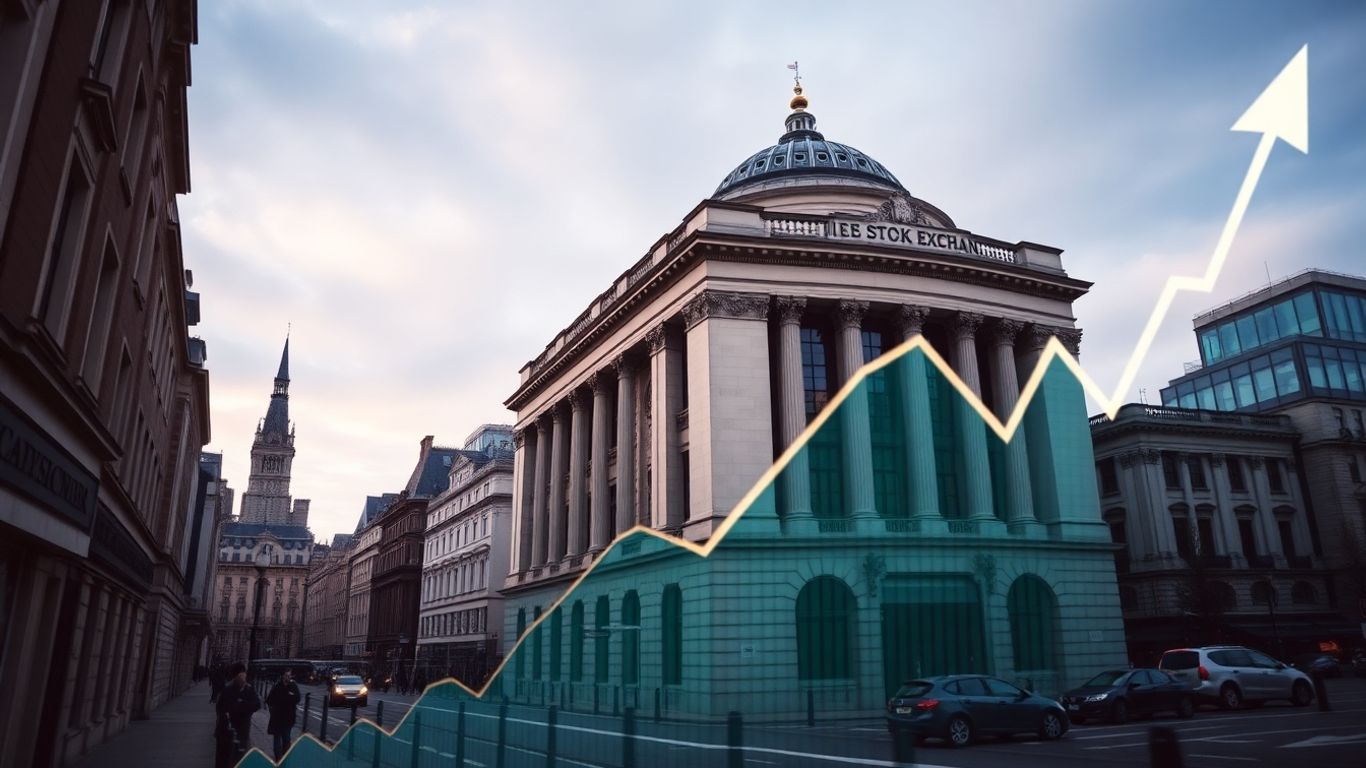
Thinking about putting your money into the FTSE 250? It’s a smart move for many investors looking beyond the biggest companies. This index gives you a look at the UK’s mid-sized businesses, which can be a sweet spot for growth. But like anything in the financial world, it’s not just about picking stocks and hoping for the best. You need a plan.
Investment Avenues: Direct vs. Index Funds
When you decide to invest in the FTSE 250, you’ve got a couple of main paths. You can go the direct route, picking individual companies yourself, or you can use index funds, which are designed to mirror the index’s performance.
- Direct Investment: This means buying shares in specific companies that are part of the FTSE 250. It gives you control and lets you bet on businesses you’ve researched and believe in. However, it takes time and effort to keep up with each company’s news and performance.
- Index Funds: These funds hold all, or a good sample, of the companies in the FTSE 250. It’s a more hands-off approach. You get instant diversification, spreading your risk across many businesses. This is often simpler and can be a good starting point.
- Exchange-Traded Funds (ETFs): Similar to index funds, ETFs trade on stock exchanges like individual stocks. They offer diversification and can be bought and sold throughout the trading day, giving you flexibility.
Assessing Risks and Potential Rewards
Every investment has its ups and downs, and the FTSE 250 is no different. Because it focuses on mid-cap companies, there’s often more room for growth compared to the giants in the FTSE 100. These companies might be expanding, innovating, or gaining market share, which can lead to good returns.
However, mid-sized companies can also be more sensitive to economic shifts. They might not have the deep pockets or established global reach of larger corporations to weather a storm. So, while the potential for reward can be higher, the risk can also be a bit more pronounced. The FTSE 250’s performance often acts as a good indicator of the UK’s broader economic health, meaning it can be more volatile than larger, more international indices.
Here’s a quick look at what influences the index:
| Factor | Potential Impact |
|---|---|
| UK Economic Growth | Positive growth generally boosts the index. |
| Interest Rate Changes | Higher rates can make borrowing more expensive. |
| Global Events | International news can affect UK businesses. |
| Sector Performance | Strength or weakness in key sectors matters. |
| Company-Specific News | Individual company results impact their share price. |
Key Considerations Before Committing Capital
Before you jump in, take a moment to think about a few things. What are you trying to achieve with your money? Are you saving for retirement in 20 years, or do you need the cash in five? Your goals will shape how much risk you should take.
Your personal financial situation is unique. What works for one investor might not be the best fit for another. It’s wise to think about how much you can afford to invest and how comfortable you are with the possibility of losing some of that money. Don’t invest money you might need in the short term.
Consider these points:
- Your Investment Goals: Are you looking for steady income, capital growth, or a bit of both?
- Risk Tolerance: How much fluctuation in your investment’s value can you handle without panicking?
- Time Horizon: How long do you plan to keep your money invested? Longer periods can often smooth out market bumps.
- Market Conditions: What’s happening in the UK and global economies right now? Are things stable or uncertain?
It’s always a good idea to do your homework or chat with a financial advisor. They can help you figure out if the FTSE 250 fits into your overall financial plan.
The Evolving Nature of the FTSE 250

Adaptations to Market Dynamics
The FTSE 250 isn’t static; it’s a living index that changes as the market does. Think of it like a river – it flows and adapts. Companies grow, shrink, get bought out, or even go bust. Because of this, the list of companies in the FTSE 250 is regularly reviewed. This means the index stays relevant, reflecting the current state of mid-sized UK businesses. It’s not just about who’s big today, but who’s growing and making waves.
Maintaining Index Relevance
To keep its status as a reliable indicator, the FTSE 250 has specific rules for which companies can be included. These rules look at things like how much a company is worth (market capitalization) and how easily its shares can be traded. Companies that no longer meet these standards are removed, and new ones that do are added. This process happens periodically, usually quarterly. It’s a bit like a sports league where teams move up or down based on their performance.
Here’s a simplified look at the general criteria:
- Market Capitalization: Companies must fall within a certain range, being larger than the FTSE 100 companies but smaller than the very top tier. This range shifts as the market changes.
- Listing Requirements: Companies must be listed on the London Stock Exchange and meet specific trading and free float requirements.
- Domicile: Generally, companies need to be UK-domiciled or have significant operations and listing in the UK.
Future Outlook for Mid-Cap Companies
Looking ahead, the FTSE 250 will likely continue to be a key indicator of the UK’s economic health. Mid-cap companies often represent the growth engine of an economy. They’re typically more agile than their larger counterparts but more established than smaller, newer businesses. This position means they can be quite sensitive to economic shifts, both positive and negative. Their performance can offer a clearer picture of the domestic economy’s momentum than the more globally focused FTSE 100. As the economic landscape changes, so too will the companies that make up the FTSE 250, offering a dynamic view of British business.
The constant adjustment of the FTSE 250 ensures it remains a true reflection of the mid-cap segment of the UK stock market. This adaptability is what makes it such a useful tool for investors and analysts trying to understand economic trends.
Wrapping Up Your FTSE Journey
So, we’ve walked through what the FTSE 250 is all about. It’s a snapshot of how mid-sized UK companies are doing, and it’s pretty important for understanding the broader economy. Remember, investing isn’t just about picking stocks; it’s about understanding the market and making smart choices. Keep learning, stay patient, and don’t be afraid to ask for help if you need it. The world of finance can seem a bit much at first, but with a little effort, you can definitely get a handle on it. Happy investing!
Frequently Asked Questions
What exactly is the FTSE 250 index?
Think of the FTSE 250 as a list of the 250 biggest companies in the UK, right after the top 100. It’s like a snapshot showing how these medium-sized companies are doing in the stock market. It helps us understand how a big chunk of the UK’s business world is performing.
How is the FTSE 250 different from the FTSE 100?
The FTSE 100 includes the 100 largest companies, which are usually very big and well-known. The FTSE 250 includes the next 250 biggest companies. So, the FTSE 100 shows how the giants are doing, while the FTSE 250 gives us a look at the growing, mid-sized businesses.
Why is the FTSE 250 important for the UK economy?
The FTSE 250 is like a health checker for the UK’s economy. Since these companies are often focused on the UK, their success or struggles can tell us a lot about how businesses and people are doing in the country. When the index goes up, it’s usually a good sign for the economy.
How can someone invest in the FTSE 250?
You can invest in the FTSE 250 in a couple of main ways. You could buy stocks of individual companies that are in the index, but that takes a lot of research. A simpler way is to buy an index fund, which is like a basket holding stocks from many companies in the FTSE 250, spreading your risk.
What are the risks of investing in the FTSE 250?
Like any investment, there are risks. The value of the FTSE 250 can go up and down depending on what’s happening in the economy, world events, or even company news. You might not always get your money back, and the value can change quite a bit, especially in the short term.
Does the FTSE 250 ever change?
Yes, it does! The companies in the FTSE 250 aren’t there forever. Every so often, the list is updated. Companies that grow big enough might move up to the FTSE 100, and new companies that meet the size and trading rules can join the FTSE 250. This keeps the index current and a true reflection of the market.

Peyman Khosravani is a global blockchain and digital transformation expert with a passion for marketing, futuristic ideas, analytics insights, startup businesses, and effective communications. He has extensive experience in blockchain and DeFi projects and is committed to using technology to bring justice and fairness to society and promote freedom. Peyman has worked with international organizations to improve digital transformation strategies and data-gathering strategies that help identify customer touchpoints and sources of data that tell the story of what is happening. With his expertise in blockchain, digital transformation, marketing, analytics insights, startup businesses, and effective communications, Peyman is dedicated to helping businesses succeed in the digital age. He believes that technology can be used as a tool for positive change in the world.