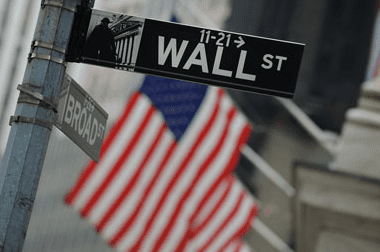
Since recent four-year anniversary of the passage of the Dodd-Frank Wall Street Reform Act, pundits across the public-opinion spectrum have weighed in on the seminal questions: has Dodd-Frank stabilized the financial industry? Has it brought transparency to investment transactions? And perhaps most importanthas it built a viable structure for preventing another colossal crash in the future? Despite the voicing of strong pro and con positions by various observers, perhaps the most credible observation is one that a Wall Street lawyer might make: The jury is still out.
Short-Term Memory Problems
In a recent interview, a critical interlocutor claimed that Dodd-Frank was a hasty, ill-conceived piece of legislation; former Senator Chris Dodd responded with a reminder of what the crash scene was like between 2008 and 2010: $12 trillion worth of national wealth wiped out, 5 million homes foreclosed upon, the collapse of Americas two largest investment houses, the countrys largest insurance company nationalized, and millions of people forced out of work. It was against such a catastrophic background that Wall Street reform legislation wasnot hastily, but urgentlycrafted. The crash scene may have been cleaned up with billions of dollars of taxpayer money, but much debris is still extant.
Oversight, Liquidity, Transparency
The immediate focus of Dodd-Frank was crash containment. If a bank were to approach crisis level, regulatory monitoring as well as strict limits on acceptable levels of risk would presumably isolate that bank from the rest of the sector, thereby avoiding sci-fi virus-like contagion. Along with the Volcker Rulewhich prohibits deposit-account banks from engaging in speculative tradingminimum capitalization requirements were introduced to bolster the fail-safe mechanism. Market transparency became the cornerstone of the legislation, while enhanced consumer protection processes were passed to protect the everyday consumer.
But Has It Worked?
Dodd-Frank mandated 398 new rules to provide the teeth that regulators would need to enforce the acts goals. However, to date only 208 rules (52%) have been granted final rule status. Capital cushions have also come under attack with a New York University report estimating that the six largest U.S. banks are about $300 billion shy of the reserves they would need to overcome another major financial crisis. Stress Testing critics say that it makes for interesting game theory, but nobody knows if the crash-prevention system will work unless tested under real-time circumstances. Furthermore, there is the problem of shadow banks and other significant financial institutions that walk like a bank, talk like a bank but, at the end of the day, have escaped minimum capital requirements altogether. Perhaps the most disconcerting statistic is this one: the six largest banks are today 37% bigger than they were in 2008.

Peyman Khosravani is a global blockchain and digital transformation expert with a passion for marketing, futuristic ideas, analytics insights, startup businesses, and effective communications. He has extensive experience in blockchain and DeFi projects and is committed to using technology to bring justice and fairness to society and promote freedom. Peyman has worked with international organizations to improve digital transformation strategies and data-gathering strategies that help identify customer touchpoints and sources of data that tell the story of what is happening. With his expertise in blockchain, digital transformation, marketing, analytics insights, startup businesses, and effective communications, Peyman is dedicated to helping businesses succeed in the digital age. He believes that technology can be used as a tool for positive change in the world.