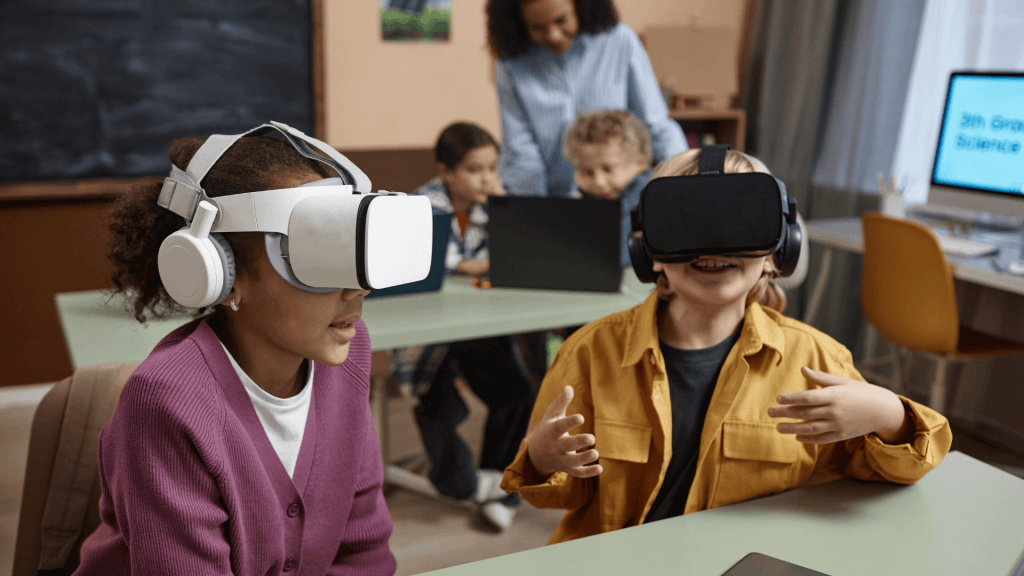
Because of the rapid speed at which technology is changing, education has to follow.
Dynamic interactive technology has forever changed the classrooms’ chalkboards, textbooks, and static presentations.
One of the most immersive and effective ways to engage students in today’s technological world is to educate through virtual reality.
With virtual reality in education that places the learner directly in a molecule, on a shipwreck, or in space exploring planets, they can experience a deeper level of learning.
To start the journey of cutting-edge tools, teachers have to take a few necessary steps.
They have to select age-appropriate lesson modules, prepare an area that would support safe movement, and understand what hardware is required.
For a VR-friendly classroom that supports diverse learning, deepens understanding, and enhances engagement, we will explore the steps in this article, especially with teachers in mind.
Why Bring VR Into the Classroom?
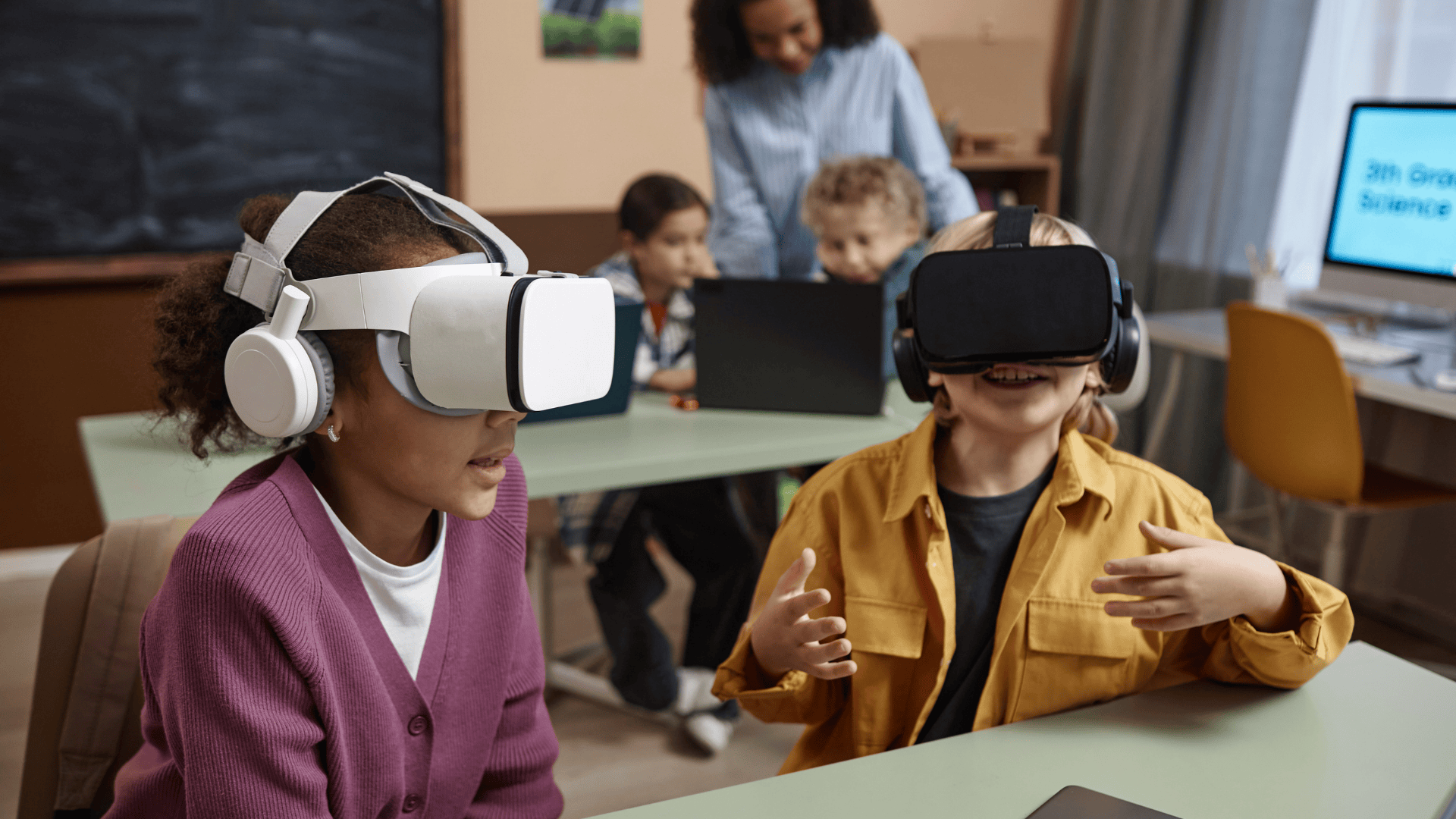
Traditional lessons that are more abstract or detached are shifting to immersive learning.
Instead of just reading about the solar system, students can now experience it on a deeper level and float among the planets with VR by simply slipping on a headset.
VR immersion enhances the student’s visualization and ability to experiment in an environment that is not usually accessible.
Virtual labs are safe, vivid, and repeatable when it comes to subjects like experimental chemistry or physics.
A student’s world is enriched without the added costs of a physical lab; in fact, VR chemistry enables the student to virtually dissect a frog or mix chemicals and view the result without the danger involved.
VR addresses multiple learning preferences; for example, auditory learners might use narration in VR, or kinesthetic learners could interact with virtual objects.
When given an interactive visual as well as a tactile experience, for example, when manipulating virtual atoms during a physics lab VR session, it is advantageous for students who struggle with reading comprehension and helps them thrive.
Understanding the Basic Requirements
If you are looking for user-friendly VR headsets that are also powerful, Meta Quest or HTC Vive are ideal.
The most affordable standalone headset for classrooms is the Meta Quest.
For larger VR environments, and typically for computers, the HTC Vive offers higher graphical fidelity and space-based tracking.
Computers with high-performance graphic cards and processors are ideal when using tethered headsets, like Vive.
When using Quest 2, which is a wireless option, a reliable charging station is required.
Many VR experiences run from the cloud or require regular content updates.
For seamless loading, access to the latest learning modules, multi-user engagement, and seamless loading, a good quality Wi-Fi connection is required.
Futuclass and other educational platforms are tailor-made for the classroom and offer, for example, VR physics as well as VR chemistry.
Teachers find it easy to monitor students’ progress with the progress-tracking and built-in assessment tools.
Setting Up a VR‑Friendly Classroom Space
VR demands physical movement, which means there should be no hazards to trip over and tape to define boundaries for at least a 2-meter area.
Classroom furniture should be arranged so students won’t bump into desks or each other.
Usually 5-6 students are able to use VR at the same time per class, which means ideally there should be a roster to ensure everyone gets a turn.
Sanitizing headsets is essential between uses, and to prevent eye strain or disorientation, VR sessions should be kept to between 20 and 30 minutes.
Choosing the Right Educational VR Content
For teachers, it’s important to ensure that content correlates directly to the curriculum benchmarks and learning goals.
Before implementing, vet each module for grade-appropriateness, terms alignment, and knowledge level.
Modules like VR physics simulations of forces and motion and VR in chemistry demonstrations of molecular reactions fit seamlessly into middle school and early high school science.
Interactive labs help students visualize atomic interactions, experiment with variables, and immediately apply theoretical knowledge.
Training and Preparing Students for VR Use
Start with a class-wide discussion: What is VR? What will we learn?
Show a short demo or recorded VR walkthrough.
Discuss etiquette; for example, students should avoid touching moving headsets, stay within boundaries, and respect others during VR sessions.
Setting Rules and Expectations
Have a checklist:
- One student per headset
- Headset straps snug on the head
- Stay within the play space
- Spectators whisper or use soft voices
- Hands on hips or at sides when not actively engaging in VR
For safety reasons, orientation is necessary, for example, what to do if a student feels dizzy, how to signal for assistance, and running a tutorial demo.
If a student experiences any discomfort, it should be communicated at an early stage.
Overcoming Common Challenges
Affordability can be a challenge.
Ideally, purchase just a couple of headsets, then expand over time.
Seek out grants earmarked for STEM enhancement, or partner with tech companies offering educational VR initiative grants or equipment donations.
When tech is involved, there are usually hiccups to start with.
Designate one staff member to ensure that chargers, extension cables, and spare headsets are ready for use.
For continuation, always have a backup plan ready.
Some students are not able to use VR due to certain disabilities, for example, vestibular issues, motion sickness, or epilepsy.
Long‑Term Integration and Lesson Planning
VR shouldn’t stand alone but rather be complementary to the curriculum offered.
For example:
Science Units:
After teaching about Newton’s laws in a traditional class, reinforce it with a physics lab VR module.
Chemistry Topics:
Models of molecules and bonding become more tangible when explored in VR chemistry space.
Project-Based Learning:
Let students design a virtual ecosystem or custom lab experiment in VR, presenting their findings with multimedia.
Balance is key. Begin with a traditional lecture, switch to VR for simulation, then finish with group discussion or peer teaching.
Use built-in quizzes after VR modules to assess and track students’ knowledge gains and make needed adjustments.
Conclusion
VR in education is an enhancement to the learning experience, not just the latest trend in hardware.
For transformative lessons, preparation and following the steps are important when it comes to VR physics and VR chemistry.
A great starting point is a platform like Futuclass that offers immersive modules in both chemistry and physics.
Gradually introduce VR stations and modules to cultivate and explore a new learning adventure step by step.
Are you and your classroom ready for this incredible VR journey?