
Thinking about getting a new car? It’s exciting, but the money part can feel like a puzzle. That’s where a calculator for vehicle finance comes in. It’s a simple tool that helps you figure out what you can really afford and what your monthly payments might look like. This guide will show you how to use one and what to expect when you’re looking into car loans.
Key Takeaways
- A calculator for vehicle finance helps you estimate loan costs and see what you can afford.
- Knowing your credit score is important for getting better loan rates.
- Things like loan length, interest rates, and how much you pay upfront all change your monthly payments.
- Getting pre-approved for a loan before you start shopping gives you more power when you negotiate.
- Comparing different loan offers is a smart move to make sure you get a good deal.
Understanding Your Vehicle Finance Calculator
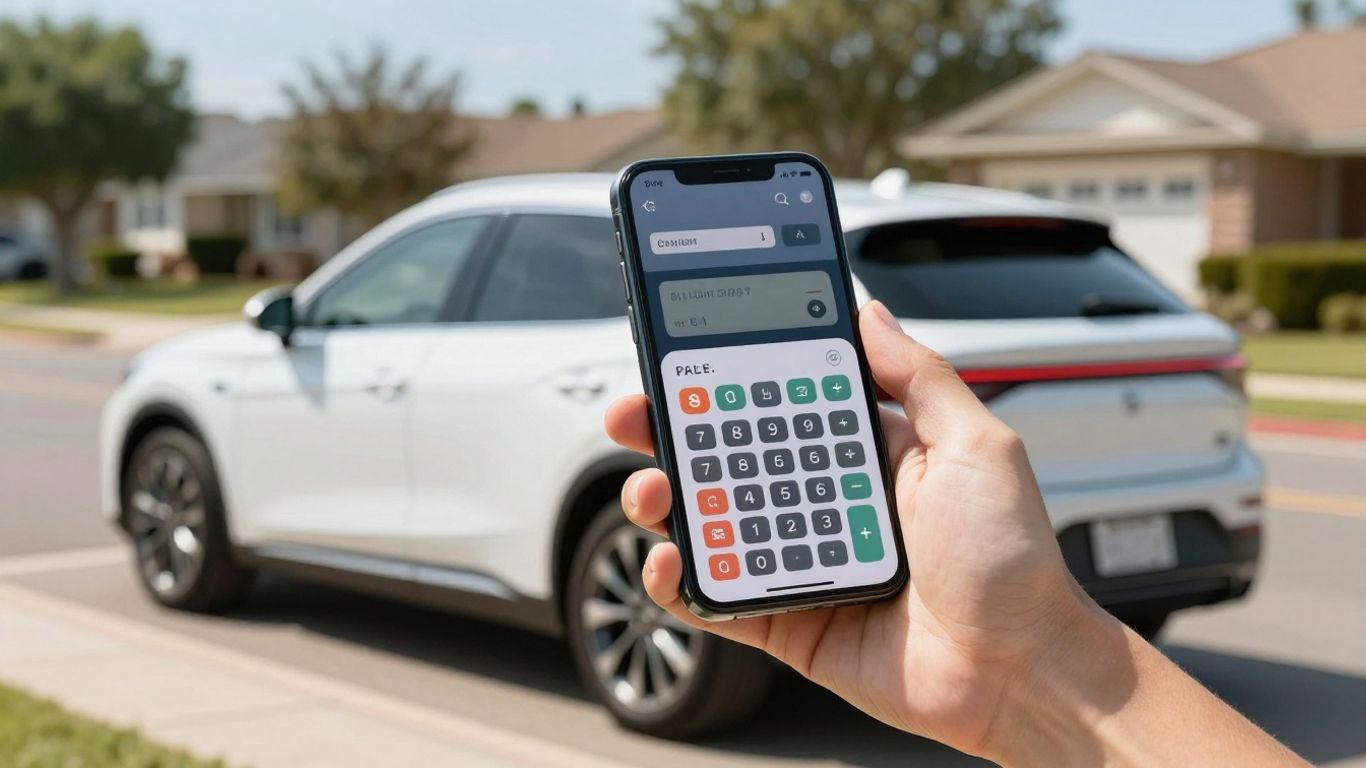
Buying a car is a big step, and figuring out the money side of things can feel pretty overwhelming. That’s where a vehicle finance calculator comes in. Think of it as your personal guide to understanding how much car you can actually afford and what your monthly payments might look like. It takes the guesswork out of a really important financial decision, giving you a clearer picture before you even start shopping.
Key Components of a Vehicle Finance Calculator
Most car finance calculators ask for a few key pieces of information to give you an estimate. You’ll usually need to input:
- Vehicle Price: The total cost of the car you’re interested in.
- Loan Term: How many months or years you plan to finance the car.
- Interest Rate (APR): The annual percentage rate the lender charges. This is a big one that affects your total cost.
- Down Payment: The amount of money you’ll pay upfront.
- Trade-in Value: If you’re trading in your old car, its estimated value.
Some calculators might also ask about taxes and fees, which gives you an even more accurate picture. The goal is to get a realistic idea of your potential monthly payments. This simple calculation gives you the power to compare different loan scenarios side-by-side.
How a Vehicle Finance Calculator Simplifies Your Decision
Trying to calculate loan payments by hand is a headache. A calculator does the heavy lifting for you. It shows you how changing one variable, like extending the loan term or increasing your down payment, can affect your monthly payment and the total interest you’ll pay over time. This kind of instant feedback is super helpful when you’re comparing different vehicles or loan offers. It helps you see the long-term financial implications of your choices. For instance, you can quickly see how a slightly higher interest rate can add hundreds or even thousands of dollars to what you pay over the life of the loan. It’s a straightforward way to compare different scenarios without needing to be a math whiz. You can even use it to explore different auto loan options that might be available.
By playing around with different price points and loan terms, you can see what monthly payment fits comfortably within your existing budget. This prevents you from falling in love with a car you can’t afford and helps you avoid financial strain down the road.
The Importance of Accurate Input Data
To get the most useful results, you need to provide accurate information. Don’t worry if you don’t have the exact numbers yet; even a good guess will help you get started. For example, knowing your credit score is important for getting the best car loan rates. If you’re unsure about the exact interest rate you might get, you can often find general rates for your credit tier online, or use a range to see how it impacts payments. Similarly, getting an estimate for your trade-in value before you go to the dealership can give you a solid number to plug in. The more precise your inputs, the more reliable the calculator’s output will be, helping you make a truly informed decision about your vehicle purchase budget.
Leveraging a Calculator for Smart Budgeting

Before you even start looking at cars, a finance calculator can be your best friend for figuring out what you can actually afford. It’s like having a crystal ball for your wallet. You can play around with different numbers to see what monthly payment feels right for your budget. This way, you don’t get your heart set on a car that’s out of reach. It helps you set a realistic budget right from the start.
Establishing Your Vehicle Purchase Budget
Setting a budget isn’t just about the sticker price. You need to think about the whole picture. A calculator helps you see how different loan terms and interest rates change your monthly payment. It also helps you consider other costs that come with owning a car.
- Vehicle Price: The starting point for most calculations.
- Down Payment: How much cash you put down upfront.
- Loan Term: The length of time you’ll be paying off the loan (e.g., 36, 48, 60 months).
- Interest Rate (APR): The annual cost of borrowing money.
Remember, the monthly payment is just one piece of the puzzle. You also need to factor in insurance, fuel, and regular maintenance. Ignoring these can lead to unexpected financial strain.
Comparing Different Loan Scenarios
This is where a calculator really shines. You can easily compare how changing one variable affects your payments. For example, what happens if you extend the loan term by a year? Or what if you can put down an extra $1,000?
| Scenario | Monthly Payment | Total Interest Paid | Total Cost of Loan |
|---|---|---|---|
| 60 months, 5% APR | $375.00 | $2,500.00 | $22,500.00 |
| 72 months, 5% APR | $320.00 | $3,040.00 | $23,040.00 |
| 60 months, 6% APR | $385.00 | $3,100.00 | $23,100.00 |
As you can see, a longer loan term means a lower monthly payment, but you end up paying more interest over time. Playing with these numbers helps you find the sweet spot between affordability and the total cost.
Understanding Total Cost of Ownership
Don’t just focus on the loan payment. Think about everything that goes into owning a car. This includes:
- Insurance: Premiums can vary a lot based on the car you choose.
- Fuel: Estimate your monthly gas or electricity costs.
- Maintenance: Regular oil changes, tire rotations, and other upkeep.
- Repairs: Budget for unexpected fixes that might come up.
By using a calculator to estimate your loan payment and then adding these other costs, you get a much clearer picture of your true monthly car expenses. This holistic view is key to making a smart financial decision.
Key Factors Influencing Your Loan Calculation
When you’re looking at car loans, a few things really change the numbers you see. It’s not just about the sticker price; other elements play a big part in what your monthly payment will be and how much you’ll pay overall. Understanding these factors helps you get a clearer picture and make a smarter choice.
Vehicle Price and Down Payment Impact
The starting point for any car loan is the vehicle’s price. This is the base amount you’re looking to finance. Your down payment is your first chance to reduce that amount. The more cash you put down upfront, the less you need to borrow. This not only lowers your monthly payment but also cuts down the total interest you’ll pay over the loan’s life. A bigger down payment is generally a good move if you can manage it.
The Role of Interest Rates (APR)
Your Annual Percentage Rate (APR) is essentially the cost of borrowing money. It’s expressed as a yearly percentage. A lower APR means less money goes towards interest, and more goes towards paying off the car itself. Your credit score is a major factor in what APR you’ll be offered, but lenders also look at the loan term and the car’s age. It’s really important to know your APR because it directly affects both your monthly payment and the total amount you’ll repay.
Loan Term and Its Effect on Payments
The loan term is simply how long you have to pay back the loan, usually measured in months (like 48, 60, or 72 months). A longer term means lower monthly payments, which can feel easier on your wallet each month. However, over a longer period, you’ll end up paying more in total interest. For instance, borrowing $25,000 over 72 months will cost more in interest than borrowing the same amount over 48 months. It’s a trade-off between a manageable monthly bill and the overall cost of the vehicle. You can explore different loan options with various lenders to see what works best.
It’s easy to get caught up in just the monthly payment, but remember to look at the total cost. A lower monthly payment achieved through a longer loan term can end up costing you significantly more in interest over the years. Finding a balance that fits your budget now and in the long run is key.
Here’s a quick look at how these factors can influence your loan:
- Vehicle Price: Higher price means a larger loan amount.
- Down Payment: More down payment means a smaller loan amount and less interest paid.
- APR: A lower APR reduces the total interest paid.
- Loan Term: Longer term means lower monthly payments but higher total interest paid.
Advanced Features for Precise Calculations
Beyond the basic payment figures, a good vehicle finance calculator offers tools to give you a much clearer picture of your loan’s long-term impact. These advanced features help you move past just the monthly number and understand the full financial commitment.
Amortization Schedules for Payment Breakdown
An amortization schedule is like a detailed report card for your loan. It breaks down every single payment you’ll make over the life of the loan. You can see exactly how much of each payment goes towards the principal (the actual amount you borrowed) and how much is applied to interest. Watching the principal balance shrink over time is pretty satisfying, and it shows you how you’re building equity in your vehicle. It’s a great way to visualize the loan’s journey.
Here’s a simplified look at what an amortization schedule might show:
| Payment Number | Starting Balance | Payment Amount | Principal Paid | Interest Paid | Ending Balance |
|---|---|---|---|---|---|
| 1 | $20,000.00 | $400.00 | $250.00 | $150.00 | $19,750.00 |
| 2 | $19,750.00 | $400.00 | $255.00 | $145.00 | $19,495.00 |
| … | … | … | … | … | … |
Incorporating Trade-In Values
If you’re planning to trade in your current car, a calculator that lets you input its value can make a big difference. Instead of just guessing, you can get a more accurate loan amount. You’ll typically enter your car’s estimated worth and, if you still owe money on it, the remaining balance. This directly reduces the amount you need to finance, giving you a more realistic monthly payment from the start.
Don’t just estimate your trade-in value; get a real quote if possible. This makes your loan calculation much more accurate.
Factoring in Taxes and Fees
It’s easy to get caught up in the car’s sticker price, but taxes and fees can add a significant chunk to the final cost. Things like sales tax, registration fees, and title fees are often overlooked. The best calculators have specific fields where you can add these costs. This way, your calculated payment reflects the true total you’ll be borrowing, preventing any unwelcome surprises when you’re ready to sign the papers.
Navigating Auto Loan Options with Calculators
Once you’ve got a handle on your budget and the total cost of a vehicle, the next big step is figuring out how to pay for it. Auto loans are the most common way people finance their cars, but there’s more to it than just picking any loan. It’s about finding the right fit for your financial situation.
Securing Favorable Car Loan Rates
Getting a good interest rate on your car loan can save you a lot of money over the years. Several things influence the rate you’ll be offered. Your credit history is a big one, but lenders also look at how long you plan to take to pay back the loan and how much you’re borrowing. Comparing offers from multiple lenders is key to finding the best rate. Don’t just go with the first one you see. Try to get quotes from your bank, a credit union, and the dealership’s finance department. Applying to a few places within a short period usually won’t hurt your credit score much.
Exploring Specialized Loan Products
While standard auto loans are common, there are other options that might suit you. Some lenders offer loans specifically for used cars, or perhaps for buyers with less-than-perfect credit. There are also lease-to-own programs, though these often come with different terms and conditions. A good calculator might not directly show these specialized products, but understanding your borrowing power through a general calculator can help you ask the right questions when exploring these less common avenues.
The Benefit of Pre-Qualification Tools
Many online calculators link to pre-qualification tools. This is a smart way to get an idea of what interest rates and loan amounts you might qualify for before you formally apply. It’s like a test drive for your finances. Pre-qualification usually doesn’t affect your credit score, and it gives you a realistic budget to work with. Knowing what you’re likely to get approved for allows you to shop for a car with more confidence, knowing you have financing in place.
Moving from Calculation to Car Ownership
So, you’ve spent time with the calculator, played with different numbers, and you have a pretty good idea of what you can afford each month. That’s a huge step! But the calculator is just the starting point. Now it’s time to take that financial plan and turn it into keys in your hand. It’s about making sure the numbers you worked out actually line up with the real world of buying a car.
Reviewing the Total Loan Commitment
It’s easy to get fixated on that monthly payment number. It’s what hits your bank account every month, after all. But remember, the calculator also showed you the total amount you’ll pay back over the life of the loan. This includes all the interest. A lower monthly payment might sound great, but if it means stretching the loan out for many extra years, you could end up paying a lot more overall. Always look at that total figure. It gives you the full picture of your financial commitment.
Don’t let a low monthly payment blind you to the total cost. A longer loan term, while easier on your wallet month-to-month, can significantly increase the amount of interest you pay over time. It’s a trade-off worth understanding before you sign.
Gathering Necessary Financial Documents
Once you’ve settled on a loan scenario, you’ll need to get your paperwork in order. Lenders will want to see proof of income, your employment history, and details about your current debts. They’ll also check your credit report. Having these documents ready can speed up the process considerably. Think about things like recent pay stubs, bank statements, and proof of address. The more organized you are, the smoother the final steps will be.
Here’s a quick checklist of common documents you might need:
- Proof of Income (e.g., recent pay stubs, tax returns)
- Proof of Residency (e.g., utility bill, lease agreement)
- Driver’s License or State ID
- Information on current insurance
- Details of any trade-in vehicle
Finalizing Your Vehicle Purchase Budget
Before you sign on the dotted line, take one last look at your budget. Remember those other costs we talked about? Insurance, fuel, maintenance – they all add up. Make sure your comfortable monthly loan payment still leaves room for these ongoing expenses. It’s not just about affording the car itself, but affording the entire experience of car ownership. You might even want to explore options for vehicle protection plans for added peace of mind against unexpected repair bills. Getting pre-qualified for a loan beforehand can also give you a solid number to work with, making this final budgeting step much more concrete.
Ready to Drive Away Confidently
So, you’ve learned how car finance calculators work and why they’re super helpful. They’re not just fancy tools; they’re your first step to figuring out what you can really afford. By playing around with different numbers, you get a clearer picture of monthly payments, interest costs, and the total price of your dream car. This kind of planning helps you avoid surprises down the road and makes sure you’re making a smart financial choice. Don’t just guess – use a calculator, compare your options, and drive away with confidence knowing you’ve made an informed decision.
Frequently Asked Questions
What exactly is a car finance calculator?
Think of a car finance calculator as a super helpful online tool. It’s designed to help you figure out how much a car loan might cost you each month. You just need to put in some basic info, like the price of the car you want, how much money you’ll pay upfront, how long you plan to take to pay it back, and the interest rate. The calculator then does the math for you and gives you an estimate of your monthly payment.
Why is using a calculator so important before buying a car?
Using a calculator before you shop is like having a secret map for your money. It helps you understand what you can realistically afford, so you don’t get your heart set on a car that’s too expensive. It shows you how different choices, like paying more upfront or choosing a shorter loan, can change your monthly payments. This makes sure you make a smart decision that fits your budget, not just for a little while, but for the whole time you’re paying off the car.
What information do I need to use a car finance calculator?
To get the best estimate, you’ll need a few key details. First, the total price of the car you’re interested in. Then, think about your down payment – that’s the money you’ll pay right away. You’ll also need to consider the loan term, which is how many months or years you’ll be making payments. Lastly, the interest rate, often called APR, is super important because it affects how much extra you’ll pay over time. If you’re trading in your old car, its estimated value is helpful too!
How does the interest rate (APR) affect my car loan?
The interest rate, or APR, is basically the cost of borrowing money. A higher APR means you’ll pay more in interest over the life of the loan, making your total cost higher. Even a small difference in the interest rate can add up to hundreds or even thousands of dollars over several years. That’s why it’s a good idea to shop around for the best possible rate.
What’s the difference between a short loan term and a long loan term?
Choosing a shorter loan term, like 48 months, means your monthly payments will be higher, but you’ll pay less interest overall and own your car sooner. A longer loan term, like 72 months, will give you smaller monthly payments, which can feel easier on your wallet each month. However, you’ll end up paying more in interest over the entire life of the loan.
Besides the monthly payment, what other costs should I consider?
It’s smart to think beyond just the monthly loan payment. You’ll also need to budget for car insurance, which can vary a lot depending on the car you choose. Don’t forget about gas, regular maintenance like oil changes, and potential repairs down the road. Some calculators can help you estimate these extra costs to give you a more complete picture of what owning the car will really cost you.

Peyman Khosravani is a global blockchain and digital transformation expert with a passion for marketing, futuristic ideas, analytics insights, startup businesses, and effective communications. He has extensive experience in blockchain and DeFi projects and is committed to using technology to bring justice and fairness to society and promote freedom. Peyman has worked with international organizations to improve digital transformation strategies and data-gathering strategies that help identify customer touchpoints and sources of data that tell the story of what is happening. With his expertise in blockchain, digital transformation, marketing, analytics insights, startup businesses, and effective communications, Peyman is dedicated to helping businesses succeed in the digital age. He believes that technology can be used as a tool for positive change in the world.