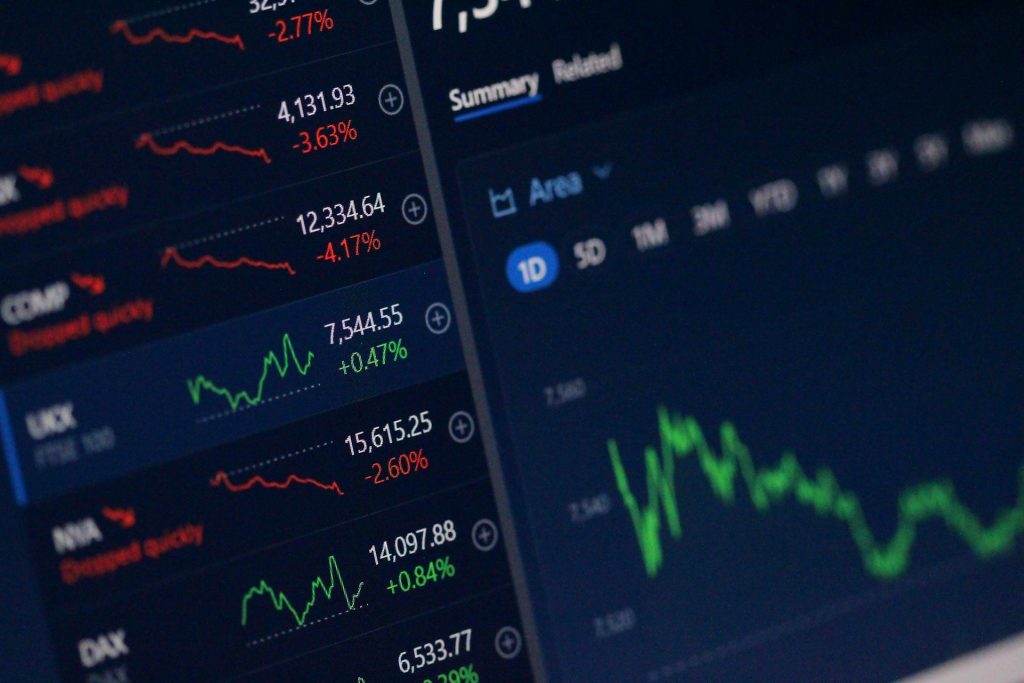
The opening weeks of 2025 have been restless. Sudden moves in currency pairs. Commodity spikes that fade within hours. Bond yields jerking higher, then slipping back without warning. In this climate, quantitative hedge funds are pulling away from the routines they relied on a year ago. The shift isn’t quiet—it’s visible in the way positions are built, unwound, and rebuilt again before the dust even settles.

Shifting Strategies in Unpredictable Markets
Change has stopped waiting for a schedule. It cuts across sectors, arriving without warning, and the ones who keep pace are often those willing to break old habits. In energy pits, in the quiet offices of luxury retailers, plans are torn up and rebuilt to match the day’s reality. Property groups do it too, shifting holdings when a new policy lands or when a city’s demand dries up overnight.
The same restlessness is spilling into parts of entertainment, where the market for online casinos in Texas keeps expanding. Operators there tend to roll out welcome packages, reload deals, and cashback for returning customers. Some are known for quick payouts and designs that work just as well on a phone as on a desktop. Among them, casino sites licensed for Texas residents – referring to sweepstakes and social casino platforms operating within state law – stand apart, working within set rules that give players a defined and safe space. Clear terms, flexible ways to move money, and straightforward bonus structures make the framework easy to navigate.
In any fast-turning field, the wait-and-see approach has worn thin. What once took weeks can now be decided before the close of business. It’s a shift that has reached the upper floors of the hedge fund world.
Flexible Positioning Becomes the New Hedge Fund Standard
Industry reports suggest that AQR, along with several other well-known quantitative managers, may be shifting away from slower rotation schedules in favor of more responsive trading models. Decisions that once came after a committee review now happen mid-session. In certain cases, models incorporate live market inputs — including price ticks, order book data and cross-asset correlations — to inform intraday exposure adjustments. A few months ago, such speed might have been seen as reckless. Now, it feels like survival.
Across Asia and Europe, the same pattern is taking shape. Certain investment firms that embraced more flexible positioning earlier in the year have seen stronger outcomes compared to peers holding static allocations. What started as a limited experiment within a few organisations is now being rolled out more broadly across the sector.
Reading the Market’s Pulse
The older rhythm—waiting for economic releases, scanning earnings reports—has given way to a constant readout of market temperature. Predictive analytics now work like early-warning radar, blending historical datasets with live trading flows. When stress levels rise, capital can be pulled from vulnerable sectors before the slide becomes visible to most.
Some desks are running minimum-variance calculations that adjust every time volatility jumps. Others are building risk-rate measures designed to shift portfolio weightings with almost no delay. It means no holding pattern between decision and execution.
There’s also growing use of regime-shift detection. The moment a market slips from trending to choppy, or when volatility clusters start to appear, the models flag it. Managers can then rotate between strategies—trend following one week, mean reversion the next—without losing their footing. The approach is part caution, part opportunism.
In a few cases, these tactics are layered together. A trend model might run in the background while another hunts for seasonal effects, with a carry trade ready to activate if conditions align. It’s messy, adaptable, and built to avoid being trapped in a single mindset.
The New Fault Lines
Not every move is predictable. Traders know there are days when the models miss the turn completely. A rally driven by speculation can outlast any logical forecast, then reverse on a whisper. Those moments have reignited old debates on trading floors: how much control to hand to the system, and when to step in.
Even with those doubts, the momentum is hard to stop. Larger funds now house analysts, coders, and portfolio managers in the same room, letting insights move straight from screen to market. It’s less about replacing judgment and more about speeding the path from recognition to action.
Capital is following the trend. New funds focused on adaptive methods have attracted significant investor commitments, with some documented cases reporting strong gains since January. In a year already defined by sudden turns, the firms quickest to adjust may end up writing the playbook others follow.