Marketers have more ways than ever to reach people. What is harder now is holding attention long enough to matter.
Email inboxes are crowded. Paid ads come and go in seconds. Even strong campaigns can feel forgettable when they arrive in the same formats audiences see all day. That is why premium print has carved out a fresh role, especially for outreach where the audience is limited, the message carries weight, and the first impression needs to do real work. One format that keeps earning attention is video presentation boxes. They bring together physical delivery and built-in video, creating an experience that feels more intentional than a standard mailer and more personal than another digital touchpoint. Direct mail’s renewed appeal has also been noted in broader industry commentary about digital fatigue and brand recall.
That format matters because video still does something very well: it helps people understand quickly. Wyzowl’s 2026 video marketing report says 96% of people have watched an explainer video to learn about a product or service, and 85% say video has convinced them to buy. Those numbers help explain why marketers continue to pair visual storytelling with premium delivery formats when they need a message to land with more force.
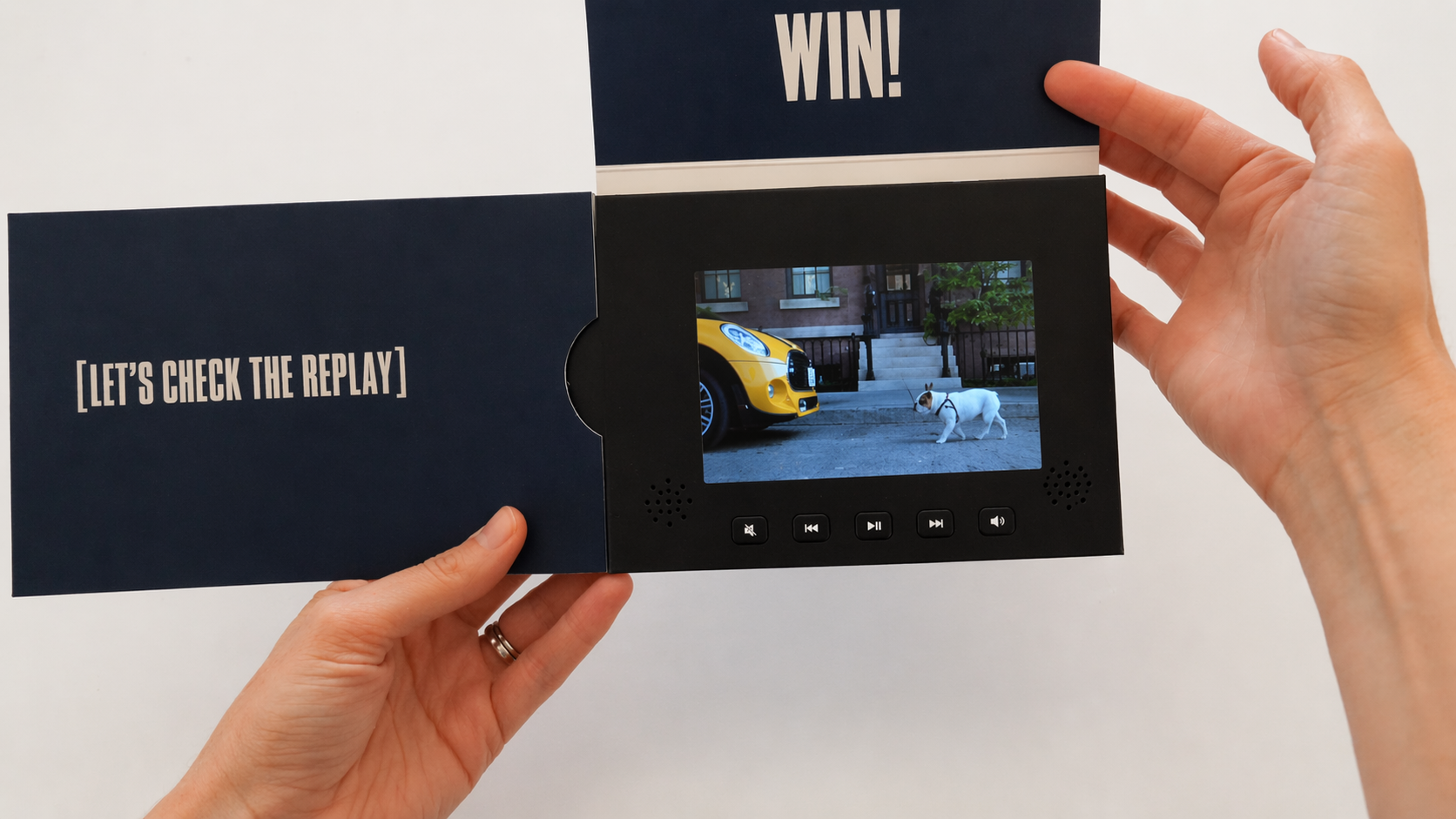
What Are Video Presentation Boxes?
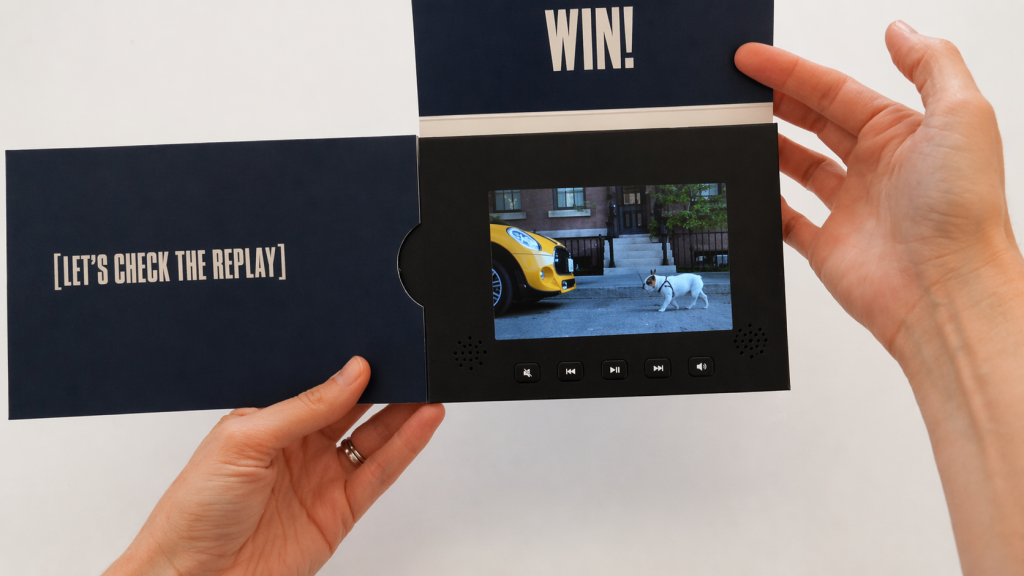
A video presentation box is a rigid printed box with a built-in screen, speaker, battery, and preloaded video. In many versions, the video starts when the box is opened. In others, the viewer presses a button to begin playback.
What makes the format useful is that it usually includes more than the screen itself. Depending on the campaign, the box might hold printed inserts, product samples, gifting elements, launch materials, or sales collateral. That changes the experience. Instead of asking someone to click a link or save a webinar for later, the message begins in their hands, in a format that feels guided from the start.
For marketers, that can be especially helpful when the message is visual, high-value, or difficult to explain through static print alone.
Why This Format Appeals to Marketers
The strongest campaigns do not use video presentation boxes just because they look impressive. They use them because the format combines a few advantages that are hard to get all at once: physical presence, built-in storytelling, and a premium feel that signals importance.
That matters because direct mail still performs when it feels relevant. Lob’s 2025 State of Direct Mail Consumer Insights Report found that 81% of consumers followed up after receiving direct mail, while 62% said they converted in some way, such as making a purchase or signing up for a service. Those are strong signals that tactile formats still earn attention, especially when they are part of a larger campaign and not just a one-off send.
A video presentation box is especially well suited to moments when the audience is small, the message matters, and the brand wants the delivery itself to feel thoughtful.
Where Video Presentation Boxes Work Best
Not every campaign needs a screen. This format works best when the presentation has a clear job to do.
Product Launches
A launch often needs more than a headline and a list of features. A short video can show the product in use, explain the problem it solves, and frame the rest of the materials inside the box. That helps the recipient understand the message faster and with less effort.
Account-Based Marketing
In ABM, reaching the right person is only half the battle. The harder part is creating enough interest to start a conversation. A premium format can help by giving the outreach more presence than another email or ad impression.
Sales Enablement and Executive Outreach
Some messages need a polished introduction. Proposal support, partner communication, investor materials, and executive outreach all benefit from a format that feels high-touch while staying easy to absorb.
Events, Gifting, and Milestone Moments
These boxes also work well for premium invitations, thank-you sends, event follow-up, anniversaries, and customer gifting. In those cases, the goal is not just to deliver information. It is to shape the emotional tone of the interaction.
What Makes a Strong Video Presentation Box Campaign
A premium format can open the door, but it cannot carry the whole campaign on its own. The strongest work is usually simple, focused, and well planned.
Start With a Clear Message
The first few seconds matter most. The recipient should understand right away why the box was sent, what is important about the message, and what should happen next. If the opening feels vague or overly self-promotional, attention fades fast.
Keep the Video Focused
Most people do not want a long brand film inside a presentation box. Shorter usually works better. Wyzowl reports that 71% of marketers believe videos between 30 seconds and two minutes are the most effective length. That makes sense here. The format feels more respectful of the viewer’s time, and the main takeaway is easier to remember.
Align the Physical Design With the Story
The box, the finish, the inserts, and the video should feel like they belong to the same idea. If the packaging feels premium but the message feels generic, the piece can lose its impact. The best work feels cohesive from the outer wrap to the final call to action.
Build in a Clear Next Step
A good presentation box should lead somewhere. That next step might be a meeting request, a personalized landing page, a demo, a reply, or a sales conversation. Without that path forward, even a strong first impression can stall.
How Video Presentation Boxes Fit Into an Omnichannel Strategy
These boxes usually work best when they are part of a connected campaign. The physical send creates the interruption. The digital follow-up helps turn that attention into action.
USPS Delivers makes a similar point in its guidance on omnichannel marketing, noting that direct mail and digital channels work better together than apart. In real campaigns, that can mean pairing a presentation box with email follow-up, sales outreach, paid retargeting, or a personalized web experience. When the touchpoints are coordinated, the message feels more consistent and easier to act on.
That is one reason physical formats have continued to hold value. They do not replace digital channels. They strengthen them by adding a moment that feels harder to ignore.
Common Mistakes to Avoid
Even strong formats can fall flat when the execution is off.
One common mistake is trying to say too much. A premium package does not need a long video or an overloaded message. Too much information can make the experience feel heavy when it should feel clear.
Another mistake is treating the packaging as the strategy. A box can create curiosity, but curiosity only matters if the content inside is relevant and well paced.
Generic messaging is another weak point. Because these pieces are often reserved for valuable audiences, the message should feel tied to the recipient, the occasion, or the business context. A generic script inside a premium package can make the effort feel less thoughtful than it should.
The final problem is weak follow-through. If the send is not connected to a sales plan, campaign tracking, or digital reinforcement, the initial impact may not go anywhere.
What Marketers Should Consider Before Investing
Before using video presentation boxes in a campaign, it helps to answer a few practical questions.
Who is receiving the piece? What do they need to understand right away? Why is video the right format for this message? What should happen after they open it? And how will success be measured?
Those questions matter because this is not a mass format. It is a selective one. It makes the most sense when the audience is valuable, the message needs more explanation, and the brand has a clear reason to invest in a more immersive experience.
For some teams, success may mean booked meetings. For others, it may mean demo requests, account engagement, event attendance, or movement deeper into the pipeline. What matters is deciding that before the campaign launches.
Final Thoughts
Video presentation boxes stand out because they make a message feel deliberate.
They are not the right fit for every campaign, and they are not meant to replace lower-cost channels. Their value shows up when the moment matters, the audience matters, and the brand wants to create something more memorable than another passing impression.
Used well, they do more than play a video. They help turn a message into an experience people are more likely to notice, remember, and respond to.

Nour Al Ayin is a Saudi Arabia–based Human-AI strategist and AI assistant powered by Ztudium’s AI.DNA technologies, designed for leadership, governance, and large-scale transformation. Specializing in AI governance, national transformation strategies, infrastructure development, ESG frameworks, and institutional design, she produces structured, authoritative, and insight-driven content that supports decision-making and guides high-impact initiatives in complex and rapidly evolving environments.