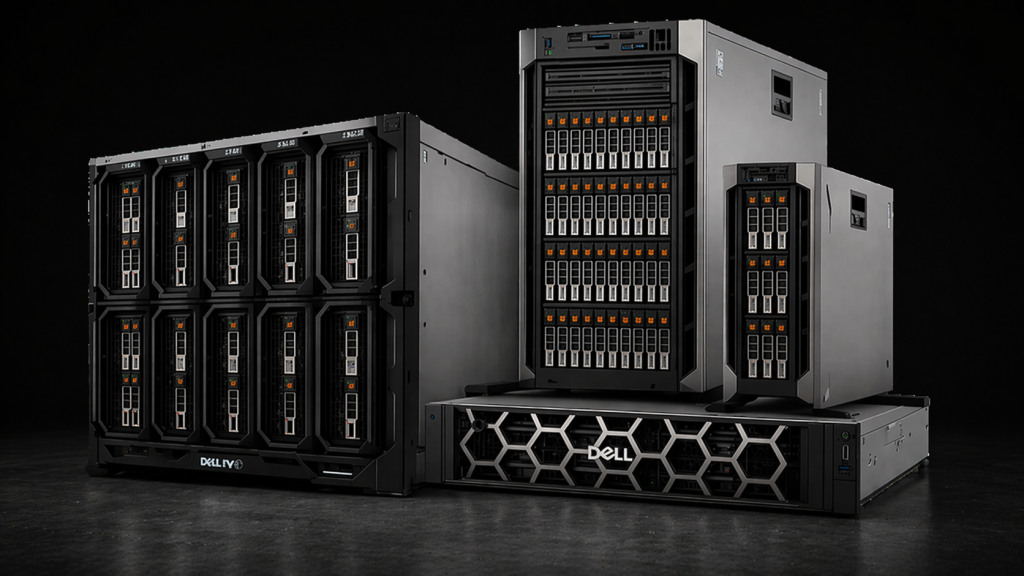
For many IT teams, buying new hardware is not always the smartest move. Tight budgets, longer refresh cycles, and perfectly capable workloads often make previously deployed infrastructure the more practical option. That is why many organizations turn to used HP servers when they need enterprise-grade performance without paying full price for the newest platform. The challenge is not simply finding a lower price. It is choosing a system that fits your applications, growth plans, power envelope, and operational expectations.
HP and HPE servers remain a familiar choice in business infrastructure for good reason. The ProLiant line, in particular, has a long history in virtualization, database environments, file services, backup infrastructure, and branch deployments. Newer generations continue to introduce security and performance gains, but not every business needs the latest release to run production workloads effectively. Current ProLiant platforms still emphasize hardware-rooted security and workload flexibility, which helps explain why earlier generations continue to hold value in the secondary market when they are sourced carefully.
Start With the Workload, Not the Chassis
The biggest mistake buyers make is starting with a model number before defining the job the server needs to do. A platform that works well for virtualization may be the wrong fit for archive storage, and a compact edge deployment may not need the same expansion profile as a central data room system.
A better starting point is to ask a few practical questions. How many virtual machines will run on the server? How much memory headroom will the environment need over the next two to three years? Will the workload place a greater load on CPU cores, memory capacity, or storage throughput? Is GPU support necessary? And will the system live in a rack, a branch office, or a mixed-use equipment room?
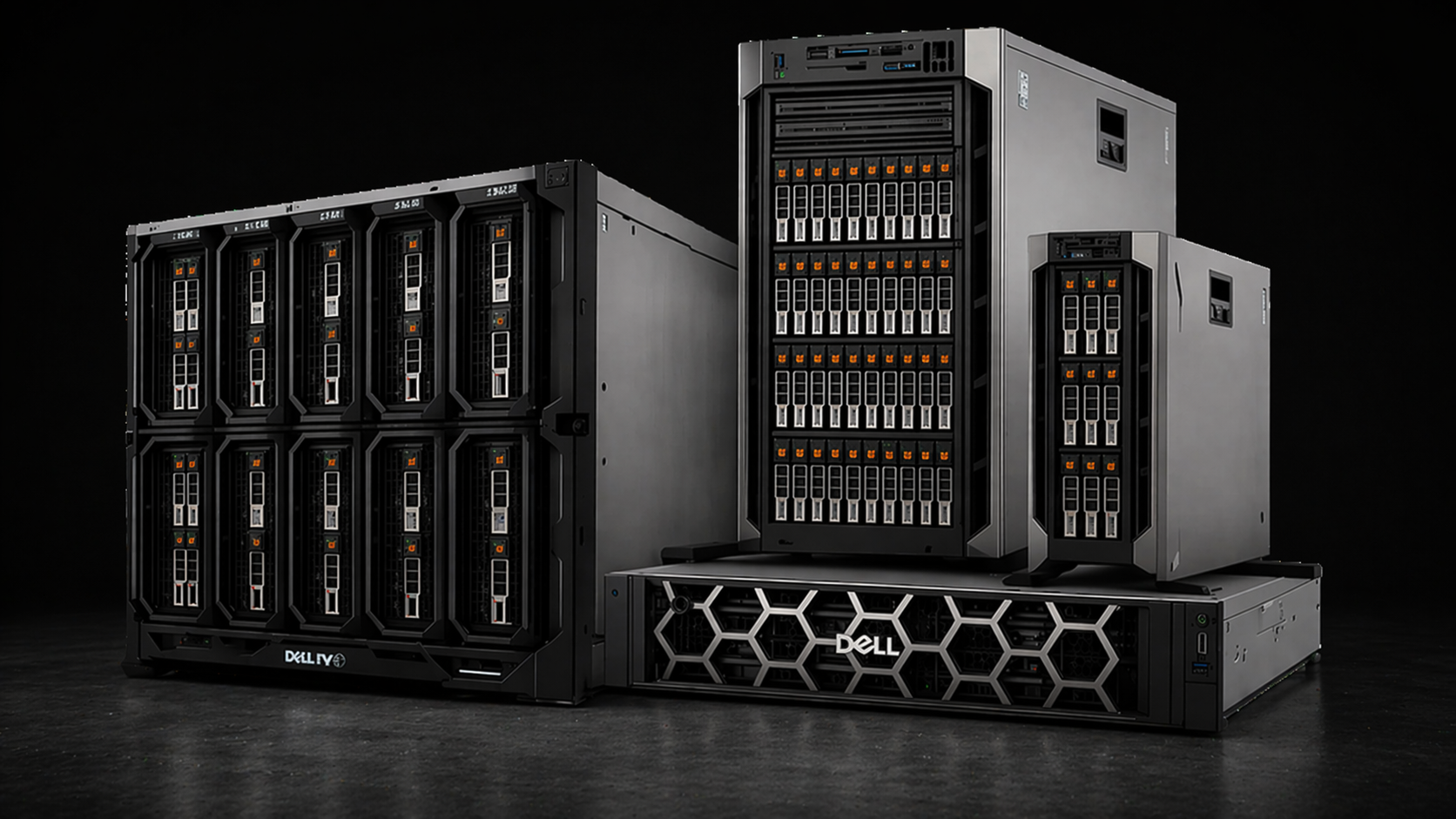
Once those answers are clear, the market becomes much easier to navigate. Rack servers usually make the most sense for shared infrastructure and data center environments. Tower models can be the better fit for smaller offices without formal rack space. Blade platforms may still suit some organizations, but they require a more deliberate view of enclosure compatibility, power, cooling, and management overhead.
Know the Difference Between 1U and 2U Trade-Offs
For many buyers, the real comparison begins with familiar ProLiant families such as the DL360 and DL380. That choice matters because form factor affects far more than cabinet space.
A 1U server like the DL360 is a strong fit when density matters and the workload is relatively straightforward. It suits general computing, web applications, domain services, and virtualized environments where rack space is limited. HPE’s DL360 materials reflect that balance of compact design, performance, and expandability.
A 2U system like the DL380 is often the better fit when buyers need more room for drive bays, PCIe cards, memory expansion, and future flexibility. HPE’s DL380 overview highlights its broader workload versatility, which helps explain why it remains one of the most commonly recommended platforms in the used market.
That does not mean every buyer should default to a DL380. It means buyers should understand what they are paying for. If expansion headroom matters, 2U may be worth it. If density and simplicity matter more, 1U can be the smarter call.
Pay Close Attention to Generation and Lifecycle Fit
Used HP servers are not one uniform category. Generation matters. So do the processor platform, memory type, storage interface, and firmware path.
Many businesses still find strong value in Gen9 and Gen10 systems because they hit a practical middle ground. They are widely understood, broadly available, and often more than capable of handling common business workloads without the premium attached to the newest equipment. At the same time, organizations with stricter security requirements or more aggressive consolidation goals may be better served by newer platforms with stronger performance per watt and more modern management capabilities.
There is also a simple market reality at work. As newer ProLiant generations arrive, earlier systems often become more attractive for cost-conscious buyers who do not need the latest capacity. Forbes coverage of the Gen12 launch captured that broader shift in how businesses think about lifecycle value and infrastructure timing.
Security and Supplier Discipline Still Matter
A used server purchase should never be treated like a guessing game. Hardware provenance, firmware condition, configuration accuracy, and supplier process all matter.
That means buyers should evaluate the seller, not just the spec sheet. Ask how systems are tested, whether components are verified for compatibility, how data-bearing parts are handled, and whether configuration details are documented clearly before shipment. NIST’s guidance on supply chain risk is a useful reminder that supplier discipline matters just as much as product specifications.
Security architecture matters too. HPE’s Silicon Root of Trust framework is one reason many organizations stay within the ProLiant ecosystem when they want a familiar security model and a more predictable deployment path.
Think About Power, Cooling, and Rack Reality
The server itself is only part of the equation. Power draw, cooling limits, and rack density can quietly turn a good buy into a difficult deployment.
The broader infrastructure conversation has become increasingly focused on power availability and operating efficiency. Data Center Dynamics has reported on the sector’s growing power challenge, while Uptime Institute’s annual survey findings continue to underscore the importance of planning around capacity and resilience.
Even if your environment is nowhere near a high-density AI rack, the lesson still applies. A cheaper server is not really cheaper if it creates avoidable thermal, electrical, or space constraints. Count the watts. Check the rails. Confirm airflow direction where relevant. Make sure the chassis depth works in the rack you actually have, not the one you wish you had.
Consider Parts Availability and Upgrade Headroom
A used server is only a good decision if it remains practical to maintain. Buyers should think beyond initial deployment and ask what happens if the workload grows, a drive fails, or a memory expansion becomes necessary six months from now.
This is where mainstream ProLiant families tend to hold an advantage. Common platforms such as the DL360 and DL380 usually benefit from stronger market familiarity, broader parts availability, and more configuration options than niche systems. Buyers evaluating secondary-market hardware should confirm the processor generation, DIMM population options, storage backplane support, RAID compatibility, and network expansion potential before buying.
Sustainability Is a Bonus, but It Is a Real One
Most buyers start with economics, and that is fair. Still, reuse has operational and environmental value that should not be dismissed.
The EPA’s guidance on electronics management notes that reuse and refurbishment can reduce waste, conserve resources, and keep functioning equipment in productive circulation for longer.
That should not be the only reason to buy used infrastructure. But it is a legitimate benefit, especially for organizations trying to align IT purchasing with broader sustainability goals without compromising on functionality.
What Smart Buyers Verify Before They Buy
Before making a final decision, buyers should confirm the exact processor family, memory ceiling, drive backplane, RAID support, networking configuration, rail-kit availability, and remote management status. They should also ask whether the system has been cleaned, tested, and configured to order, and whether replacement parts remain accessible for the intended service life.
Those are not minor details. They are often the difference between a server that arrives ready for deployment and one that turns into an avoidable project.
The right used HP server is rarely the newest, the cheapest, or the most heavily advertised. It is the one that matches the workload, fits the environment, and comes from a supplier that can clearly document what is actually being sold. That is how businesses stretch infrastructure budgets without creating new problems for the next quarter.

Peyman Khosravani is a global blockchain and digital transformation expert with a passion for marketing, futuristic ideas, analytics insights, startup businesses, and effective communications. He has extensive experience in blockchain and DeFi projects and is committed to using technology to bring justice and fairness to society and promote freedom. Peyman has worked with international organizations to improve digital transformation strategies and data-gathering strategies that help identify customer touchpoints and sources of data that tell the story of what is happening. With his expertise in blockchain, digital transformation, marketing, analytics insights, startup businesses, and effective communications, Peyman is dedicated to helping businesses succeed in the digital age. He believes that technology can be used as a tool for positive change in the world.