
Keeping up with the latest finance news from China can feel like a full-time job. Things move fast over there, and what’s happening in their economy often has ripples felt around the world. This past year has been particularly interesting, with shifts in government strategy, big moves in the tech world, and some notable changes in how the Chinese currency is behaving. Plus, Chinese companies are really making their mark on the global stage. Let’s break down some of the key developments.
Key Takeaways
- China’s government is setting ambitious growth targets, aiming for significant GDP per capita increases by 2035. While growth is expected to stay strong in the near term, long-term challenges like property market issues and domestic demand are still on the table.
- Technology is increasingly driving China’s economy, filling the gap left by the property sector. The country is using its manufacturing strengths to push forward in areas like AI and robotics.
- The Chinese currency, the Renminbi, has been strengthening against the dollar. Officials might be okay with this, potentially reducing their usual market interventions.
- Chinese stocks have seen strong gains for a couple of years now. Even with trade tensions, the market is looking more stable, and certain sectors like AI and internet companies seem undervalued compared to global peers.
- Chinese companies are expanding internationally. We’re seeing major players like BYD entering new markets, Pop Mart doing well with its global sales, and autonomous driving tech from Baidu partnering up in places like Dubai.
Navigating China’s Evolving Economic Landscape

China’s economy is in a period of significant change, with policymakers adjusting their strategies to meet ambitious growth targets while also tackling deeper, long-term challenges. The focus is shifting, and understanding these moves is key to grasping the country’s economic direction.
Policymaker Strategies for Economic Growth Targets
China has laid out a roadmap aiming for substantial GDP per capita growth by 2035. The 15th Five-Year Plan, announced in late 2025, suggests an average annual economic growth rate of around 4.17 percent for the next decade. While the specific target for 2026 is still pending, expectations are for a rate near five percent. This initial push for stronger growth early in the plan period is intended to build confidence among both businesses and households, setting a positive tone for the years ahead.
Addressing Long-Term Growth Challenges
Despite the ambitious targets, questions remain about their achievability given persistent issues. These include an ongoing property market correction, subdued domestic spending, and global trade uncertainties. While these problems won’t disappear overnight, their impact on the broader economy and stock markets is becoming less severe. For instance, the property sector’s direct contribution to China’s GDP has decreased significantly, and its weighting in major stock indices like the MSCI China has also fallen. This reduced reliance means that downturns in this sector are less likely to pose systemic financial risks compared to previous years.
The economic landscape is being reshaped, with technology now playing a more prominent role in driving growth, stepping in as the property sector’s influence wanes.
Shifting Approaches to Boosting Domestic Demand
While increasing domestic demand remains a priority, the methods are evolving. Instead of broad consumer subsidies, recent policy discussions and potential initiatives point towards more targeted support. This includes efforts to reduce income inequality and strengthen the social safety net, particularly for lower-income groups. Measures aimed at lowering costs associated with things like maternity care might also be introduced. The government’s approach appears to be moving towards redistributing resources and providing a more robust safety net, rather than relying on widespread stimulus programs.
Here’s a look at how different sectors contribute to China’s economy:
- Technology-Related Sectors: Projected to contribute 18.3% to GDP in 2026.
- Property-Related Sectors: Estimated to contribute 16.6% to GDP in 2026.
This shift highlights technology’s growing importance as a new engine for economic expansion.
Technology Sector’s Ascendancy in China’s Economy
It’s pretty clear that technology isn’t just a buzzword in China anymore; it’s become a real engine for economic growth. For a while, the property market was the big story, contributing a huge chunk to the country’s GDP. But things have shifted. Now, technology-related industries are stepping up, filling that gap and then some. We’re seeing this play out across the board, from electric vehicles to new medicines and artificial intelligence.
Technology’s Growing Contribution to GDP
The numbers show a significant change. Back in 2018, property and its related sectors made up about 25 percent of China’s GDP. Fast forward to projections for 2026, and that share has dropped considerably. Meanwhile, technology’s slice of the economic pie has grown substantially. It’s a clear sign that the country’s economic focus is changing.
| Year | Property-Related GDP Contribution (%) | Technology-Related GDP Contribution (%) |
|---|---|---|
| 2018 | ~25.0 | ~11.0 |
| 2026 (Proj.) | 16.6 | 18.3 |
Innovation Driving Economic Growth
China’s push for technological advancement goes beyond just wanting to be self-sufficient. Recent leaps in areas like electric vehicles and AI show that innovation is now a direct driver of economic expansion. The government is looking to spread these technological gains across the entire economy, aiming to boost how much we can produce, find new ways to use these technologies commercially, and create entirely new markets.
The government’s strategy seems to be about making technology work for everyone, improving productivity and creating new demand through widespread adoption.
Leveraging Supply Chain Advantages for Technological Advancement
One of China’s big strengths is its manufacturing supply chain, and it’s using this to its advantage in the tech world. Think about robotics in factories – China is deploying them at a much higher rate compared to countries like the U.S., especially when you adjust for income levels. This ability to quickly scale up production and integrate new technologies is a key reason why the tech sector is growing so fast.
- Rapid adoption: China is quick to adopt new technologies across various industries.
- Manufacturing prowess: Strong supply chains allow for fast scaling of tech production.
- Government support: Policy priorities are focused on science, technology, and industrial modernization.
This shift means that while challenges like the property market correction and global trade tensions are still present, the growing tech sector offers a new pathway for economic progress.
Renminbi Dynamics and Market Implications
Recent Renminbi Appreciation Against the Dollar
The start of 2026 has seen the Chinese renminbi make a notable comeback, strengthening by nearly one percent against the U.S. dollar in recent weeks. This marks a significant shift, pushing the currency past the 7.0 level against the dollar for the first time since 2023. This upward movement suggests a potential change in how the People’s Bank of China views its currency’s value.
Central Bank’s Tolerance for Currency Strength
There’s a growing belief that Chinese policymakers might be comfortable with further renminbi appreciation. This tolerance appears linked to the perceived durability of the recent trade agreement between the U.S. and China. If concerns about economic growth ease and the risk of the renminbi weakening diminishes, the central bank may adjust its approach.
Reduced Currency Market Intervention
Consistent with past patterns, if the economic outlook stabilizes and depreciation pressures subside, we anticipate a reduction in the central bank’s direct intervention in the currency markets. This would allow market forces to play a larger role in determining the renminbi’s value. This shift could signal increased confidence in China’s economic stability and its ability to manage external economic pressures.
The economic landscape in China is showing signs of renewed stability, with the renminbi’s recent strength reflecting a more confident outlook. This could pave the way for a more predictable environment for both domestic and international investors.
Here’s a look at how the renminbi has performed recently:
| Period | Change vs. USD |
|---|---|
| Past Month | Nearly +1% |
| Early 2026 | Strengthened past 7.0 |
This trend is important because:
- It can make Chinese exports more expensive.
- It can lower the cost of imports for Chinese consumers and businesses.
- It may influence foreign investment decisions into China.
- It signals a potential shift in monetary policy focus.
Chinese Equity Market Performance and Outlook
Strong Annual Gains in Chinese Equities
Chinese stocks finished 2025 on a high note, marking the second year in a row with solid yearly gains. The MSCI China Index saw a significant jump of 31 percent, while Hong Kong’s main index, the Hang Seng, also performed well with a 28 percent rally. These increases surprised many market watchers, especially since trade tensions between the U.S. and China had led many analysts to advise caution at the start of the year. Looking ahead, several factors are expected to influence equity market returns in 2026.
Valuation Attractiveness of the MSCI China Index
After a period of market fluctuations in the last quarter of 2025, the MSCI China Index is now trading at a more balanced valuation. Its forward price-to-earnings ratio stands at 12.7x, which is just a bit higher than its historical average of 11.6x. This suggests a more reasonable entry point for investors compared to previous periods.
Discounted Valuations for AI and Internet Leaders
Interestingly, even with the broader market’s recovery, the valuations for leading Chinese companies in artificial intelligence (AI) and internet services still appear lower when compared to their counterparts in the U.S. As investors begin to question the high valuations of some U.S. tech giants, there’s a growing anticipation of increased interest in Chinese AI stocks. This shift in focus could provide additional support for the overall Chinese equity market.
The property sector’s influence on the broader economy and stock market has diminished considerably. While developers continue to face challenges, their direct impact on major indices like the MSCI China Index is now limited, as technology sectors have taken a more prominent role in driving economic growth.
Key factors influencing the equity market outlook include:
- Economic Growth Targets: Policymakers have set ambitious goals, aiming for China to reach the level of moderately developed countries by 2035. This implies a significant increase in GDP per capita, suggesting a continued focus on economic expansion.
- Domestic Demand Support: The government’s approach to boosting domestic consumption is evolving, with a greater emphasis on reducing income inequality and strengthening the social safety net for lower-income groups.
- Technological Advancement: Technology is increasingly recognized not just for national security but as a primary engine for economic growth, with significant investment and adoption across various industries.
- Currency Stability: The recent appreciation of the Renminbi against the U.S. dollar, coupled with potentially reduced central bank intervention, could signal a more stable economic environment, which is generally favorable for equity markets.
Global Expansion of Chinese Companies
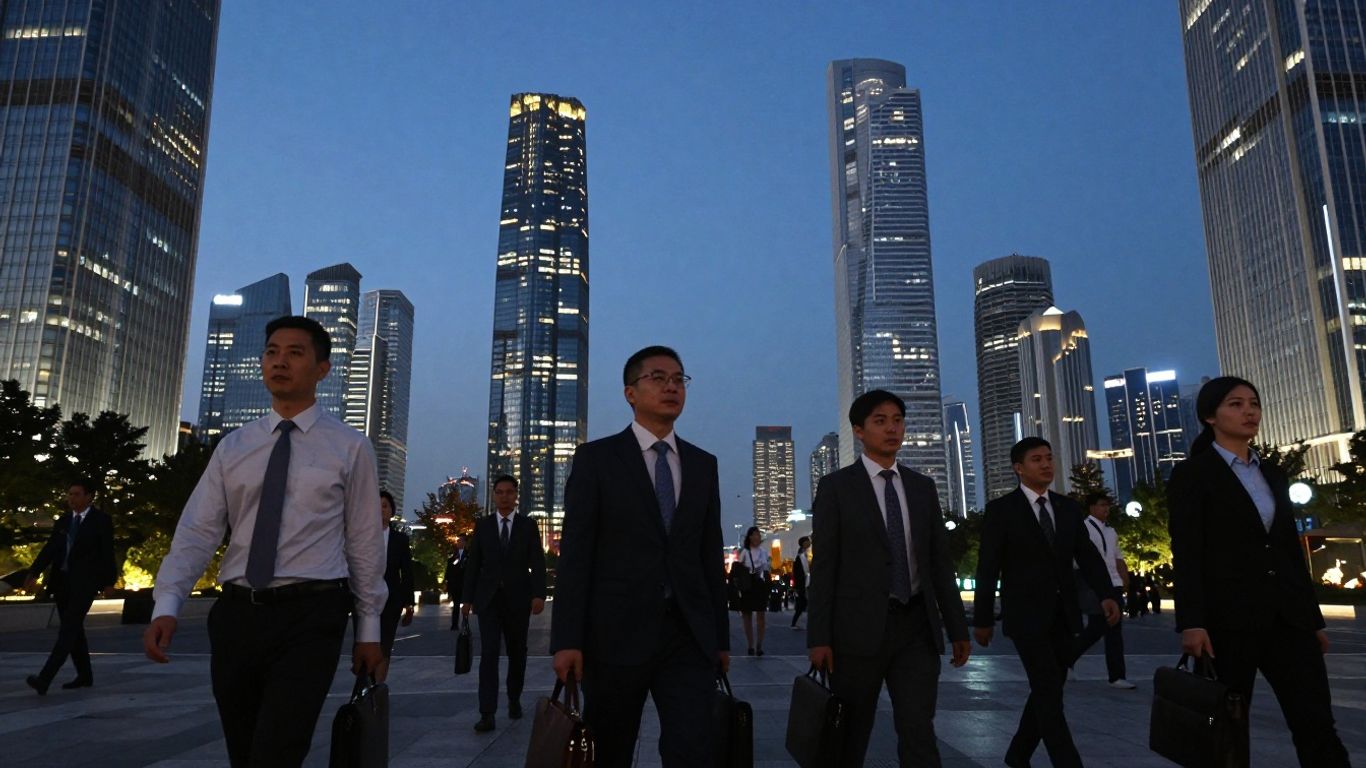
Chinese companies are increasingly looking beyond their domestic market, making significant moves on the international stage. This global push is not just about selling more products; it’s about establishing a presence, building brand recognition, and tapping into new consumer bases.
BYD’s Entry into the Egyptian Market
BYD, a major player in electric vehicles, has officially launched its operations in Egypt. The company introduced three models: the BYD Dolphin Surf, BYD Sealion 6 EV, and BYD Sealion 6 DM-i. This expansion into North Africa signifies a strategic effort to broaden its reach in emerging markets and capitalize on the growing demand for electric transportation solutions.
Pop Mart’s International Sales Performance
Pop Mart, known for its collectible toy figures, is also seeing success abroad. The company reported that its popular LABUBU character alone sold over 100 million units in 2025. This highlights the global appeal of its unique product designs and its ability to connect with consumers across different cultures. The growth in social commerce, which is projected to reach $6.2 trillion by 2030, likely plays a role in Pop Mart’s international sales strategy.
Baidu’s Apollo Go Partners with Uber in Dubai
Baidu’s autonomous driving unit, Apollo Go, has teamed up with Uber to launch services in Dubai. This partnership is a key part of Baidu’s global expansion strategy, which combines advanced technology with local market understanding. It aims to bring self-driving ride-hailing services to a new international city, marking another step in the global rollout of autonomous mobility solutions.
The internationalization of Chinese firms is becoming a more prominent feature of the global economy. Companies are not only exporting goods but also exporting services and technology, adapting their business models to diverse market conditions.
Innovations in Digital and Mobility Services
China’s tech scene is buzzing with new developments, especially in how we interact with digital tools and get around. Two recent announcements highlight this progress: a new video generation model and a significant upgrade to ride-hailing services for international travelers.
Doubao’s Seedance 2.0 Video Generation Model
Doubao, a platform many are familiar with, has rolled out its Seedance 2.0 model. This update allows users to create short videos, either 5 or 10 seconds long, just by typing in a description. It’s pretty neat because it can also generate videos featuring personalized avatars. You can even use your own photo to create a digital version of yourself for videos, though it requires a quick verification step.
What’s impressive about Seedance 2.0 is its technical side. It can sync up original audio with the video, create longer narratives across multiple shots, and offers control over the final output. This kind of AI-powered content creation is becoming more accessible to everyday users.
Tencent Mobility Services Integrates with Uber
For those who travel internationally, Tencent Mobility Services has made things a lot easier. They’ve integrated with Uber directly into their popular mini-program. This means you can book an Uber ride in many countries without needing to download the Uber app itself or deal with different payment systems. It’s all handled within the familiar Tencent interface.
Here’s a quick look at what this integration offers:
- Global Reach: The service currently supports 20 countries and regions, including places like Japan and the UK.
- Extensive City Coverage: It covers over 1,000 cities worldwide.
- Simplified Payments: You can pay for your rides directly using WeChat Pay, which is a big plus for frequent travelers.
This partnership is a smart move, aiming to simplify cross-border travel for Chinese users. It shows how Chinese tech companies are looking to make global services more user-friendly.
Advancements in Embodied AI and Data Infrastructure
Beyond these specific product launches, there’s a broader trend in China’s tech industry focusing on embodied AI and the data infrastructure needed to support it. Companies are investing heavily in creating AI that can interact with the physical world more effectively. This requires robust data systems to train and manage these advanced AI models. While not always visible to the end-user, these behind-the-scenes developments are laying the groundwork for future technological leaps in areas like robotics and advanced automation.
Looking Ahead: China’s Evolving Economic Landscape
So, what does all this mean for the future? It seems China’s economy is really shifting gears. We’re seeing a move away from relying so heavily on property, with technology stepping up as a major growth engine. This focus on innovation, alongside efforts to support domestic demand through more targeted social programs rather than just broad subsidies, paints an interesting picture. Plus, the renminbi’s strength and the more stable trade relationship with the U.S. could pave the way for a steadier stock market. While challenges like the property market correction and geopolitical tensions are still around, the overall direction suggests a more diversified and potentially more resilient Chinese economy. It’s definitely a space worth keeping an eye on as these trends continue to unfold.
Frequently Asked Questions
What is China’s main goal for its economy in the next few years?
China wants to become a moderately developed country by 2035. This means their economy needs to grow a lot, aiming for about a 50% increase in how much each person earns. They plan to achieve this by growing the economy by around 5% each year for a while, then slowing down a bit.
What are some big challenges China’s economy faces?
Even with big goals, China has some tough problems. The housing market is still a bit shaky, people aren’t spending as much money as they could, and there’s a chance prices might fall instead of rise. Also, disagreements with other countries can make things harder.
How is China trying to get people to spend more money?
Instead of just giving everyone money to spend, China is focusing on helping lower-income families more. They want to make sure people who don’t earn much have a stronger safety net and more help, especially if they lose their jobs. This could mean things like helping with costs related to having a baby.
Is technology more important to China’s economy now?
Yes, very much so! China sees technology, like electric cars and new computer programs (AI), as a major way to grow its economy. They are using their strong manufacturing skills to quickly adopt new technologies and make them work everywhere, which helps businesses work better and creates new things for people to buy.
Why is the Chinese money (Renminbi) getting stronger?
The Chinese money has been getting stronger compared to the U.S. dollar lately. This might be because there’s less worry about trade conflicts between the U.S. and China. Because of this, China’s central bank might not need to step in and control the money’s value as much.
Are Chinese stocks a good investment right now?
Chinese stocks have done well for the past two years. The main stock market index (MSCI China Index) looks reasonably priced, and some fast-growing tech companies, especially those in AI and internet services, seem cheaper compared to similar companies in the U.S. This could make them more attractive to investors.

Peyman Khosravani is a global blockchain and digital transformation expert with a passion for marketing, futuristic ideas, analytics insights, startup businesses, and effective communications. He has extensive experience in blockchain and DeFi projects and is committed to using technology to bring justice and fairness to society and promote freedom. Peyman has worked with international organizations to improve digital transformation strategies and data-gathering strategies that help identify customer touchpoints and sources of data that tell the story of what is happening. With his expertise in blockchain, digital transformation, marketing, analytics insights, startup businesses, and effective communications, Peyman is dedicated to helping businesses succeed in the digital age. He believes that technology can be used as a tool for positive change in the world.