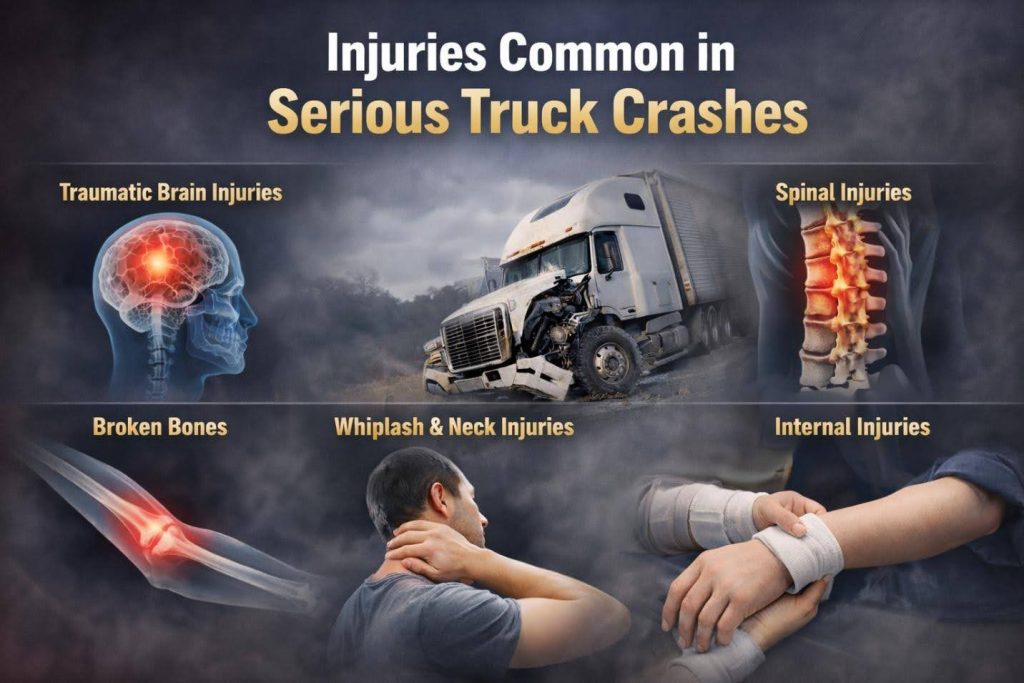
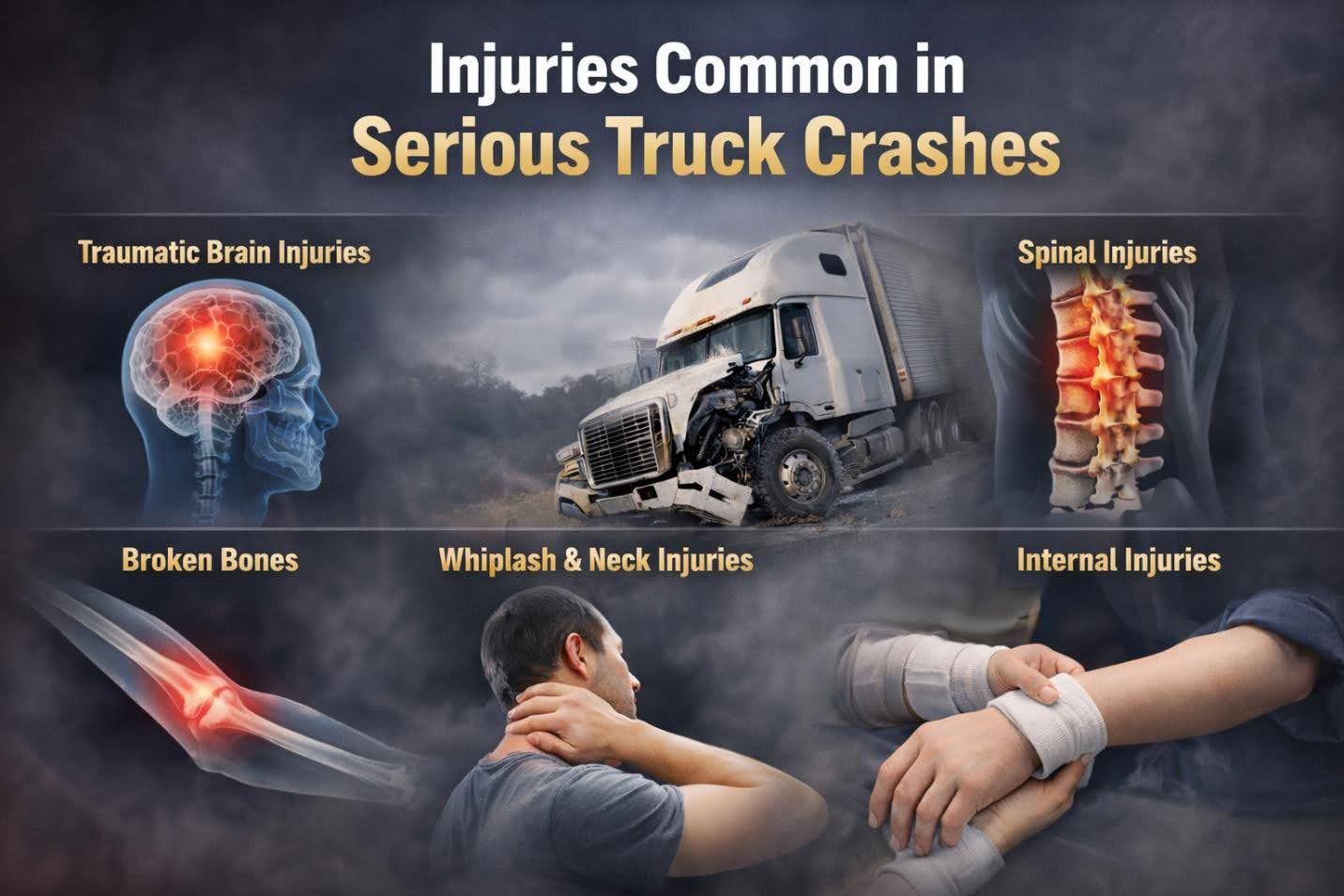
Serious truck crashes often cause life changing harm because of the weight and force involved. Even with a seat belt, a crash can injure your head, spine, chest, and organs in seconds. Some symptoms take days to appear, so people feel fine at first and worse later. O’Hare and Koch Attorneys in the Carrollton, TX area, take truck wrecks seriously, digging into details that routine case mills miss. That perspective can help injured people understand what to watch for, what medical follow up may be needed, and why documentation matters. If you are dealing with symptoms after a truck wreck, the sections below cover injuries commonly tied to high impact truck collisions.
Traumatic Brain Injuries and Concussions
Head injuries are common in serious truck crashes. A concussion can happen even without a direct blow to the head because the brain can move inside the skull during sudden deceleration. Symptoms may include headaches, nausea, dizziness, confusion, memory problems, sleep disruption, and sensitivity to light or noise. More severe traumatic brain injuries can cause long term cognitive and emotional effects. People may struggle with attention, mood changes, and difficulty returning to school or work. It is important to seek medical care and follow through with recommended imaging, therapy, and specialist visits.
Spinal Cord Injuries and Back Trauma
The spine can absorb extreme force during a truck collision. Injuries can range from herniated discs and nerve compression to spinal fractures and spinal cord damage. Symptoms may include severe back pain, weakness, numbness, tingling, or loss of coordination. Spinal cord injuries can lead to partial or complete paralysis, along with changes in bladder and bowel function. Even less catastrophic back injuries can require months of treatment, physical therapy, injections, or surgery. Early evaluation helps determine the full scope of damage.
Broken Bones and Orthopedic Injuries
Fractures are common when a smaller vehicle is struck by a truck. Arms, wrists, ribs, legs, ankles, and hips can break from impact, airbag deployment, or being braced against the floorboard. Some fractures heal with casting, while others require surgical repair with plates, screws, or pins. Orthopedic injuries also include torn ligaments, damaged cartilage, and joint trauma. These injuries can limit mobility, make work tasks harder, and create arthritis risk later. Keeping imaging results and treatment notes organized can be important for recovery planning.
Internal Injuries and Organ Damage
Internal injuries can be among the most dangerous because they are not always visible. Blunt force trauma may cause bleeding, organ damage, or punctures. Injuries can involve the spleen, liver, kidneys, lungs, or intestines. Warning signs may include abdominal pain, chest pain, shortness of breath, faintness, or unusual swelling. Anyone with these symptoms after a major crash should seek emergency care immediately. Prompt treatment can be critical.
Neck, Shoulder, and Soft Tissue Injuries
Soft tissue injuries are common even in severe crashes. Whiplash can strain the neck and upper back. Shoulder injuries can occur from seat belts, bracing, or sudden movement. Muscles, tendons, and ligaments may be stretched or torn. These injuries can still be serious, especially when they limit sleep, lifting, driving, or work duties. Treatment may include physical therapy, medication, injections, and sometimes surgery. Documenting how pain affects daily activities can help medical providers understand the full impact.
Serious truck crashes can cause multiple injuries at once, including head trauma, spine damage, fractures, internal injuries, and painful soft tissue conditions. Since symptoms can show up later, get medical care right away and keep clear notes on your recovery. Save discharge papers, imaging results, prescriptions, and follow up notes. Track time missed from work and how pain affects sleep, driving, and daily tasks. If bills or insurance calls confuse you, a lawyer can help save evidence and avoid missteps early.

Pallavi Singal is the Vice President of Content at ztudium, where she leads innovative content strategies and oversees the development of high-impact editorial initiatives. With a strong background in digital media and a passion for storytelling, Pallavi plays a pivotal role in scaling the content operations for ztudium’s platforms, including Businessabc, Citiesabc, and IntelligentHQ, Wisdomia.ai, MStores, and many others. Her expertise spans content creation, SEO, and digital marketing, driving engagement and growth across multiple channels. Pallavi’s work is characterised by a keen insight into emerging trends in business, technologies like AI, blockchain, metaverse and others, and society, making her a trusted voice in the industry.