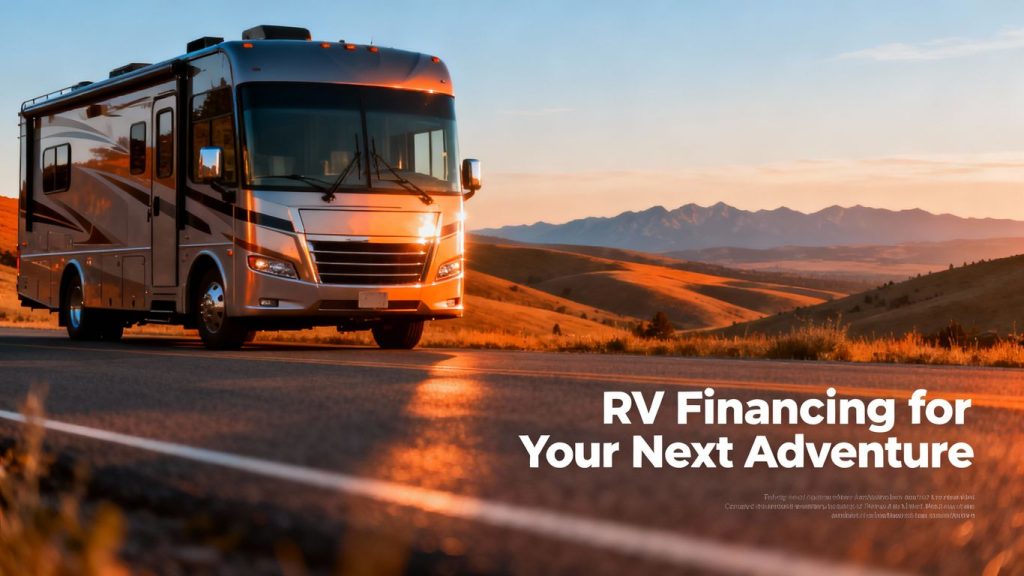
Thinking about getting a motorhome? That’s awesome! They’re great for hitting the road and seeing new places. But, like anything big, there’s the money part. Figuring out how much you can actually afford for payments each month is super important. That’s where a finance motorhome calculator comes in handy. It helps you get a clear picture before you even start looking too seriously.
Key Takeaways
- RV loans work a lot like car loans. You apply, get approved based on your credit and finances, and then make payments over time.
- A down payment is usually needed, and putting more down can lower your monthly payments.
- Loan terms can be short or long. Longer terms mean lower monthly payments but often more interest paid overall.
- Your credit score really matters. A better score usually means better loan terms and lower interest rates.
- A finance motorhome calculator is a useful tool to estimate your monthly payments and see what you can afford, but remember to factor in other costs like insurance and maintenance.
Understanding Your Motorhome Financing Options
How Motorhome Loans Function
Getting a motorhome loan is pretty similar to getting a loan for a car, but motorhomes are often a bigger purchase, so the loan details can be a bit different. Basically, you borrow money from a lender to buy your motorhome, and then you pay that money back over time with interest. The motorhome itself acts as collateral, meaning if you can’t make the payments, the lender can take it back. It’s a pretty standard process.
Here’s a general rundown of how it works:
- Application: You’ll fill out a loan application, giving the lender details about yourself, your income, and your financial history.
- Credit Check: The lender will look at your credit score and report to see how risky it might be to lend you money.
- Approval: If approved, the lender will tell you how much they’ll lend, the interest rate, and the repayment period.
- Down Payment: You might need to pay a portion of the motorhome’s price upfront.
- Loan Term: You’ll agree on how long you have to pay back the loan.
- Repayment: You’ll make regular payments, usually monthly, until the loan is fully paid off.
The whole point is to make owning a motorhome achievable without having to pay the full price all at once. It spreads the cost out, making it more manageable for your budget.
Key Steps in the Loan Application Process
Applying for a motorhome loan involves a few important steps to get you approved. It’s not overly complicated, but being prepared helps a lot. You’ll want to gather some information beforehand.
- Gather Your Financial Documents: This usually includes proof of income (like pay stubs or tax returns), bank statements, and details about any other debts you have.
- Check Your Credit Score: Knowing your credit score beforehand gives you an idea of what kind of loan terms you might qualify for. You can often get a free credit report.
- Complete the Loan Application: Fill out the lender’s application form accurately. This is where you’ll state how much you want to borrow and provide all your personal and financial details.
- Submit Supporting Documents: Send in the financial documents you gathered to verify your income and financial stability.
- Review Loan Offers: Once approved, compare the loan offers from different lenders. Look at the interest rate, loan term, and any fees involved.
The Role of Down Payments in RV Loans
A down payment is the money you pay upfront when you buy your motorhome. It’s a percentage of the total price that you pay out of your own pocket, and the rest is financed through the loan. For example, if you’re buying a motorhome for $100,000 and put down 10%, that’s $10,000 from you, and you’d finance the remaining $90,000.
A larger down payment can significantly lower your monthly payments and the total interest you pay over the life of the loan. It also shows the lender that you’re serious about the purchase and have some financial commitment, which can sometimes help you get better loan terms.
Most lenders typically ask for a down payment ranging from 10% to 20% of the motorhome’s price. However, some lenders might offer options with lower down payments, or even zero down for certain loan amounts, though these might come with different conditions.
Leveraging the Finance Motorhome Calculator
So, you’ve got your eye on a motorhome, and you’re ready to figure out the numbers. That’s where our Finance Motorhome Calculator comes in. Think of it as your first stop to get a realistic picture of what your monthly payments might look like. It’s designed to take the guesswork out of budgeting for your RV adventure.
Estimating Your Potential Monthly Payments
This calculator is pretty straightforward. You’ll input a few key details, like the price of the motorhome you’re considering, how much you plan to put down as a down payment, and the loan term you’re thinking about. Based on that, it’ll give you an estimated monthly payment. This number is your starting point for understanding affordability. It’s not the final word, but it’s a solid estimate to help you compare different motorhomes and loan scenarios.
Factors Influencing Loan Affordability
While the calculator gives you a number, remember that several things affect your actual loan. Your credit score is a big one; a better score usually means a lower interest rate, which directly reduces your monthly payment and the total interest paid over time. The loan term also plays a significant role. A longer term means lower monthly payments, but you’ll likely pay more interest overall. Conversely, a shorter term means higher monthly payments but less interest paid in the long run.
Here’s a quick look at how loan term can impact payments (assuming a $100,000 loan with a 6% interest rate):
| Loan Term (Years) | Monthly Payment (Estimate) | Total Interest Paid (Estimate) |
|---|---|---|
| 10 | $1,110.25 | $32,830.00 |
| 15 | $843.86 | $51,894.80 |
| 20 | $716.43 | $71,943.20 |
Beyond the Calculator: Additional Ownership Costs
It’s important to remember that your monthly loan payment is just one piece of the motorhome ownership puzzle. The calculator doesn’t account for other expenses that come with owning an RV. You’ll need to budget for:
- Insurance: Motorhomes require specific insurance policies, which can vary based on the RV’s value and how you use it.
- Maintenance and Repairs: Like any vehicle, motorhomes need regular upkeep, and unexpected repairs can happen.
- Fuel: Motorhomes can be quite thirsty, so factor in the cost of gasoline or diesel.
- Storage or Campsite Fees: Depending on where you live and how often you travel, you might have costs associated with parking or storing your motorhome.
- Registration and Taxes: Annual fees for registration and potential property taxes will also add to your expenses.
Always remember that the calculator provides an estimate. Your actual loan terms, interest rate, and final monthly payment will be determined by the lender after a full review of your financial situation. It’s wise to get pre-approved to know exactly what you qualify for before you start seriously shopping.
By using the calculator and considering these additional costs, you can create a more complete and accurate budget for your motorhome dreams.
Navigating Loan Terms and Interest Rates
When you’re looking into financing a motorhome, the loan terms and interest rates are two big pieces of the puzzle. They directly affect how much you’ll pay each month and how much the motorhome ultimately costs you over time. It’s not just about the sticker price; these financial details really matter.
Understanding Different Loan Durations
Motorhome loans come with various repayment periods, often called loan terms. The length of this term can significantly change your monthly payment amount. Generally, longer terms mean lower monthly payments, but you’ll end up paying more interest overall. Shorter terms mean higher monthly payments, but you’ll save money on interest in the long run.
Here’s a look at common loan term lengths:
- Short-Term Loans (0-48 months): These are great if you want to pay off your motorhome quickly. Your monthly payments will be higher, but you’ll pay less interest over the life of the loan.
- Medium-Term Loans (49-84 months): This range offers a balance. Payments are more manageable than short-term loans, and you still save a good amount on interest compared to very long terms.
- Long-Term Loans (85-180 months): These offer the lowest monthly payments, which can make a more expensive motorhome feel more affordable. However, the total interest paid over 15 years can add up considerably.
The Impact of Interest Rates on Total Cost
Interest is essentially the cost of borrowing money. The interest rate on your motorhome loan is expressed as a percentage and is applied to the outstanding loan balance. Even a small difference in the interest rate can lead to a large difference in the total amount you pay for your motorhome over the years.
For example, imagine a $100,000 loan for 15 years:
- At a 5% interest rate, your total interest paid would be around $42,000.
- At an 8% interest rate, your total interest paid would jump to about $75,000.
That’s an extra $33,000 just because of the interest rate. Your creditworthiness plays a big role in the rate you’ll be offered, so improving your credit score can save you a lot of money.
Choosing the right loan term and understanding the interest rate are key to making your motorhome ownership financially sound. It’s about finding a payment you can comfortably manage without paying excessive interest over time.
Choosing the Right Loan Term for Your Budget
Deciding on the best loan term involves looking at your current financial situation and your long-term goals. If you have a stable income and prefer to be debt-free sooner, a shorter term might be ideal, even with higher monthly payments. On the other hand, if you want to keep your monthly expenses lower to allow for other travel or living costs, a longer term could be a better fit. It’s a personal decision that depends on what works best for your budget and lifestyle.
Creditworthiness and Loan Approval
When you’re looking to finance a motorhome, lenders will want to know if you’re likely to pay back the loan. This is where your creditworthiness comes into play. Essentially, it’s a measure of your financial reliability. The main tool lenders use to gauge this is your credit score.
The Importance of Your Credit Score
Think of your credit score as a financial report card. It’s a three-digit number that summarizes your history of borrowing and repaying money. A higher score generally means you’ve managed credit well, making you a less risky borrower in the eyes of a lender. This can translate into better loan terms, lower interest rates, and a smoother approval process for your motorhome loan. Conversely, a lower score might mean higher interest rates or even denial of the loan.
Minimum Credit Score Requirements
Lenders have different benchmarks for what they consider an acceptable credit score. While some might consider scores as low as the high 500s, you should expect significantly higher interest rates and potentially a larger down payment requirement. Many lenders prefer to see scores in the 600s or higher. For the most competitive rates and terms, a score in the 700s or 800s is ideal.
Here’s a general idea of what different score ranges might mean:
| Credit Score Range | Potential Loan Outcome |
|---|---|
| 700+ | Best rates and terms |
| 620-699 | Standard rates, possible |
| Below 620 | Higher rates, larger down payment, or denial |
How Credit Affects Loan Offers
Your credit score directly influences the kind of loan offers you’ll receive. A strong credit history can open doors to more favorable options. You might qualify for:
- Lower Interest Rates: This is perhaps the biggest benefit. Even a small difference in interest rate can save you thousands of dollars over the life of a long-term loan.
- Wider Range of Lenders: More lenders will be willing to work with you, giving you more choices.
- More Flexible Terms: You might have more options regarding loan duration and down payment requirements.
- Higher Loan Amounts: If you’re looking at a more expensive motorhome, a good credit score increases your chances of being approved for the full amount.
Lenders look at your entire financial picture, not just your credit score. They’ll also consider your income, employment history, and existing debts to determine if you can comfortably manage the monthly payments. It’s always a good idea to check your credit report for any errors before applying for a loan.
Maximizing Your Motorhome Purchase
Determining How Much Motorhome You Can Afford
Figuring out what kind of motorhome fits your budget is more than just looking at the sticker price. It involves a realistic look at your finances and what you can comfortably manage each month, not just for the loan payment, but for everything else that comes with owning an RV. Think about your income, your existing debts, and how much you have saved for a down payment. Lenders will also look at your debt-to-income ratio, which is a key factor in determining how much they’re willing to lend you. Using our finance motorhome calculator is a smart first step to get a ballpark figure, but remember that the monthly payment shown doesn’t cover all the costs.
Strategies for Securing Favorable Loan Terms
Getting the best possible loan terms can save you a significant amount of money over the life of the loan. One of the most effective ways to achieve this is by improving your credit score before you apply. A higher score signals to lenders that you’re a lower risk, which often translates into lower interest rates and potentially lower down payment requirements. Shopping around and comparing offers from different lenders is also a good strategy. Don’t just accept the first offer you receive; see who can give you the best rate and terms.
- Improve your credit score: Aim for a score above 700 for the best rates.
- Shop around: Compare offers from multiple lenders.
- Consider a larger down payment: This can reduce your loan amount and monthly payments.
- Negotiate terms: Don’t be afraid to discuss the interest rate and loan duration.
The Benefits of a Higher Credit Score
A strong credit score is like a golden ticket when it comes to financing a motorhome. It opens doors to better interest rates, which can save you thousands of dollars. For instance, a loan of $200,000 at 5.25% interest over 20 years might cost around $323,000 in total. However, if your credit score leads to a 9.0% interest rate on the same loan, the total cost jumps to over $431,000. That’s a difference of more than $108,000, a substantial sum that could be used for other adventures or investments.
Lenders assess your creditworthiness to gauge the risk involved in lending you money. A higher credit score indicates a history of responsible borrowing, making you a more attractive candidate for favorable loan terms and lower interest rates. Conversely, a lower score might mean higher rates or a request for a larger down payment, increasing the overall cost of your motorhome.
Here’s a look at how interest rates can impact your total loan cost:
| Loan Amount | Interest Rate | Loan Term (Years) | Estimated Total Paid (Principal + Interest) |
|---|---|---|---|
| $200,000 | 5.25% | 20 | $323,445 |
| $200,000 | 9.0% | 20 | $431,868 |
| $200,000 | 5.25% | 15 | $285,000 (approximate) |
Ready to Hit the Road?
So, you’ve used our finance motorhome calculator to get a clearer picture of what your monthly payments might look like. That’s a big step towards making your RV dreams a reality! Remember, the calculator gives you an estimate, and actual loan terms can vary based on your credit, the specific RV, and the lender. It’s always a good idea to talk with a loan officer to go over your options and get precise figures. Now you’re better equipped to budget and plan for that adventure on wheels. Happy travels!
Frequently Asked Questions
How do RV loans work?
RV loans are pretty similar to car loans. You apply with a lender, they check your credit, and if approved, you get terms like the loan amount, interest rate, and how long you have to pay it back. You might need to make a down payment, and then you’ll have a monthly payment plan.
What’s a typical loan length for an RV?
RV loans can be quite long, often ranging from 10 to 20 years. The exact length can depend on how much you borrow, the age of the RV, and the lender.
What credit score do I need for an RV loan?
Most lenders look for a credit score of at least 600. If your score is a bit lower, you might still get a loan, but expect a higher interest rate. A higher score, like in the 700s or 800s, usually means better loan deals.
How much should I put down on an RV loan?
Typically, lenders ask for a down payment of 10% to 20% of the RV’s price. Some lenders might offer options with no down payment for certain loan amounts, but this can vary.
Can I get an RV loan with bad credit?
It can be tougher, but not impossible. If your credit score is below 680, you might need to pay cash, find an owner financing deal, make a larger down payment, or explore options like personal loans or loans from your credit union. Sometimes, a co-signer can help.
Besides the loan payment, what other costs should I consider for an RV?
Don’t forget about insurance, parking or storage fees, regular maintenance and potential repairs, fuel costs, and registration or license fees. These add up and are important to budget for.

Peyman Khosravani is a global blockchain and digital transformation expert with a passion for marketing, futuristic ideas, analytics insights, startup businesses, and effective communications. He has extensive experience in blockchain and DeFi projects and is committed to using technology to bring justice and fairness to society and promote freedom. Peyman has worked with international organizations to improve digital transformation strategies and data-gathering strategies that help identify customer touchpoints and sources of data that tell the story of what is happening. With his expertise in blockchain, digital transformation, marketing, analytics insights, startup businesses, and effective communications, Peyman is dedicated to helping businesses succeed in the digital age. He believes that technology can be used as a tool for positive change in the world.