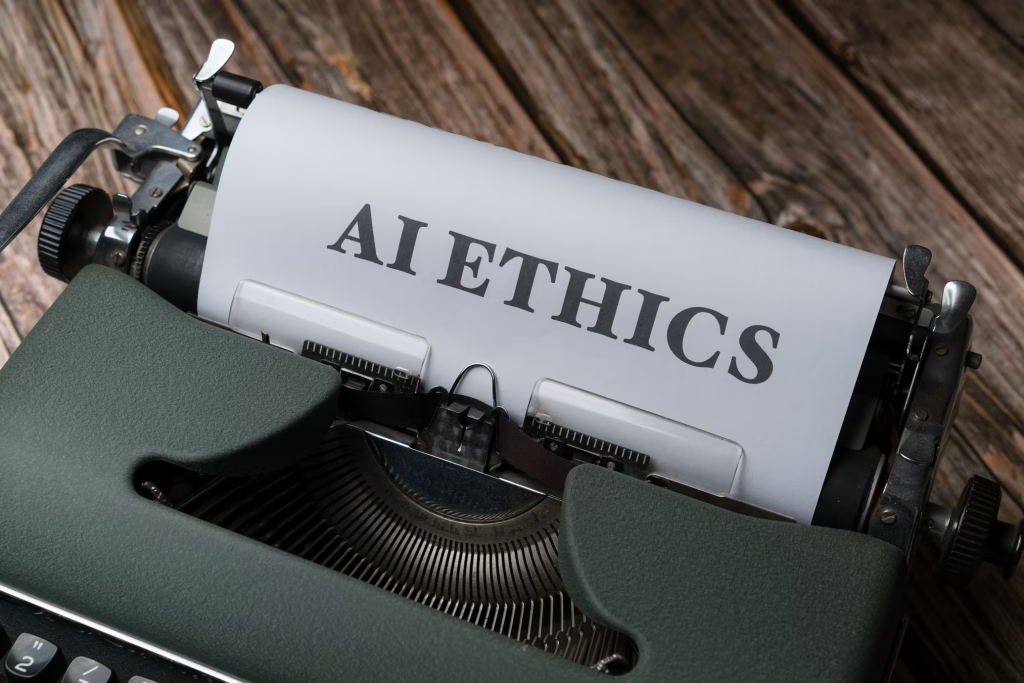
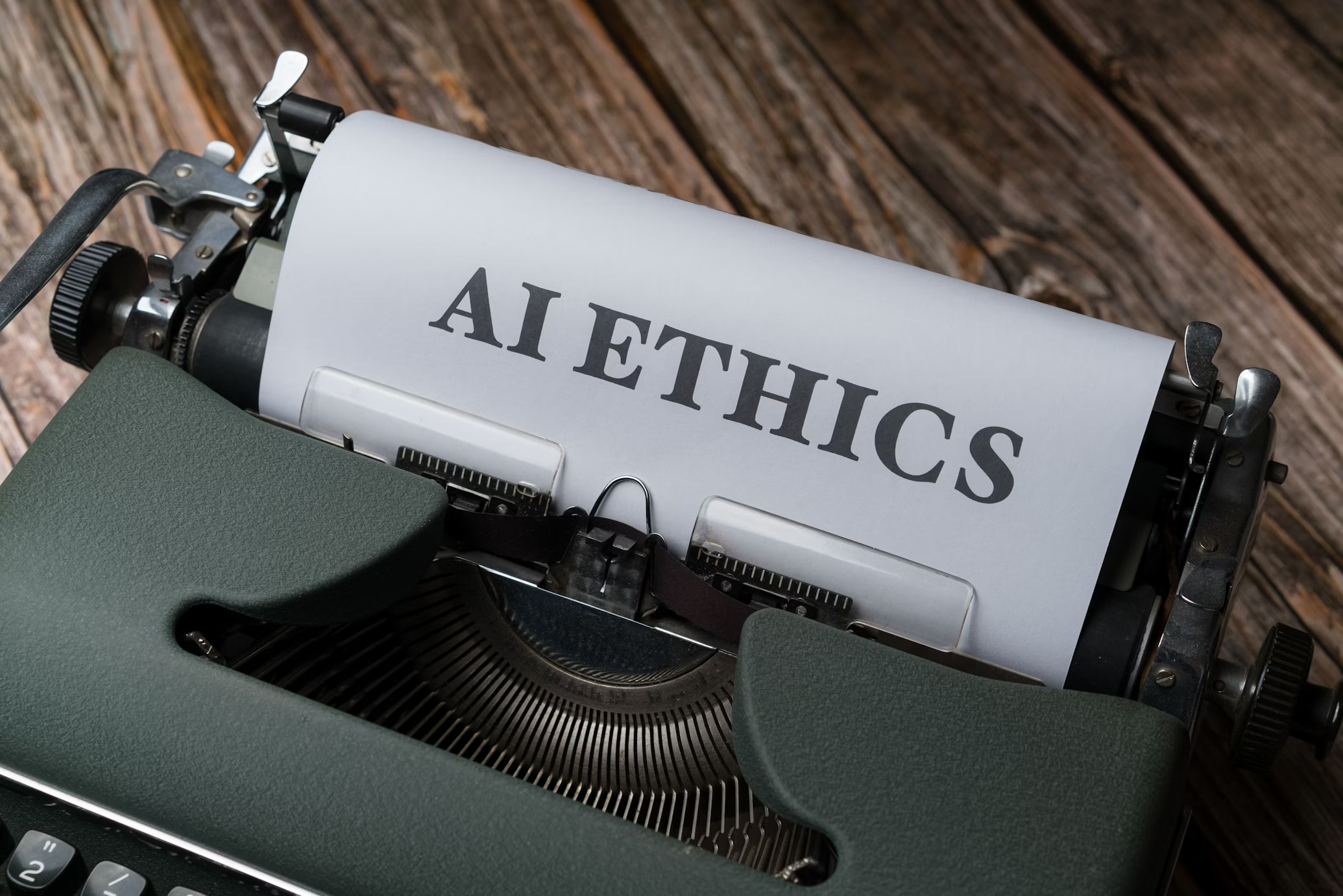
Artificial Intelligence (AI) is gradually becoming a segment of contemporary education, changing classrooms with their own learning aids, grading systems that are computerized, and even adaptive tests. Such innovations can improve the learning process and make education more convenient, effective, and based on the needs of individual students. Nevertheless, the ethics of AI in education are linked to critical concerns regarding privacy, equity, and academic ethics. What can educators and institutions do to ensure that AI does not fail to improve learning at the expense of human supervision and equity?
The ethical use of AI is a growing issue that challenges many students to balance their academic tasks and use AI-based educational tools. Other students who are interested in strong academic support get it from Papersowl https://papersowl.com/do-my-homework to cope with this balance. This personalized assistance will enable students to keep up with their tasks while managing the ethical side of AI in education.
Benefits of AI in Education
Personalized Learning
Personalization of learning is one of the most significant benefits of AI in the classroom. AI-based systems can process the students’ performance and adjust the lessons to their needs to ensure every student learns at their own speed. This personalization assists students who would be disadvantaged in classrooms by providing personalized resources and assistance. Consequently, the ethical use of AI in education may offer more fair opportunities to learn, particularly for learners with varying learning requirements.
Efficiency and Data-Driven Insights
The educational systems can become very efficient with the help of AI tools. The automated grading systems, such as those, lessen teachers’ administrative load, giving them more time to focus on interactive and high-quality teaching. Besides, the capability of AI to process vast amounts of data can help understand students’ performance, allowing teachers to monitor progress and provide information about possible difficulties at the initial stage. Such data-driven information and knowledge can result in much more informed decisions, resulting in schools developing more productive educational approaches.
Ethical Issues in AI-Driven Education
Privacy Concerns

Student privacy is a growing concern as AI is making its way into the education sector. The problem is that, to personalize the learning process, AI platforms are used to gather and process a vast amount of personal data, which is at odds with the issue of data safety and consent. What can learning institutions do to ensure that students’ information is not abused and violated? Besides, do students have complete information about the use of their data? These ethical issues in education need to be thought over and clear policies to safeguard the students.
Bias in AI Systems
One more urgent ethical issue is bias in AI algorithms. Here, AI systems are trained on the available data, which means that if the data used to train the system is biased, AI can also perpetuate these biases in its decisions. Indicatively, when an AI grading system is fed with information that has biased skills toward some demographic groups, it will automatically work against other students. Making the AI systems unbiased is imperative to ensure equity in education. This demands strict testing and monitoring to ensure the AI technologies are fair and will not support the existing inequalities.
The Role of Human Oversight
Although AI may be an effective instrument in education, human control must not be overlooked. Those are judgment, empathy, and context that teachers and educators contribute to the learning process, and these qualities are not quite the same as those that AI cannot reproduce. The ethical issues in education surrounding AI must not shadow the significance of human interaction in the classroom. Teachers should be prepared to apply AI tools, but should not neglect the need to address the needs of students in a holistic manner.
AI can assist teachers in performing the less significant processes, such as grading.
However, it must not replace the decision-making process with various human characteristics, such as emotional intelligence or ethical concerns. The balance between AI and human intervention will help to ensure that AI will not reduce education, but instead complement it with the human factor, which is essential in developing a student.
Balancing AI Innovation with Responsibility
Ensuring Fairness and Accessibility
To make AI tools in education ethically applicable, institutions and educators should focus on fairness and accessibility. Artificial intelligence may benefit students, but such benefits should be equally shared. Schools, in turn, should ensure that AI tools are affordable to all students irrespective of their socioeconomic status and that AI use unintentionally widens the digital divide. This must be done with careful undertaking and constant supervision of AI systems to ensure that it is in the best interest of all students.
Conclusion
AI implementation in education is a promising yet highly controversial field. AI can advance education through automated grading and personalized learning, among other methods, to improve education efficiency and offer a more customized approach. Nonetheless, teachers and schools should tackle issues related to privacy, bias, and academic integrity so that AI can be applied in a morally acceptable way. Innovation and responsibility can also be balanced to achieve the advantages of AI in educational institutions, not to mention that fairness, transparency, and human control must be maintained.
Papersowl is a valuable resource for a student who has to face these ethical dilemmas. Those academic help platforms assist students with their assignments by ensuring no ethical harm is inflicted on their studies. Still, they take advantage of the academic assistance they need in an AI-oriented educational context.