Mini excavators have become a staple on jobsites and in backyards alike—and for good reason. These compact machines pack surprising power into a small footprint, making them perfect for tight spaces and precision work. But what really unlocks their full potential? The right attachments.
With the right setup, a mini excavator can go from trenching to demolition to material handling—all in the same day. In this post, we’ll explore how attachments expand your machine’s capabilities, what tools are most commonly used, and how you can choose the best ones for your needs.
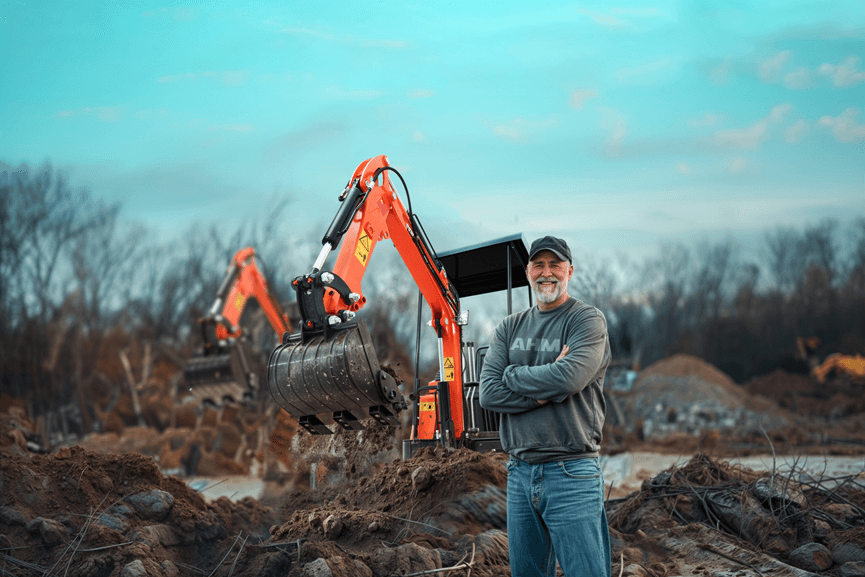
Why Versatility Matters on the Jobsite
In today’s fast-paced, budget-conscious world, having a machine that can do it all is a game-changer. Mini excavator attachments help you stretch your investment, allowing one machine to take on a wide range of tasks without calling in backup. Whether you’re a landscaper digging footings, a contractor breaking up concrete, or a homeowner clearing brush, attachments help you do more with less—saving both time and money.
Common Mini Excavator Attachments and Their Uses
Let’s break down some of the most popular attachments and how they boost your mini excavator’s versatility:
Buckets (Standard, Trenching, Grading)
Buckets are the bread and butter of mini excavators. But not all buckets are the same.
- Standard buckets are great for general digging.
- Trenching buckets are narrower, ideal for digging utility lines or irrigation channels.
- Grading buckets have a wider, flat profile—perfect for smoothing out soil or gravel.
Swapping buckets lets you tailor your excavator to the exact job at hand.
Hydraulic Breakers
Need to tackle concrete pads, asphalt driveways, or stubborn rock? A hydraulic breaker attachment turns your mini excavator into a mini jackhammer. It’s perfect for demolition and site prep work, especially in urban or residential areas where larger machines are overkill.
Augers
Auger attachments are a must-have for digging precise holes for fence posts, trees, signs, or piers. They save serious time and manual labor, especially in tough or rocky soil conditions.
Thumbs (Mechanical or Hydraulic)
Thumb attachments make it easy to grip and lift awkward materials like logs, stumps, rocks, or debris. Mechanical thumbs stay in a fixed position, while hydraulic thumbs give you more control and precision—great for material handling or cleanup.
Grapples
When it comes to grabbing and sorting brush, demolition debris, or scrap materials, grapples are a solid choice. They’re commonly used in landscaping, storm cleanup, and even small-scale demolition jobs.
Rippers
Need to break up hard ground, frozen soil, or compacted clay? A ripper attachment is designed to dig deep and disrupt tough terrain so you can dig or grade more easily afterward.
Quick Couplers: The Game-Changer for Attachment Swaps
If attachments make your excavator versatile, quick couplers make it convenient. These tools let you switch between attachments quickly and safely—no tools or heavy lifting required.
- Manual couplers require you to use a wrench or pin system.
- Hydraulic couplers allow for attachment changes from inside the cab.
Either way, quick couplers reduce downtime and make it more realistic to use multiple tools in a single job without constant hassle.
Real-World Examples of Multi-Attachment Use
Whether you’re using a Kubota excavator or another compact model, attachments can dramatically increase your efficiency on the job.
Imagine a landscaper tackling a full backyard overhaul:
- Start the day with a grading bucket to level the site.
- Switch to an auger to dig post holes for a new fence.
- Attach a grapple to remove old tree limbs and brush.
- End the job by using a standard bucket to backfill around hardscape features.
Instead of bringing in multiple machines—or worse, switching to manual labor—you’ve done it all with one compact excavator and a few smart attachments.
Tips for Choosing the Right Attachments
To get the most out of your mini excavator, make sure your attachments are a good fit:
- Check compatibility: Match the attachment to your machine’s hydraulic flow and weight capacity.
- Buy based on tasks: Focus on what jobs you do most often—don’t buy attachments just to collect dust.
- Consider aftermarket vs. OEM: Aftermarket tools can be more affordable, but always double-check quality and fitment.
If you’re looking for reliable, high-performance attachments, AHM offers a range of tools designed to work seamlessly with mini excavators—built for durability and field-tested for real-world jobsites.
Maintenance and Compatibility Considerations
Keep your attachments in top shape with a little routine care:
- Clean and grease moving parts after use.
- Check hydraulic connections regularly for leaks or damage.
- Inspect pins and couplers for wear—especially if you swap tools frequently.
Also, make sure your machine’s specs support each attachment’s weight and hydraulic requirements. Not every mini excavator can safely operate every tool.
Conclusion
Mini excavators are powerful on their own—but with the right attachments, they become true multitaskers. Whether you’re a weekend DIYer or a seasoned contractor, investing in a few key tools can dramatically increase your machine’s value, flexibility, and efficiency on the jobsite.
If you’re looking to level up your workflow, don’t just think about a new machine—think about how your current one can do more. Start with attachments.

Peyman Khosravani is a global blockchain and digital transformation expert with a passion for marketing, futuristic ideas, analytics insights, startup businesses, and effective communications. He has extensive experience in blockchain and DeFi projects and is committed to using technology to bring justice and fairness to society and promote freedom. Peyman has worked with international organizations to improve digital transformation strategies and data-gathering strategies that help identify customer touchpoints and sources of data that tell the story of what is happening. With his expertise in blockchain, digital transformation, marketing, analytics insights, startup businesses, and effective communications, Peyman is dedicated to helping businesses succeed in the digital age. He believes that technology can be used as a tool for positive change in the world.