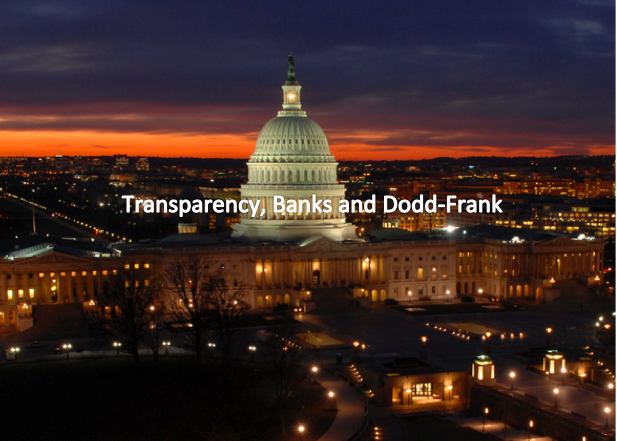
One of the most significant features of the Dodd-Frank Wall Street Reform Act of 2010 (Dodd-Frank) was the establishment of the Financial Stability Oversight Council (FSOC), a multi-agency regulatory watchdog entity charged with deciding which financial institutions require special Federal Reserve Board oversight due to being designated as systemically important. Until now, the secretive FSOC deliberations have focused mainly on the banking sector, but last fall, mutual fund companies were added to the basket of institutions whose collapse could presumably threaten the entire economy. One SEC commissioner has dubbed the council the Unaccountable Capital Markets Death Panel.
The Too Big To Fail Threshold
Dodd-Frank automatically puts banks with $50 billion or more in assets under Federal Reserve supervision; the FSOCs task is to decide which other banks and now mutual fund firms also need such oversight due to their importance to the economy. The council is made up of 10 members including the chairpersons of the Federal Reserve, the SEC and the FDIC and is headed by Treasury Secretary Jacob J. Lew.
Star Chamber Proceedings
Critics point to the secretive nature of FSOC proceedings as well as the lack of any advance notice to an organization that it is being considered for systemically important status. Decisions by the Financial Stability Oversight Council dramatically affect the operations of companies that are designated as systemically important financial institutions, according to Congressman Dennis Ross, a Florida Republican. He is spearheading legislation along with Democratic Congressman John Delaney of Maryland that would limit the powers of the FSOC and lift some of its secrecy.
Transparency or Secrecy
Lawmakers who favor changes to the FSOCs mode of operations claim that the council could be more transparent and still live up to its Dodd-Frank mandate. However, the Treasury secretary denies charges of opacity: The council has voluntarily adopted a robust transparency policy and put in place a comprehensive, deliberative approach to its evaluation of risks. It solicits public input and carefully considers all points of view, according to Secretary Lew. Congressman Delaney countered that There are some tweaks that might actually allow FSOC to achieve its objectives even better. Thats what were trying to do. Were not coming at it that FSOC is a poorly conceived idea.
Mutual Funds Against Inclusion
Two of Americas biggest asset management firms with $3.8 trillion and $1.9 trillion assets under management are currently under FSOC scrutiny, and the designation of systemically important has been applied to two other non-bank financial institutions. These firms point out that they belong in a different category from banks because they dont trade with their own funds, and their clients investment accounts are not government insured.
Read More:
how would reconcile your bank account to avoid spending more than you have?
how is having a security system for your home a risk management strategy?

Peyman Khosravani is a global blockchain and digital transformation expert with a passion for marketing, futuristic ideas, analytics insights, startup businesses, and effective communications. He has extensive experience in blockchain and DeFi projects and is committed to using technology to bring justice and fairness to society and promote freedom. Peyman has worked with international organizations to improve digital transformation strategies and data-gathering strategies that help identify customer touchpoints and sources of data that tell the story of what is happening. With his expertise in blockchain, digital transformation, marketing, analytics insights, startup businesses, and effective communications, Peyman is dedicated to helping businesses succeed in the digital age. He believes that technology can be used as a tool for positive change in the world.